


A Philosophy of Flavor, Not Just Frugality
Let’s get one thing straight: this isn’t just about being thrifty. While the ethos of not wasting food is deeply embedded in Indian culture, the art of repurposing leftovers is driven by a passion for flavor. It’s a creative challenge. Where one person
sees a half-empty container of day-old rice, an Indian home cook sees the foundation for a spectacular breakfast. This mindset stems from a cultural respect for food, often encapsulated in the Sanskrit phrase *Anna he Purnabrahma*, which translates to "Food is the divine creator." Wasting it isn't just inefficient; it's disrespectful. So, instead of simply reheating, the goal is to reinvent. The question is never, "How can I eat this again?" but rather, "What can this become next?"
The Magic of a Tempering 'Tadka'
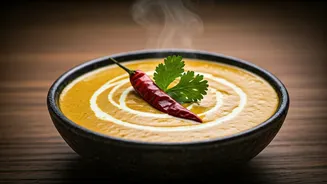
One of the most powerful tools in this transformation is the *tadka* (also known as *chaunk* or *phodni*). This is the technique of tempering whole or ground spices in hot oil or ghee, which are then poured over a dish. It’s a flavor bomb that takes less than a minute to make and can instantly resurrect tired ingredients. Imagine a bowl of plain, leftover dal (lentil stew). It’s fine, but not exciting. Now, picture heating a small ladle of ghee, sputtering mustard seeds, cumin seeds, and a dried red chili until fragrant, maybe adding some chopped garlic or asafoetida. Pouring this sizzling, aromatic mixture over the cold dal doesn't just reheat it; it gives it a completely new, vibrant personality. This single technique is used to wake up everything from yogurt and rice to vegetables, turning the mundane into something magical.
Yesterday's Dinner, Today's Masterpiece
The applications of this philosophy are endless and delicious. That clumpy, cold rice from last night? It’s the perfect canvas for *phodnicha bhaat*, a classic Maharashtrian breakfast. The dry, separate grains are ideal for stir-frying with a *tadka* of mustard seeds, turmeric, onions, and peanuts, creating a savory, satisfying dish that’s far better than the original rice ever was. Those few stiff, leftover rotis or chapatis? They are often sliced into thin strips and stir-fried with vegetables and spices to create something akin to a noodle dish. Leftover idlis (steamed rice cakes) are cubed and pan-fried with spices to make "idli fry." And leftover vegetable curries, or *subzis*, are frequently mashed and used as a flavorful stuffing for parathas (flaky flatbreads), creating an entirely new meal for the next day's lunchbox.
A Lesson in Creative Constraint
Ultimately, what makes Indian home cooks so adept with leftovers is their mastery of creative constraint. Instead of seeing a finished dish, they see versatile components. Rice is a grain. Dal is a protein-rich puree. Cooked vegetables are a seasoned base. This perspective unlocks a world of possibilities. It’s a practical, sustainable approach to cooking that reduces waste and saves money, but the real win is on the plate. It fosters a more intuitive and flexible relationship with food, encouraging cooks to rely on their senses—smell, sight, and taste—to build new dishes from old parts. It’s a culinary superpower that has been passed down through generations, born from necessity but perfected through a love of good food.