





Your Eyeballs Can Change Shape
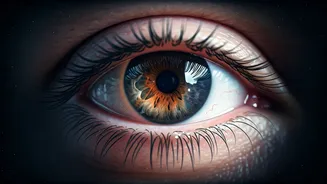
It sounds like science fiction, but for many astronauts, it’s a documented reality. The condition, known as Spaceflight Associated Neuro-ocular Syndrome (SANS), affects a significant portion of those who spend extended time in microgravity. On Earth,
gravity pulls our body fluids down toward our feet. In space, this pressure vanishes. Fluids shift upward, increasing pressure inside the skull. This intracranial pressure can push on the back of the eyeball, slightly flattening it and causing the optic nerve to swell. The result? Astronauts can experience a shift in vision, often becoming more farsighted. While some of these changes reverse upon returning to Earth, for others, the effects can linger, a permanent souvenir from their time in orbit. NASA considers SANS a major risk for long-duration missions, like a trip to Mars, and it's a key area of ongoing research.
Your Genes Express Themselves Differently
One of the most groundbreaking discoveries came from NASA’s Twins Study, which compared astronaut Scott Kelly, who spent nearly a year on the International Space Station (ISS), with his identical twin brother, Mark, who remained on Earth. Scientists found that while Scott’s fundamental DNA didn't mutate into something new, thousands of his genes changed their level of expression. This means certain genes were turned 'on' or 'off' in response to the space environment. These changes affected everything from his immune system to his bone formation. Even more bizarrely, the protective caps on the ends of his chromosomes, called telomeres, actually lengthened in space—a phenomenon typically associated with youth that scientists are still struggling to fully understand. Most of these genetic shifts reverted to normal within months of his return, but a small percentage did not, highlighting how deeply space can rewrite our biological programming, at least temporarily.
You Become a Puffy-Faced, Bird-Legged Creature
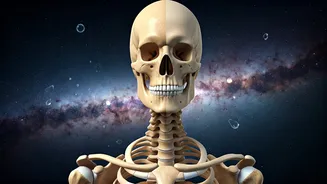
The fluid shift in space doesn't just affect your eyes; it completely redistributes the two gallons of water in your body. Without gravity to pull it downwards, fluid migrates from the legs and lower torso into the chest and head. This leads to a classic astronaut look: a puffy, swollen face, congested sinuses, and noticeably thinner legs, often called 'bird legs.' It’s more than just a cosmetic issue. The body's sensors, tricked into thinking there’s too much fluid, trigger a process that reduces overall blood volume. Astronauts essentially trick their bodies into dehydrating themselves slightly to achieve a new equilibrium. This is also why astronauts often feel faint and light-headed upon their return to Earth; their bodies have to relearn how to manage fluids under the full force of gravity again.
Your Immune System Gets Confused
The ISS is cleaner than most operating rooms, yet astronauts can still get sick. The combination of microgravity, radiation, and the psychological stress of confinement creates a perfect storm to confuse the immune system. Studies have shown that while the number of immune cells remains stable, their function becomes dysregulated. Some parts of the immune response are suppressed, while others are overactivated. This can lead to a state where an astronaut is more susceptible to new infections, while dormant viruses already in their body, like chickenpox or Epstein-Barr, can reactivate. At the same time, the overactive parts can lead to an increase in allergy-like symptoms and inflammation. It's a delicate balancing act, and figuring out how to keep the immune system stable is crucial for ensuring crew health on multi-year voyages into deep space.