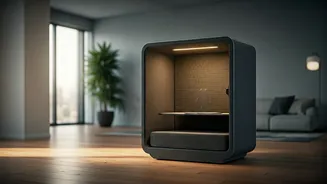







The Great Blurring of Home and Office
In the spring of 2020, millions of Americans were abruptly sent home to work. At first, it felt like a novelty. We traded business casual for sweatpants and replaced rush hour with an extra hour of sleep. But the novelty quickly wore off, replaced by
a creeping sense of unease. The problem wasn't just the barking dogs during Zoom calls or the kids demanding snacks during a crucial presentation; it was the psychological erosion of boundaries. Without the physical transition of a commute, our brains struggled to switch off. The laptop on the kitchen counter was a constant, glowing reminder of unfinished tasks. Home, once a sanctuary, was now just a less-ergonomic branch of the office. This wasn't just a personal inconvenience; it was a systemic failure of infrastructure. Corporate America had robust systems for its campuses—HVAC, security, IT support, ergonomic chairs—but almost none for the new, distributed workplace: our homes.
When a Spare Room Isn't Enough
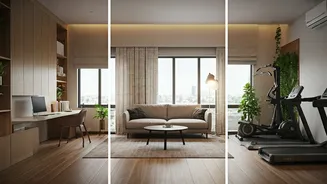
The initial advice was simple: find a dedicated workspace. Set up in the spare bedroom, the basement, or even a quiet corner of the living room. But this advice ignored the reality for a huge swath of the American workforce. For apartment dwellers, families in modest homes, or those with roommates, a “spare room” was a laughable luxury. Open-plan living, once a design ideal, became a productivity nightmare. Noise-canceling headphones could only do so much to block out the sounds of a household in motion. People tried everything: flimsy room dividers, strategically placed bookshelves, signs taped to doors pleading for quiet. Yet the core issue remained. You weren't just fighting for quiet; you were fighting for a mental space, a psychological airlock between your professional self and your personal self. The market was flooded with better webcams and ring lights, but the fundamental challenge was spatial.
Enter the Pod: A Room Within a Room
This is where the foldaway study pod—or privacy pod—made its entrance. It wasn't a new invention; companies like WeWork and innovative tech campuses had used larger versions for years as quiet nooks for phone calls. But now, scaled down and marketed to individuals, they offered a radical solution. These weren't just fancy phone booths. They were compact, acoustically insulated enclosures, often equipped with a small desk, ventilation, and power outlets. They looked like something teleported from a spaceship. More importantly, they offered what no room divider could: a seal. Closing the door on a pod wasn't just about muffling sound. It was a powerful, physical ritual. Stepping inside meant you were at work. Stepping out meant you were home. It was a commute, however small, re-introduced into a world that had lost it. The pod provided a definitive boundary, a tangible manifestation of focus in the middle of domestic chaos.
Redefining 'Workplace Infrastructure'
The rise of the personal pod marked a crucial shift in how we define "workplace infrastructure." For decades, infrastructure meant the corporate campus: the building, the servers, the security badges. Now, the definition had to expand to include the employee’s personal environment. Forward-thinking companies realized that providing a laptop and a software subscription wasn't enough. To ensure productivity and prevent burnout, they had to help employees create a viable workspace. This led to a new kind of corporate perk: the work-from-home stipend. Employees were given budgets not just for a new monitor, but for a better chair, a standing desk, or, for some, a contribution toward a study pod. The company's responsibility for providing a safe and effective work environment was now extending, virtually and financially, into the private home. The pod became the ultimate symbol of this new contract—a piece of corporate-grade infrastructure, personalized for one.