


Beyond the Basic Recipe
This isn't just a list of ingredients. It’s a deep dive, a forensic analysis of what makes a beloved snack work. Think of it as part instruction manual, part food science lesson, and part love letter. Creators on YouTube, TikTok, and food blogs aren't
just telling you how to make a homemade version of Goldfish crackers; they're exploring the specific fat-to-flour ratio needed for that signature snap, or testing different types of cheddar to nail the exact flavor profile. This approach empowers the home cook, transforming them from a follower of instructions into an informed participant in the creative process. It demystifies processed foods, revealing that the magic behind a Twinkie or a Cheez-It isn't sorcery, but chemistry you can replicate—and often improve—in your own kitchen.
The Lunchable Glow-Up
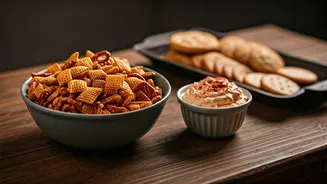
Perhaps no snack better illustrates this trend than the humble Lunchable. For decades, it was the epitome of convenient, if uninspired, childhood lunches: a plastic tray of pale crackers, rubbery ham, and cheese squares with the texture of a vinyl record. Today, the recipe explainer has given it a dramatic glow-up. The concept has evolved into the "adult Lunchable," a sophisticated bento box or miniature charcuterie board. Food influencers meticulously arrange artisanal crackers, prosciutto or soppressata, wedges of brie or aged gouda, and perhaps a dollop of fig jam. The explainer element comes in when they discuss the principles of pairing flavors and textures—why the salty meat works with the sweet jam, or how a sharp cheese cuts through the richness. It takes a disposable, mass-produced product and reframes it as a lesson in thoughtful, satisfying meal construction.
The Pantry Pastry Project
The trend extends far beyond simple assembly. Take toaster pastries. The store-bought Pop-Tart is a classic, but its charm often lies more in nostalgia than in flavor. The explainer-driven home baker sees it as a challenge. They dive into creating the perfect shortcrust pastry that's flaky but won't crumble into dust. They experiment with fruit fillings that taste like actual fruit, not just corn syrup and red dye. They perfect a glaze that hardens into a satisfying shell instead of remaining sticky. Shows like Claire Saffitz's "Gourmet Makes" were pioneers in this space, showing the painstaking process of reverse-engineering snacks like Doritos and Gushers. These projects aren't for a quick sugar fix; they are weekend-long endeavors. They make the old snack "useful" again not as a convenience food, but as a vehicle for learning advanced baking techniques and appreciating the craft behind food production.
Comfort Food in High Definition
So, why is this happening now? The trend is fueled by a perfect storm of cultural currents. First, there's the powerful pull of nostalgia. In uncertain times, revisiting the simple, comforting foods of our youth provides a sense of security and stability. Second, there’s a growing desire for transparency and control over what we eat. Deconstructing a snack allows us to remake it with higher-quality ingredients and without the long list of preservatives. Finally, there's the social media factor. A beautifully crafted, homemade Pop-Tart isn't just a treat; it's content. It’s a visual humblebrag that says, "I am creative, skilled, and have excellent taste." These explainers give people a blueprint for creating something impressive, shareable, and deeply personal. It’s comfort food, but rendered in high definition—sharper, clearer, and more satisfying than the original memory.