


How to Spot the Ringed Planet
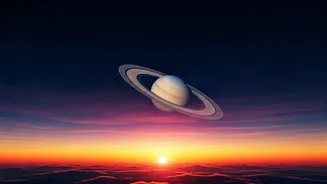
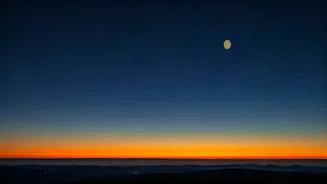
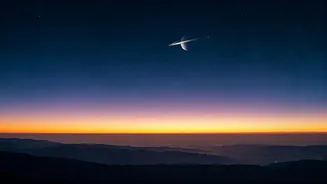
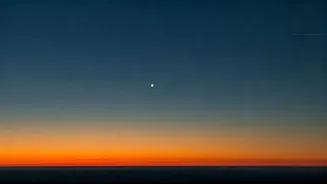
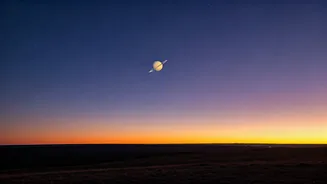
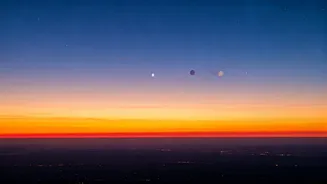
Finding Saturn requires just two things: an early alarm and a clear view of the eastern horizon. For the next several weeks, the gas giant will be rising in the pre-dawn sky, appearing as a moderately bright, star-like object. You’ll want to look about
an hour before your local sunrise. Unlike twinkling stars, planets tend to shine with a more constant, steady light. Saturn won’t be dazzlingly bright, but it will be distinct. To give yourself the best chance, get away from city light pollution if you can. Even a park or a darker suburban street will help. Give your eyes about 15 minutes to adjust to the darkness. At first, it will just look like another point of light, but its lack of twinkling is your first clue. If you have a pair of binoculars, they won't be powerful enough to resolve the rings, but they will help you hold the planet steady in your view, revealing its distinctly non-star-like nature.
Why the Yellowish Glow?
The planet’s signature pale, butter-yellow color isn’t an accident; it’s a direct result of its turbulent, frigid atmosphere. Saturn is a gas giant, composed mostly of hydrogen and helium, but its upper cloud tops are what we see. These clouds are made of ammonia ice crystals. When sunlight—which has traveled over 800 million miles to get there—hits these crystals, they reflect a yellowish-white hue back at us. Deeper in the atmosphere, other compounds like methane absorb red light, which also influences the overall color palette. But it's that high-altitude ammonia haze that gives Saturn its classic, serene glow. So when you spot that yellowish dot, you’re not just seeing a planet; you’re seeing the chemical fingerprint of an alien atmosphere, located nearly a billion miles away.
What You're Actually Looking At
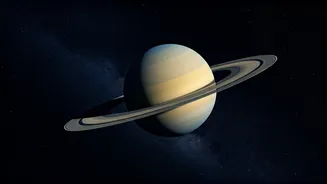
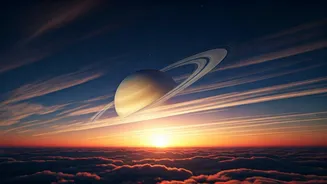
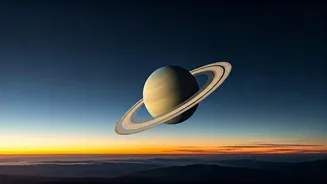
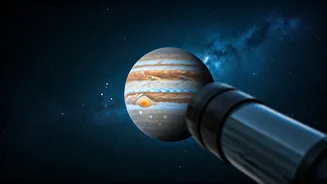
While Saturn appears as a simple point of light to the naked eye, it’s one of the most dynamic objects in our solar system. It’s the second-largest planet, a colossal ball of gas so light for its size that it would float in a bathtub big enough to hold it. And of course, there are the rings. Composed of countless particles of ice and rock, ranging from dust-sized grains to mountain-sized chunks, the ring system is Saturn’s defining feature. Unfortunately, you need a telescope to see them. Even a basic backyard telescope with about 30x magnification can begin to reveal the rings as distinct from the planet itself, a truly unforgettable sight. This early-morning viewing is a perfect excuse to dust off an old telescope or consider investing in a new one. The view is more than worth the effort.
A Preview of Better Views to Come
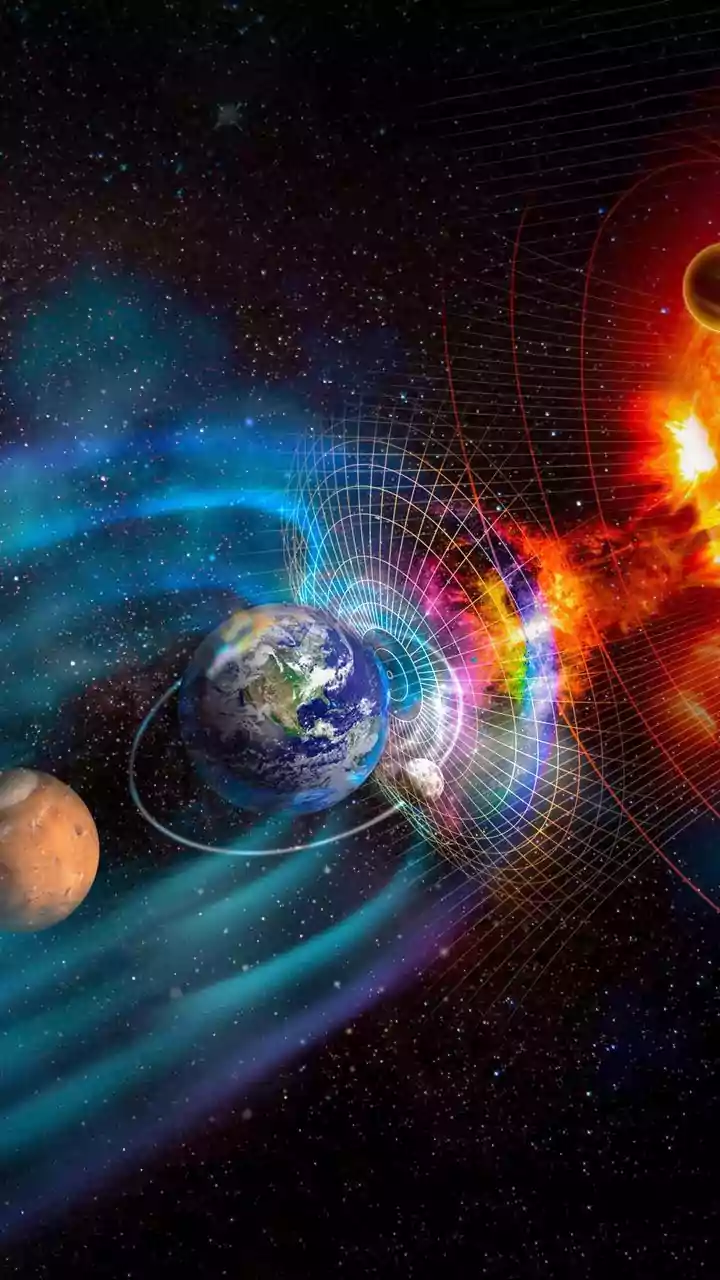
This pre-dawn appearance is just the opening act for Saturn’s 2024 performance. As the year progresses, Earth will catch up to Saturn in its orbit. The planet will rise earlier and earlier each night, becoming a fixture of the late-night and eventually the evening sky. The main event is Saturn’s “opposition,” which occurs in early September. At opposition, Earth is directly between Saturn and the sun. This is when the planet will be at its biggest, brightest, and visible all night long, making it the absolute best time for viewing. Consider these morning sightings a quiet preview. For now, you can also spot Mars, appearing as a reddish dot, often in the same general area of the pre-dawn sky, offering a two-for-one planetary viewing session.