







Beyond Fancy Flashcards
For decades, educational software has mostly been a digital version of a workbook—glorified flashcards and multiple-choice quizzes. But the new wave of AI tutors is fundamentally different. Powered by the same large language models (LLMs) behind tools
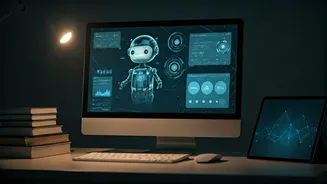
like ChatGPT, these tutors can engage in natural, conversational dialogue. Instead of just marking an answer wrong, they can ask Socratic-style questions to guide a student toward the right answer. If you're stuck on a history essay, you can brainstorm with it. If a physics concept isn't clicking, you can ask it to explain the idea using a sports analogy. Platforms like Khan Academy’s Khanmigo or the language app Duolingo Max are early examples of this shift. They aren't just content repositories; they're dynamic learning partners designed to simulate the patience and guidance of a real-life tutor.
The 'Personalized' Part Explained
The term “hyper-personalized” isn’t just marketing jargon. These systems are built on adaptive learning algorithms that create a unique educational path for every user. As you work through problems, the AI analyzes your performance in real-time. It tracks which concepts you master quickly and where you consistently stumble. If you’re acing algebra but struggling with geometry, the tutor will automatically adjust, serving up more geometry practice and foundational concepts until you're confident. It's like a GPS for your brain, constantly rerouting based on your progress. Unlike a classroom where the teacher has to cater to the median student, or a human tutor who only sees you once a week, an AI tutor has a perfect memory of your entire learning journey, allowing it to tailor every single interaction to fill your specific knowledge gaps without making you repeat what you already know.
A Private Tutor for Every Pocket
Perhaps the most significant promise of AI tutors is democratization. Quality one-on-one tutoring can cost anywhere from $30 to over $100 an hour, putting it out of reach for many American families. This creates a significant equity gap, where students who can afford personalized help often pull further ahead. AI tutors, typically offered as low-cost subscriptions or even free add-ons to existing educational platforms, could radically change that dynamic. They offer 24/7 availability, meaning a student can get help with homework at 10 p.m. on a Sunday, long after a human tutor has gone home. For adult learners trying to pick up a new skill for work or a hobby, this on-demand access provides the flexibility needed to fit education into a busy life. The potential is enormous: a patient, knowledgeable, and affordable learning assistant available to anyone with an internet connection.
The Human Element and Its Limits
Despite the impressive technology, AI tutors are not a silver bullet. Critics and educators rightly point out what’s missing: the human element. A great teacher or tutor does more than just explain concepts; they provide motivation, build confidence, and understand the emotional state of a learner. They notice when a student is having a bad day, feeling frustrated, or losing interest. An AI, no matter how sophisticated, cannot replicate that empathetic connection. Furthermore, these systems are still prone to errors, sometimes providing incorrect information or being overly rigid in their teaching methods. There are also valid concerns about data privacy and the risk of students becoming overly reliant on AI for problem-solving instead of developing their own critical thinking skills. For now, the consensus among experts is that these tools work best as a supplement—not a replacement—for traditional instruction.