




The New Definition of Opulence
The idea of a five-star vacation once conjured images of infinity pools packed with beautiful people, DJ-fueled beach clubs, and restaurants where the reservation was as valuable as the meal. It was a culture of spectacle. Today, for a growing number
of sophisticated travelers, that sounds less like a vacation and more like work. The new luxury is subtractive, not additive. It’s less about what a resort offers—and more about what it removes: noise, crowds, and the endless digital tether. This shift redefines opulence as the presence of space, privacy, and quiet contemplation. High thread-count sheets and gourmet food are still expected, but they are now the backdrop, not the main event. The real prize is the mental real estate that opens up when the constant hum of daily life fades away. In a world of notifications, deadlines, and social obligations, the rarest commodity is an uncluttered mind.
From Burnout Culture to Blissful Boredom
What’s driving this pivot from see-and-be-seen to hide-and-heal? The answer lies in the exhaustion of modern life. Post-pandemic, many Americans re-evaluated their relationship with work, stress, and what it truly means to “recharge.” The frantic energy of pre-2020 travel feels out of step with a new desire for genuine restoration. Travelers are actively seeking “digital detoxes,” where weak Wi-Fi is a feature, not a bug. They’re trading nightlife for stargazing, and crowded tours for solitary hikes. This isn't about boredom; it’s about a more profound engagement with one’s surroundings and oneself. The goal is no longer to return with a camera roll full of envy-inducing posts, but with a sense of calm that lasts long after the tan has faded. It's an investment in mental wellness, with the resort serving as the serene setting for that crucial work.
The Boutique Caribbean Escape
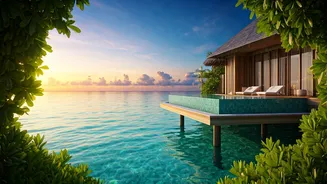
Forget the mega-resorts with their sprawling waterparks and packed beaches. The new Caribbean dream is found on smaller islands or in secluded corners of larger ones. Think Dominica, known as the “Nature Island,” where resorts like Secret Bay offer private clifftop villas immersed in the rainforest, promoting a sense of being one with the environment. Or consider the Grenadines, where small, exclusive properties on islands like Mustique or Canouan have long perfected the art of understated, private luxury. Here, the day's main event might be a swim in a deserted cove, a private yoga session, or simply reading a book on your veranda without interruption.
America's Rustic Archipelagos
You don't need a passport to find this brand of quiet. The U.S. is home to its own tranquil island chains that offer a distinct sense of escape. In the Pacific Northwest, Washington’s San Juan Islands provide a moody, contemplative alternative to tropical sun. Visitors can kayak through misty coves, watch for orcas, and cozy up in lodges that prioritize fireplaces over flat-screens. On the opposite coast, Georgia’s Golden Isles, particularly Little St. Simons Island—a privately owned, 11,000-acre sanctuary—offers a different kind of solitude. With only a handful of guests at a time, the experience is defined by naturalist-led walks through maritime forests and along seven miles of undeveloped beach.
The Philosophy of Quiet Service
What makes these resorts truly luxurious is not just their location, but their approach to hospitality. Service is intuitive, not intrusive. Staff seem to appear when needed and vanish when not, providing a seamless experience that fosters a sense of complete privacy. Instead of a concierge pushing a packed itinerary, you’ll find guides who can facilitate a deep connection with nature. Instead of a bustling lobby, you get a discreet check-in directly at your villa. This philosophy is built on the understanding that for today’s weary traveler, the greatest service one can provide is the space to simply be.