







The Drainage Myth You Must Unlearn
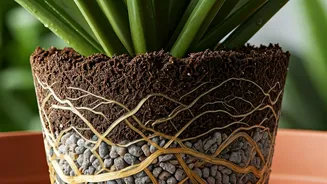
For generations, gardeners have been told to put a layer of gravel at the bottom of their pots to improve drainage. It seems logical—water runs through rocks, right? But science tells a different story. This practice actually makes things worse. When
water moving through fine soil hits a coarse layer of gravel, it stops. Surface tension causes it to pool in the soil just above the gravel, creating what horticulturalists call a 'perched water table.' Instead of draining away, the water sits right where the roots are, effectively creating a swamp in the bottom half of your pot. This is the fast track to root rot, the very problem you were trying to prevent. The first step to saving your plants is to abandon this outdated method completely.
The Real Solution: Amend the Entire Mix
So if a bottom layer is bad, what's the right approach? The key is to improve the drainage capacity of the *entire* soil volume. Instead of creating distinct layers, you want to create a consistent, well-aerated medium from top to bottom. By mixing amendments like gravel, perlite, or pumice *into* your potting soil, you create more air pockets throughout the mix. These pockets do two things: they provide oxygen directly to the roots, and they create channels for excess water to flow through the soil and out the drainage hole. Think of it like turning a dense, slow-draining clay into a looser, crumbly loam. The goal is a homogenous blend that holds enough moisture for the plant to drink, but allows the excess to escape freely.
Choosing the Right 'Grit'
Not all aggregates are created equal, and 'gravel' is a broad term. For amending soil, you want materials that are the right size and won't compact over time. Here are the top choices: * **Pea Gravel or Horticultural Grit:** Use small, angular pieces (around 1/4 inch). Avoid smooth, round river stones, which can settle and reduce air pockets. Ensure it's washed to remove fine dust that could clog soil pores. * **Perlite:** This is the lightweight, white, Styrofoam-like stuff you see in commercial potting mixes. It's a volcanic glass that has been heated until it pops. It’s excellent for aeration and doesn't add much weight to pots. * **Pumice:** Another volcanic rock, pumice is slightly heavier than perlite but is more durable and less likely to float to the top of the pot when watering. It has a porous structure that holds a bit of air and water, releasing it slowly. * **Coarse Sand:** Only use horticultural sand or builder's sand. Fine play sand will fill in all the air gaps and turn your soil into concrete. Coarse sand is a good choice for smaller pots or for succulent mixes.
A Simple, Fast-Draining Recipe
Ready to mix your own? Here is a fantastic all-purpose recipe for plants that demand good drainage, such as herbs like rosemary and lavender, or most common houseplants that are prone to root rot. It provides a perfect balance of moisture retention, nutrients, and drainage. **The Basic Formula:** * **1 part Potting Soil:** This provides the main structure and organic matter. * **1 part Perlite or Pumice:** This is your primary aeration and drainage component. * **1 part Compost or Pine Bark Fines:** This adds slow-release nutrients and improves soil texture. Combine these ingredients thoroughly in a bucket or on a tarp until you have a uniform, crumbly mixture. When you squeeze a handful, it should hold its shape loosely but fall apart easily. This is the sign of a well-aerated, healthy medium.
Customizing for Your Plants
The 1:1:1 ratio is a great starting point, but the best gardeners learn to customize. Plants from arid environments need even sharper drainage. For succulents and cacti, you might create a mix that is up to 50% or even 70% grit (pumice, coarse sand, and small gravel). For tropical plants that like more consistent moisture but still hate 'wet feet' (like monsteras or philodendrons), you might stick closer to the basic formula or slightly reduce the amount of grit. The best practice is to research your specific plant's native habitat. Does it grow on a rocky hillside or a loamy forest floor? Answering that question will tell you everything you need to know about its ideal soil.