
The King You Don't Know
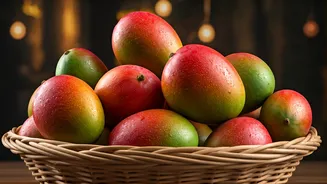
In the United States, our relationship with mangoes is, to put it mildly, limited. We typically encounter one or two varieties, like the sturdy, reddish-green Tommy Atkins, a cultivar prized more for its ability to survive long-distance shipping than
for its transcendent flavor. It’s a perfectly fine fruit. But to compare it to the mangoes of India is like comparing a postcard of the Grand Canyon to standing on its rim at sunrise. In India, the mango is unequivocally hailed as the 'King of Fruits.' Its arrival signals the true beginning of the scorching summer, a sweet, juicy relief from the heat. The fruit is woven into the country's cultural fabric, appearing in mythology, poetry, and art. Gifting a box of the season’s first premium mangoes is a gesture of high esteem. This isn't just produce; it's a seasonal event, a source of regional pride, and a national treasure.
A Universe of Flavor
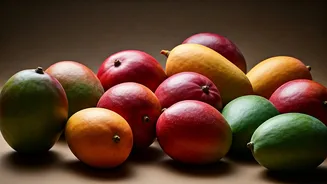
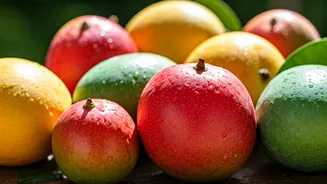
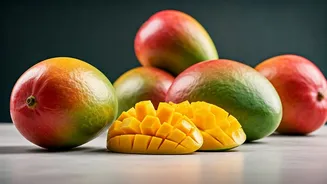
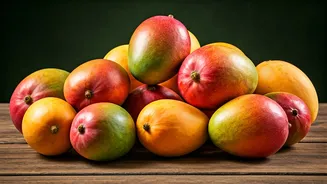
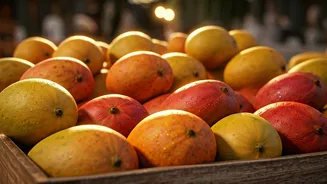
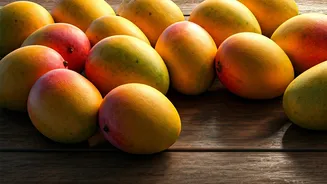
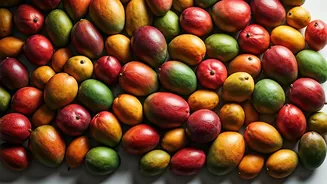
The sheer diversity is staggering. While Americans are familiar with a handful of types, India is home to over 1,500 varieties, and agricultural experts believe there are over 500 distinct, cultivated ones. Each has its own personality, a unique profile of sweetness, tang, texture, and aroma. There’s the world-famous Alphonso, or 'Hapus,' from Maharashtra, with its creamy, non-fibrous flesh and notes of citrus and honey. There's the Dussehri from Uttar Pradesh, slender and intensely sweet, with a fragrance so potent it fills a room. Or consider the Chaunsa, a post-monsoon variety from the north, so soft and juicy that connoisseurs often just puncture the skin and suck the pulp out directly. There are mangoes that taste like peaches, others with hints of pineapple or lemon, some green when ripe, others a brilliant saffron orange. This is the world that most of us are missing, and there’s no better place to get a crash course than at the epicenter of this celebration.
Inside the Mango Festival
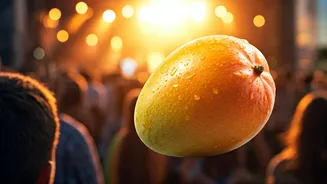
Enter the Delhi International Mango Festival, or Aam Mahotsav. Typically held over a weekend in early July at Dilli Haat, a sprawling open-air market, this government-sponsored event is a joyous, chaotic, and utterly delicious ode to the king of fruits. Imagine walking into an arena where the air is thick with the intoxicating perfume of thousands of mangoes. Farmers and growers from across the country converge here to display their prized crops. You’ll see tables piled high with hundreds of varieties, many of which you’ve never heard of, let alone seen. There are competitions for the biggest mango, the most beautiful, and, of course, the tastiest. Visitors can participate in mango-eating contests, where the goal is speed and blissful messiness. Cultural programs featuring folk music and dance add to the festive atmosphere, making it a feast for all the senses.
More Than Just a Tasting
While the free tastings are a major draw, the festival offers a deeper experience. It’s a chance to talk to the farmers who have cultivated these fruits for generations, to learn the subtle differences between a Langra and a Kesar. Food stalls offer a creative, and sometimes bewildering, array of mango-infused dishes: mango kulfi (ice cream), mango lassi (yogurt drink), mango chutney, mango-based curries, and even mango pizza. This isn't a polished, Epcot-style food festival. It's a vibrant, authentic, and deeply local event. It’s an opportunity to step directly into the heart of India's culinary soul and witness the pure joy that a simple fruit can bring to millions. You’ll leave with a sticky face, a full stomach, and a completely recalibrated understanding of what a mango can and should be.