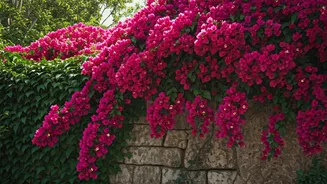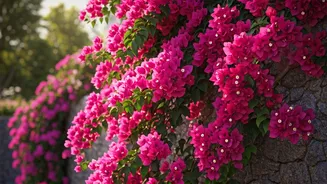






Understanding the Drama Queen
Before you grab your shears, you need to understand the plant’s personality. A bougainvillea isn’t a polite garden guest; it’s a vigorous, sprawling vine that thinks your roof, your neighbor’s fence, and the unsuspecting nearby oak tree are all personal invitations
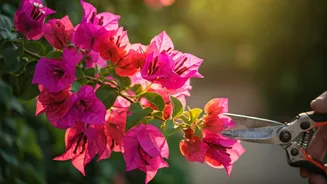
to climb. Its goal is world domination, one thorny cane at a time. The beautiful bursts of color you see aren’t even flowers—they’re modified leaves called bracts. The actual flowers are the tiny white nubs in the center. And here’s the key: bougainvillea only blooms on new wood. If you let old, tangled branches dominate, you get a fortress of thorns with a few sad tufts of color at the very top. Pruning isn't just about size; it's a direct command to the plant to stop building tangled messes and start making beautiful new growth, which is where the magic happens.
Timing Your Intervention
Controlling the drama is all about timing. Pruning at the wrong moment is like trying to have a serious talk during the season finale—it just makes things worse. The golden rule is to prune after a major bloom cycle has finished. For many U.S. climates where bougainvillea thrives (think Florida, California, Texas), this might happen multiple times a year. A light trim after each flush of color keeps things tidy. The most important cut, the “hard prune,” should happen in late winter or very early spring, just before the new growing season kicks off. This is when the plant is relatively dormant and can handle a major reset without going into shock. Never, ever do a hard prune in the late fall. This encourages tender new growth that will be immediately zapped by the first frost, weakening the entire plant.
Gearing Up for Battle
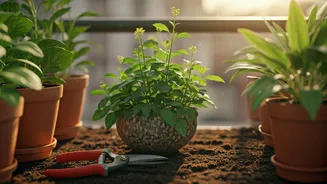
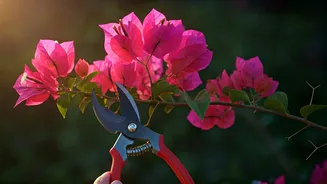
Do not go into this fight unprepared. Bougainvillea thorns are not quaint little rose prickers; they are sharp, woody, and often have a nasty habit of breaking off in your skin. They will shred bare arms and flimsy cotton gloves. Your toolkit for drama control requires personal protective equipment. First, get a pair of thick, preferably leather or suede, gauntlet-style gardening gloves that cover your forearms. Second, wear a long-sleeved shirt made of denim or another heavy-duty fabric. Eye protection is not overkill. When you pull a tangled cane, it can whip back with surprising force. For tools, you'll need sharp, clean bypass pruners for smaller stems and a sturdy pair of loppers for any branch thicker than your thumb. For ancient, woody trunks that have truly gone rogue, a pruning saw might be necessary.
The Two Types of Cuts
You have two main strategies in your pruning arsenal. First is the “soft prune,” or the maintenance trim. This is your regular boundary-setting conversation. After a bloom cycle, snip the long, wild shoots (sometimes called water sprouts) back to the main body of the plant. Cut back the stems that just finished flowering by about 6 to 8 inches. This encourages branching and the development of more new wood for the next round of color. The second strategy is the “hard prune,” which is the full-scale intervention. This is for overgrown, woody, and underperforming plants. In early spring, you can cut the entire plant back by a third, or even by half, to its main structural framework. It feels brutal, and your plant will look like a sad skeleton for a few weeks. But this is the tough love that forces a complete rejuvenation, resulting in a healthier, more manageable, and ultimately more beautiful plant.
The Payoff: More Blooms, Less Chaos
When you commit to regular pruning, the dynamic shifts. You are no longer a victim of your bougainvillea’s whims. You are its partner, guiding its energy toward a shared goal: spectacular, consistent beauty. By removing the tangled, unproductive wood, you allow sunlight and air to penetrate the plant, reducing the risk of pests and disease. By encouraging a flush of new growth, you are directly telling the plant where to produce its stunning bracts. The result is a plant that doesn’t just look better, it performs better. It will be fuller, healthier, and covered in more color than you thought possible. You’ve taken control of the drama, and your reward is a standing ovation of vibrant blooms.