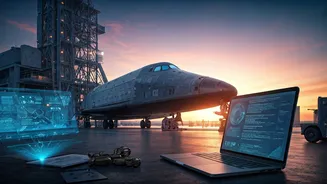










The New Space Race Is Commercial
Forget the Cold War rivalry between nations. The defining feature of the 21st-century space race is the explosive growth of the private sector. Companies like SpaceX, Blue Origin, Rocket Lab, and a constellation of ambitious startups are not just supplementing
government agencies like NASA; in many cases, they are leading the charge. They are building the rockets, launching the satellites, and designing the habitats that will define humanity's future in orbit and beyond. This isn't a government project with a few contractors—it's a burgeoning industry. According to industry analysts, the global space economy, valued at over $450 billion today, is projected to soar past $1 trillion by the end of the decade. That kind of growth isn’t fueled by a few pioneering billionaires; it requires a massive, skilled, and diverse workforce to make it happen.
It's Not Just for Astronauts Anymore
When people hear “space job,” their minds still leap to Buzz Aldrin. But for every astronaut strapped into a capsule, there are thousands of people on the ground making it possible. The modern space industry is desperate for talent across a surprisingly broad spectrum of professions. Yes, they need aerospace engineers and astrophysicists. But they also have a critical need for software developers to write the code that flies the rockets and analyzes satellite data. They need welders, electricians, and technicians to build and maintain the hardware. They need lawyers who specialize in the still-developing field of space law to navigate treaties and liability. They need marketing teams to build their brand, HR professionals to recruit talent, accountants to manage the billions in investment, and graphic designers to visualize the future. In short, the space industry is becoming a regular industry, with all the terrestrial jobs that entails. The ambition is no longer just to *go* to space, but to *build* the economy that gets us there.
The Skills Gap in the Stars
With this rapid expansion comes a significant challenge: a talent shortage. Space companies consistently report that finding qualified candidates is one of their biggest hurdles. The demand for specialized technical skills—from propulsion engineering to cybersecurity for satellite networks—is far outstripping the supply. This has created a fierce competition for talent, not just within the space sector but against the tech and manufacturing industries as well. In response, universities are spinning up new programs and degrees focused on space systems, orbital mechanics, and space-related business and policy. Companies are investing heavily in apprenticeships and on-the-job training programs to cultivate the skills they need. For the American workforce, this presents a clear opportunity. The jobs are high-tech, high-paying, and part of a visionary industry with long-term growth potential. The challenge is ensuring that the educational pipeline can prepare a new generation for these roles.
Building the Off-World Economy
The long-term vision extends far beyond launching satellites. The current boom is laying the foundation for an entire off-world economy. This includes not only ambitious goals like asteroid mining or lunar bases, but also more immediate applications that impact life on Earth. Satellite internet constellations like SpaceX's Starlink are already connecting rural and underserved communities. Earth-observation satellites provide crucial data for climate modeling, agriculture, and disaster response. The push for space tourism, while nascent, is driving innovation in reusable vehicle technology that lowers the cost of access for everyone. For the United States, maintaining leadership in this domain is a matter of economic competitiveness and national security. The country that builds the infrastructure for the space economy will have a significant advantage for decades to come, making the development of a space-focused workforce a national priority.