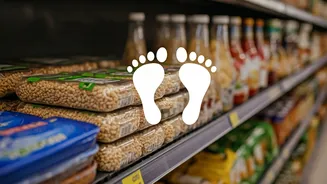







More Than Just Nutritional Facts
For decades, the standard information panel on food has focused on personal health: calories, fat, sodium, sugar. It’s a familiar landscape for anyone trying to make a dietary choice. But a significant shift is underway. A growing number of food companies
and restaurants are adding a new layer of data that speaks not to your body, but to the planet. This 'sustainability context' can include a food item’s carbon footprint (the greenhouse gas emissions produced to create it), its water usage, its impact on land, or its contribution to biodiversity loss. It reframes a simple meal as an environmental decision, giving consumers a new metric to consider alongside price and personal preference. The goal is to make the invisible, visible—to connect the food on our plate to the complex agricultural and supply chain systems that brought it there.
Carbon Counts on Your Lunch Menu
This trend is most visible in the fast-casual restaurant space, where chains are experimenting with menu transparency. Panera Bread, for instance, partnered with the World Resources Institute to label items as “Cool Food Meals.” These dishes have a low carbon footprint, meeting a specific threshold for emissions. Similarly, chains like Just Salad and Chipotle have introduced carbon labeling, allowing customers to see the estimated CO2 equivalent for each menu item. Seeing that a beef bowl has a significantly higher carbon footprint than a chicken or vegetarian option provides an immediate, tangible point of comparison. It moves sustainability from an abstract concept into a concrete number right next to the price. This direct approach is designed to nudge behavior, empowering diners to make a lower-impact choice as easily as they’d opt for a lower-calorie dressing.
Decoding the Supermarket Aisle
The grocery store is a more complex battlefield for information. While a single, federally mandated sustainability label doesn't exist yet, a dizzying array of private and third-party certifications are filling the void. You might see logos for “Regenerative Organic Certified,” which focuses on soil health, or products from B Corps, companies that meet high standards of social and environmental performance. Some brands are developing their own eco-scores or on-pack symbols to highlight their products' relative benefits. The challenge for shoppers is the lack of standardization. One company’s “climate-friendly” badge may use different criteria than another’s. This can lead to confusion and “greenwashing”—where a product is marketed as more environmentally friendly than it actually is. For now, consumers have to do a bit of homework to understand what each label truly represents.
Why This Is Happening Now
Several forces are driving this push for transparency. First, consumer demand is rising. A growing segment of the U.S. population, particularly younger generations, expresses a desire to buy from brands that align with their values, including environmental stewardship. Second, investors are putting pressure on large food corporations to account for climate risk and improve their environmental, social, and governance (ESG) performance. Reporting on supply chain emissions is becoming a business necessity, not just a marketing gimmick. Finally, companies see a competitive advantage. Getting ahead of potential government regulations and building a reputation for transparency can foster brand loyalty. By providing sustainability context, these companies are betting that an informed consumer is, ultimately, a more loyal one.