

The Garden's Tireless Workhorse
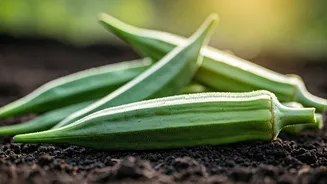
Anyone who has ever planted okra knows the headline isn’t an exaggeration; it’s a simple statement of fact. This member of the mallow family, a relative of hibiscus and cotton, thrives under the very conditions that make other plants surrender: intense
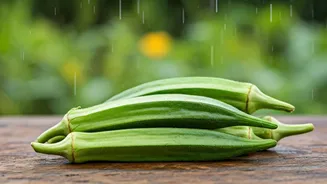
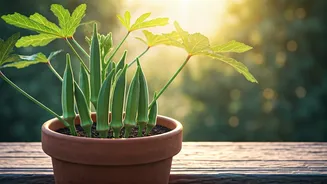
heat and humidity. While your squash plants are battling vine borers and your greens have long since wilted, a healthy okra patch becomes a model of furious productivity. The key to its generosity is its growth habit. Okra produces beautiful, hibiscus-like flowers that last only a day. Once pollinated, a tender pod forms and grows at a startling rate. To keep the plant producing, you have to harvest these pods every day or two. If you let them grow too large, they become tough and woody, and the plant, thinking its work is done, will stop making new flowers. This daily ritual of harvesting is what unlocks its seemingly endless supply. It’s a plant that rewards attention with a bounty that can quickly overwhelm a small family, making it perfect for sharing with neighbors.
Let's Talk About the Slime
Of course, you can't talk about okra without addressing the elephant in the room: the slime. That viscous texture, known scientifically as mucilage, is the number one reason people give for avoiding it. But that slime is also a superpower. It’s a soluble fiber that’s good for you, and it’s the essential thickening agent that gives a proper gumbo its signature body and richness. Without okra’s mucilage, gumbo just isn’t gumbo. But what if you want to enjoy its grassy, subtly sweet flavor without the sliminess? The secret is high heat and low moisture. Roasting okra in a hot oven until its edges are browned and crispy transforms it into a snack as addictive as french fries. A quick sear in a cast-iron skillet with a little cornmeal, grilling it on skewers until lightly charred, or flash-frying it whole neutralizes the mucilage, leaving you with a perfectly tender-crisp vegetable. The same goes for pickling; the acidic brine tames the texture, creating a crunchy, tangy condiment that’s a star on any relish tray.
A Taste of History and Resilience
Okra is more than just a productive plant; it’s a vessel of history. Its journey to the Americas is deeply intertwined with the transatlantic slave trade. Originating in Africa, where it remains a staple, okra (along with its West African name, “ki ngombo,” from which we get “gumbo”) traveled in the memories and pockets of enslaved Africans. It was planted in gardens in the Caribbean and the American South, providing a taste of home and a vital source of nutrition. In the United States, it became a cornerstone of Southern, Creole, and Cajun cuisines. It’s a foundational element in Lowcountry cooking and a testament to the ingenuity of African American culinary traditions, which took this humble pod and made it integral to some of the nation’s most iconic dishes. To eat okra is to partake in a story of survival, adaptation, and cultural resilience that stretches across continents and centuries.
Beyond the Frying Pan
While fried okra will always be a beloved classic, the vegetable’s versatility extends far beyond the deep fryer. Its simple flavor profile makes it a wonderful canvas for bold spices and ingredients. Try tossing whole pods with olive oil, smoked paprika, and garlic powder before roasting them at 425°F for 15-20 minutes. For a fresh summer side, slice it into coins and toss it raw into a salad with tomatoes, corn, and a zesty lime vinaigrette—the key is to dress it just before serving. Charred okra from the grill pairs beautifully with a yogurt-dill sauce. Quick-pickled okra, made with vinegar, dill, and garlic, is ready in just a few days and adds a briny kick to sandwiches and charcuterie boards. And if you do find yourself with an overabundance, okra freezes remarkably well. Simply slice it, spread it on a baking sheet to freeze individually, and then transfer it to a bag for future use in winter stews and, of course, a proper gumbo.