



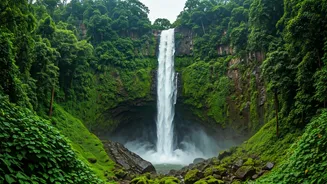

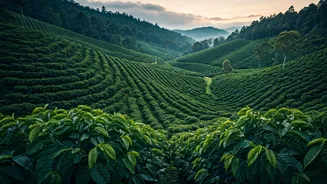


Where Water Meets Wilderness
Nestled in the southern Indian state of Karnataka, Kabini is less a town and more a sprawling, breathtaking expanse of nature. It’s named for the river that snakes through it, a life-giving artery that forms a shimmering boundary for the Nagarhole National
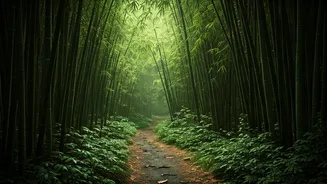
Park. For American travelers accustomed to national parks defined by dramatic canyons or towering redwoods, Kabini offers a different kind of sublime: a dense, emerald-green world teeming with life. It isn’t a place you pass through on a highway; it’s a destination you sink into. The area, part of the larger Nilgiri Biosphere Reserve, is a mosaic of moist deciduous forest, teak woodlands, and, most iconically, vast, swaying groves of bamboo.
The Symphony of the Monsoon
While beautiful year-round, Kabini’s bamboo groves achieve a state of near-mythical tranquility during the monsoon season. From June to September, the landscape undergoes a dramatic transformation. The term “rain-fed” isn’t just a descriptor; it’s the key to the entire experience. The rains wash the dust from the air, saturate the greens to an impossible vibrancy, and fill the riverbanks to the brim. The bamboo, a type of giant grass, responds with explosive growth, its hollow culms arching over jungle paths to create natural, cathedral-like tunnels. The soundscape changes completely. The buzz of the dry season is replaced by the constant, meditative drumming of rain on leaves and the earthy scent of petrichor—the smell of wet soil—that hangs thick in the air. This isn’t a gloomy, gray rain; it’s a life-affirming force that turns the forest into a living, breathing entity.
Quiet, Not Empty
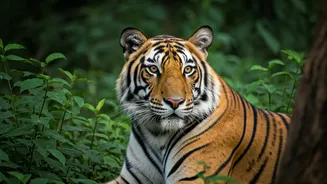
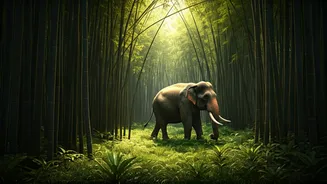
The “quiet” of Kabini is not an absence of sound but an absence of noise. The distractions of the modern world—the traffic, the notifications, the endless chatter—fade away, replaced by the rich vocabulary of the forest. A quiet boat safari on the Kabini River reveals this truth. As the motor is cut, you’re enveloped by the calls of unseen birds, the rustle of something moving in the undergrowth, and perhaps the distant trumpet of an elephant. Kabini is one of the best places in Asia to see these majestic animals in the wild, often gathering in large herds by the water's edge. This is also leopard and tiger country. While spotting a big cat requires patience and luck, their presence lends a thrilling edge to the serenity. The quiet here is potent because it’s filled with the promise of wildness, a reminder that you are a visitor in a powerful, ancient domain.
The Art of Doing Nothing
The ultimate luxury that Kabini offers is the permission to simply be. The lodges and resorts scattered along the river are designed to facilitate this. They are not hubs of scheduled activities and forced fun, but tranquil bases for observation and reflection. Days are structured around the rhythms of the wildlife, with early morning and late afternoon safaris being the main events. In between, the best thing to do is often nothing at all. Find a veranda with a view of the river, a comfortable chair overlooking the bamboo, and just watch. Watch the light change as clouds drift across the sky. Watch a cormorant dry its wings on a submerged log. Watch the rain fall. It’s an active form of stillness, a digital detox not by force but by a far more compelling alternative. In a world that constantly demands our attention, Kabini quietly invites us to give it back to ourselves.