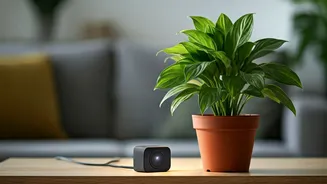





Why Your Dark Apartment Defeats Plants
Plants are solar-powered machines. They convert light into energy through photosynthesis. When we bring them indoors, we’re asking them to survive on a fraction of the light they’d get in their native habitat. A spot that seems 'bright enough' to our
eyes can be near-total darkness for a plant. Even plants labeled 'low-light tolerant' are not 'no-light' plants. They might survive for a while in a dim corner, but they won't thrive. They’ll often grow leggy, lose their vibrant color, and become susceptible to pests and disease. Without consistent, adequate light, you’re not giving your plant a home; you’re putting it in hospice.
Choose Your Low-Light Warriors
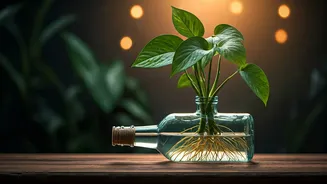
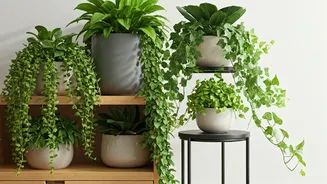
Before you buy any tech, start with the right plant. Setting yourself up for success means choosing species known for their resilience in less-than-ideal lighting. While no plant loves darkness, some are far more forgiving. Your best bets are the classics you often see in offices and shopping malls—places not known for their abundant natural light. Consider these hardy options: - **Snake Plant (Sansevieria trifasciata):** Almost indestructible, this plant has striking vertical leaves and tolerates a wide range of conditions, including low light and infrequent watering. - **ZZ Plant (Zamioculcas zamiifolia):** With its wide, glossy leaves, the ZZ plant looks almost artificial because it's so perfect and resilient. It stores water in its underground rhizomes, making it extremely drought-tolerant. - **Pothos (Epipremnum aureum):** This vining plant is famously easy to grow. While its variegation might fade in very low light, it will continue to grow and can be easily propagated. It's the perfect starter plant for a dim space.
Bring In the Artificial Sun
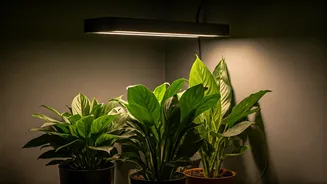
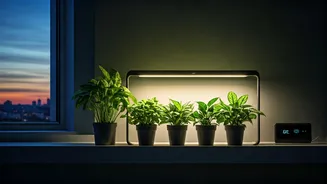
Here's the real secret: You need to supplement the light. This is where a grow light comes in, and it doesn't have to be a complicated, purple-hued science experiment. For most houseplants, a simple, full-spectrum LED grow bulb is all you need. These are designed to mimic the sun's natural light spectrum, providing the wavelengths plants need for photosynthesis. The best part? They are energy-efficient, don't produce much heat, and are often designed to screw into any standard lamp socket. You can put a grow bulb in a stylish desk lamp or a discreet clip-on fixture aimed at your plant. Suddenly, that dark corner by your bookshelf becomes a viable home for greenery.
The Smart Timer: Your Automation Hero
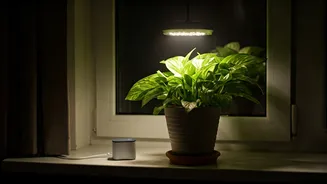
You can turn the grow light on and off manually, but life gets in the way. You forget. You go on vacation. The key to happy plants is consistency, and that's what a smart timer delivers. While a basic mechanical timer can do the job, a modern smart plug (which functions as a smart timer) offers game-changing advantages. Using a simple app on your phone, you can set a precise daily schedule—for example, on at 7 a.m., off at 7 p.m.—to ensure your plant gets a consistent 12 hours of 'daylight,' regardless of your own schedule. You can adjust the timing remotely, create different schedules for weekdays and weekends, and manage multiple plants with ease. It turns plant care from an active chore into a passive, automated system.
Putting It All Together: The 3-Step Setup
Ready to banish brown leaves for good? Here’s the simple, repeatable process. 1. **Position Your Plant and Light:** Place your low-light-tolerant plant in its desired spot. Set up your lamp (with the grow light bulb installed) nearby, positioning it so the light shines directly on the plant's foliage from about 12-24 inches away. Don't worry about aesthetics; many modern fixtures can blend seamlessly with your decor. 2. **Connect the Smart Timer:** Plug your lamp into the smart plug, and then plug the smart plug into the wall outlet. Follow the manufacturer's instructions to connect the plug to your Wi-Fi network using its companion app—this usually takes less than five minutes. 3. **Set the Schedule:** Open the app and create a new daily schedule. A good starting point for most foliage plants is 10-12 hours of light per day. Set it and forget it. Your smart timer will now automatically provide your plant with its daily dose of life-giving light, every single day.