


Beyond 'Fusion' and the Buffet Line
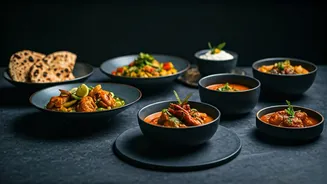
For decades, Indian food in America was often confined to two categories: the traditional, homestyle restaurant or the all-you-can-eat lunch buffet. The word 'fusion' often conjured images of clumsy, ill-conceived pairings from the 90s. But the modern
Indian reboot is something entirely different. It’s not about novelty for novelty’s sake; it’s a confident, creative, and deeply personal expression of cultural identity. This new wave is being driven by a generation of Indian-American chefs who grew up straddling two worlds. They have a reverence for the complex flavors of their heritage and a genuine love for the American classics they grew up eating with their friends. The result is a culinary conversation between the two. Instead of simply adding curry powder to a dish, these chefs are deconstructing and reconstructing classics, using Indian techniques and flavor principles to create something that feels both brand new and comfortingly familiar.
Your Favorite Comfort Foods, Reimagined
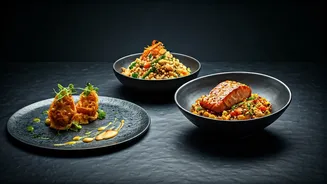
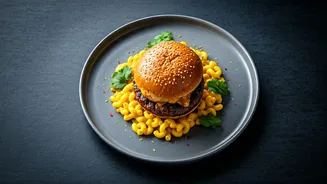
So, what does this look like on a menu? It’s the kind of food that makes you do a double-take, then immediately makes you hungry. Think of a classic sloppy joe, but instead of ground beef, it’s a savory mix of spiced mashed potatoes (the filling of a vada pav, a popular Mumbai street food), served on a soft bun. Or consider fried chicken, a Southern classic, now brined in yogurt and tandoori spices before being fried to crispy perfection and served with a cooling raita. Mac and cheese gets an upgrade with a blend of sharp cheddar and Amul cheese, spiced with turmeric, mustard seeds, and chilies. These aren't just one-off experiments. Restaurants across the country are building entire concepts around this idea. You might find chicken tikka poutine, where French fries are smothered in rich tikka masala sauce and paneer crumbles instead of cheese curds. Desserts aren't safe either, with creations like gulab jamun cheesecake or a tiramisu layered with masala chai-soaked ladyfingers. Each dish serves as a delicious testament to the idea that culinary borders are meant to be crossed, not reinforced.
The Chefs Forging a New Identity
The masterminds behind this movement are chefs like Meherwan Irani of Chai Pani in Asheville, North Carolina (which won a James Beard Award for Outstanding Restaurant), and Chintan Pandya of Dhamaka in New York City. They are part of a vanguard of culinary artists who are challenging American diners to expand their definition of Indian food. They aren’t just cooking the food of their parents; they are cooking the food of their own experience as Indian Americans. This is a crucial distinction. They are not 'watering down' Indian flavors for an American palate. If anything, they are turning up the volume. They use regional Indian spices, unapologetic levels of heat, and traditional cooking methods. The 'reboot' comes from applying this deep knowledge to a new canvas—the American comfort food canon. It’s a statement that says, “My heritage is not a static museum piece. It’s a living, breathing thing that can interact with the world around it and create something new.”
Why Now? A Shift in Cultural Confidence
This trend isn't happening in a vacuum. It reflects a broader shift in the American cultural landscape. As second- and third-generation immigrants come of age, they are asserting their multifaceted identities with newfound confidence. They no longer feel the need to choose between being 'Indian' or 'American'—they are fully both, and their creative output reflects this reality. Simultaneously, the American palate has become more adventurous than ever. Thanks to food television, travel, and the internet, diners are not only open to but actively seek out bold, new flavor combinations. The fear of the unknown has been replaced by the thrill of discovery. This confluence of culinary confidence from chefs and culinary curiosity from diners has created the perfect environment for this trend to flourish. It’s a move away from the pressure of 'authenticity' as a rigid concept and toward an understanding that culture, especially food culture, is constantly evolving.