







More Than Just Mango
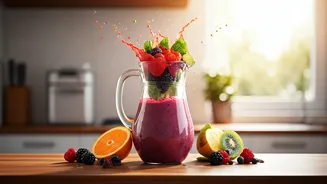
Forget the standard kale-and-banana blend. The Indian smoothie is a vibrant, localized affair that tells a story about its surroundings. While American smoothie bars might offer exotic açai, their Indian counterparts are championing homegrown heroes.
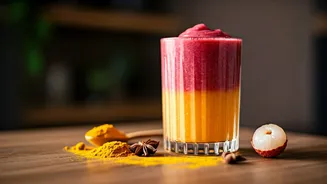
Think thick, luscious smoothies made from chikoo (sapodilla), a fruit with a malty, pear-like flavor, or the deep purple jamun (black plum), known for its sweet and tart notes. Familiar favorites like mango and banana are often blended into a lassi-like base, creating a modern twist on the traditional yogurt drink. Spices play a starring role, too. A dash of cardamom, a pinch of saffron, or even a hint of black salt can be added, transforming the drink from a simple fruit blend into something complex and uniquely South Asian. This isn't about copying a Western trend; it's about claiming it and infusing it with centuries of culinary wisdom.
The New Face of Wellness
So, who is drinking all these smoothies? The primary audience is India's burgeoning urban middle class, particularly millennials and Gen Z. As disposable incomes rise and cities like Mumbai, Bangalore, and Delhi expand, a new consumer has emerged: one who is health-conscious, digitally connected, and globally aware. For this generation, the smoothie is the perfect meal. It's quick, convenient, and Instagram-worthy, fitting seamlessly into a fast-paced urban lifestyle. It also aligns with a growing interest in wellness and clean eating that moves beyond traditional dietary norms. While older generations might stick to time-honored home-cooked meals, younger Indians are looking for on-the-go options that feel both modern and healthy. The smoothie neatly ticks both boxes, representing a shift in how health and convenience are defined.
From Juice-Wallah to Smoothie Bar
For decades, the undisputed king of fresh drinks in India was the local 'juice-wallah,' a street vendor expertly pressing sugarcane or oranges. While these beloved vendors are still a fixture, they now face competition from slick, air-conditioned smoothie chains. Homegrown brands like Drunken Monkey, which boasts hundreds of locations, have professionalized the experience. They offer a vast menu, consistent quality, and a cafe-like atmosphere where young people can hang out. These chains operate on a quick-service restaurant (QSR) model, using technology for ordering and delivery, and marketing heavily on social media. This represents a major shift in the food and beverage landscape. The smoothie's success isn't just about the drink itself; it's about the modern retail experience that comes with it, signaling a move toward more organized, branded food service.
A Blend of Tradition and Trend
Perhaps the most fascinating aspect of India's smoothie boom is how it coexists with tradition. It's not necessarily replacing classic beverages like chai, filter coffee, or lassi, but rather offering a new option in a diversifying culinary landscape. In many ways, the smoothie is a natural evolution. India has a long history of fruit-based drinks and milkshakes, from mango shakes in the summer to creamy falooda. The modern smoothie can be seen as a 21st-century reinterpretation of this legacy—a fusion of global trends and local tastes. It’s a testament to the country's unique ability to absorb outside influences without losing its own identity, creating something that is simultaneously global in its appeal and distinctly Indian in its execution.