



Setting the Scene: The Monsoon Garden Gauntlet
First, let’s define the playing field. For many Americans, a “monsoon garden” might sound exotic, but the conditions are surprisingly familiar to anyone who’s gardened through a sweltering summer in the South or Midwest. Picture this: the air is so thick
with humidity you could swim through it, the sun beats down with relentless intensity, and then, without warning, the sky opens up, dumping inches of rain in an hour. This combination of oppressive heat and torrential downpours is a nightmare for most plants. Tomatoes split, squash succumbs to powdery mildew, and delicate herbs simply melt away. It’s a botanical gauntlet where only the toughest survive. This is the environment where bhindi doesn’t just survive; it thrives.
The Defensive Powerhouse: Built for Toughness
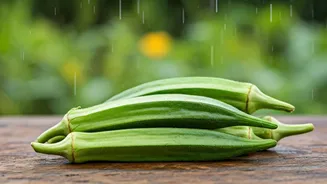
Every MVP needs a solid defense, and bhindi’s is legendary. Known to botanists as *Abelmoschus esculentus*, okra is a native of Africa that spread to South Asia, the Americas, and beyond. It was born for the heat. While other plants wilt dramatically at the first sign of a heatwave, okra stands tall, its broad, hibiscus-like leaves soaking up the sun. Its deep taproot makes it remarkably drought-tolerant for a vegetable, able to find water when the soil surface is parched. But here’s the real magic: it’s also unfazed by heavy rain. Its slick leaves shed water efficiently, and its sturdy stalk resists the fungal diseases that rot lesser plants in damp, humid conditions. Pests that decimate other crops often find okra’s slightly fuzzy pods unappetizing. In a season that knocks out half the team, bhindi is the reliable defender that never misses a game.
Putting Up Numbers: The Offensive MVP
A great defense is one thing, but an MVP has to produce. This is where bhindi truly shines. Once it starts flowering—adorned with beautiful, pale-yellow blossoms that are a dead giveaway of its relation to hibiscus—it becomes a production machine. In peak season, you can practically watch the pods grow. A single plant can yield dozens of pods over its lifespan, requiring near-daily harvesting to keep the production line moving. For a gardener battling the elements, this consistent, prolific output feels like a miracle. While your other beds might be struggling, the okra patch is a dependable source of fresh, homegrown food. It’s the star player who consistently puts points on the board, week after week, ensuring you don’t go home empty-handed.
The Clutch Player: Versatility in the Kitchen
Of course, a vegetable’s value is ultimately decided in the kitchen. In the U.S., okra often gets a bad rap, unfairly typecast as the “slimy” ingredient used primarily for thickening gumbo or deep-frying into oblivion. But in its South Asian MVP role, bhindi shows off its incredible versatility. The key is understanding how to cook it. When quickly sautéed or stir-fried at high heat, the sliminess (a substance called mucilage) never develops. Think *bhindi masala*, where sliced pods are pan-fried with onions, tomatoes, and aromatic spices until tender-crisp. Or consider *kurkuri bhindi*, where thin strips are tossed in chickpea flour and spices, then flash-fried or air-fried into impossibly crunchy, addictive snacks. It can be stuffed, roasted, or grilled. This culinary range proves that bhindi isn't a one-trick pony; it's a clutch player that can adapt and excel in any situation, silencing the critics with sheer deliciousness.