








The New Social Currency
Before wearable technology became ubiquitous, a day’s worth of physical activity was largely invisible and personal. You might feel tired or accomplished, but there was no number to prove it. Today, that number is a powerful piece of data. It’s a quiet
status symbol shared not with boasts, but with a knowing glance at a friend’s Apple Watch rings or a friendly competition on a Fitbit leaderboard. In a world of abstract professional goals and complex personal challenges, the step count offers something beautifully simple: a clear, measurable, and achievable target. Hitting your goal doesn't just mean you moved your body; it means you showed up for yourself. It’s a private victory that, paradoxically, has become a shared cultural experience.
The Myth of 10,000 Steps
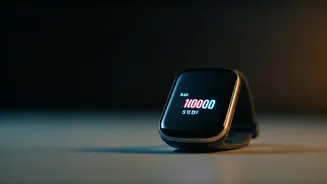
Here’s a little secret: the 10,000-steps-a-day goal isn't rooted in hard medical science. It originated as a brilliant marketing slogan for a Japanese pedometer in the 1960s. The name of the device, Manpo-kei, translates to “10,000 steps meter.” The number was catchy, round, and sounded substantial enough to be a worthy goal. Decades later, researchers have found that while more steps are generally better, significant health benefits kick in much earlier, around 7,000-8,000 steps, and the returns diminish at very high levels. But does it matter that the number is arbitrary? Not really. The goal’s power isn’t in its scientific precision but in its psychological effectiveness. It provides a concrete target that has successfully motivated millions of people to get off the couch and move more than they otherwise would have.
The Power of a Well-Played Game
The pride we feel isn’t just about health; it’s about winning. Fitness trackers are masters of gamification, turning the mundane act of walking into a compelling game. Your wrist buzzes with digital confetti when you hit your goal. You earn badges for new achievements, like your longest streak or a new daily record. You “close your rings” in a satisfying loop of visual and haptic feedback. These features are designed to tap into the brain’s reward system, delivering tiny dopamine hits that keep you coming back for more. It’s the same psychological principle that makes video games and social media so addictive, but here, it’s being leveraged for a positive outcome. You’re not just walking; you’re leveling up in the game of your own life.
Data as a Security Blanket
The obsession with steps is part of a larger cultural trend known as the “Quantified Self”—the practice of using technology to track data about your own body and life. We track sleep, heart rate, calories, and screen time. In an unpredictable world, this data provides a comforting sense of control and understanding. Seeing your activity laid out in a neat graph can make you feel like you’re an active participant in your well-being, not just a passenger. The step count is the most accessible entry point into this world. It doesn’t require special equipment beyond a phone or watch, and the activity itself is free. It’s a democratic form of self-improvement, offering a sense of order and progress one step at a time.