




From Spectator to Participant
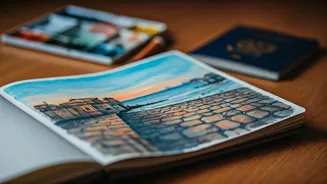
The simple act of carrying a journal and intending to write in it fundamentally changes your relationship with your surroundings. You shift from being a passive spectator—snapping a photo and moving on—to an active participant. Your brain starts subconsciously
looking for details to record. The way the late-afternoon sun hits a cobblestone street, the specific shade of blue in the tiles of a Portuguese church, the snippet of a funny conversation you overhear at a cafe—these are the things that rarely make it into a photo album but give a place its soul. Journaling forces you to slow down and observe, turning a whirlwind tour into a series of meaningful moments. It's the difference between seeing a place and truly feeling it.
The Memory-Keeper’s Secret
Our brains are notoriously fickle. The vivid details of a trip start to fade almost as soon as the plane wheels touch down back home. While photos can jog our memory, they often only capture a single, posed instant. Writing is different. The process of putting pen to paper (or fingers to keyboard) engages a different part of your brain, helping to solidify memories more deeply. When you describe the taste of a perfect Florentine gelato or the scent of rain on hot asphalt in New Orleans, you’re not just recording a fact; you’re cementing a sensory experience. Years later, reading that entry will transport you back in a way a silent, static image simply cannot. It becomes a personal time capsule, preserving not just what you saw, but who you were in that moment.
More Than Just a Logbook
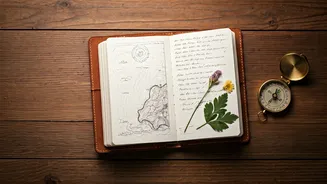
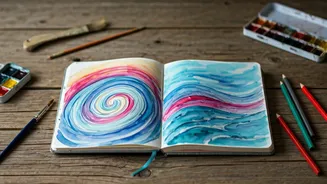
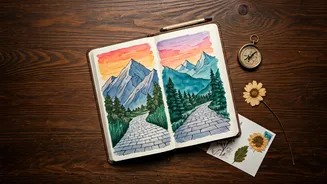
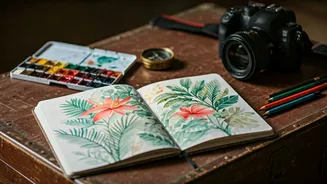
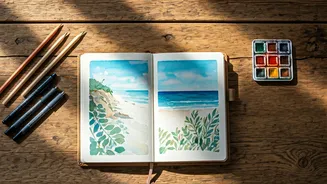
A common hurdle for new journalers is the feeling that they have nothing interesting to say. “Today, I went to the museum.” End of entry. But a travel journal isn’t a legal deposition; it's a creative space. Let go of the need to create a perfect, chronological log. Instead, think of it as a scrapbook for your mind. Try some of these ideas: * **Record Sensory Details:** What did you hear, smell, and taste? Was the market loud? Did the sea air feel damp or dry? * **Jot Down Snippets:** Write down a line from a song you heard, a funny sign you saw, or a quote from your tour guide. * **Tape Things In:** A ticket stub, a coaster from a pub, a beautiful postcard, a pressed flower—these physical objects add texture and life to your pages. * **Sketch (Badly):** You don't have to be an artist. A quick, clumsy sketch of your coffee cup or the view from your window can capture a mood better than words. * **Write About Feelings:** Were you tired, exhilarated, lonely, or inspired? Your emotional journey is just as important as your physical one.
Finding Your Perfect Medium
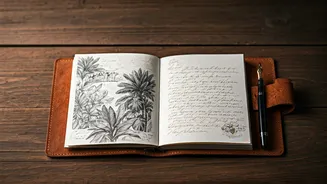
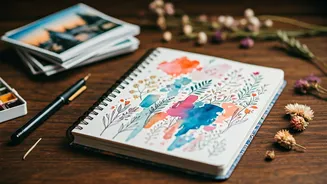
The “perfect” travel journal is the one you’ll actually use. Don't let the idea of a pristine, leather-bound notebook intimidate you. For some, a simple, cheap spiral notebook is less pressure and more practical. It can get beat up in your backpack without causing stress. For others, a beautiful book inspires them to write beautifully. And for the digitally inclined, a notes app or a dedicated journaling app on your phone works just as well. There are no rules. The goal is to capture your experience, not to create a museum-quality artifact. Choose the tool that feels most comfortable and accessible for you, whether it’s a fifty-cent notepad or a $50 Moleskine.
Your Trip, Your Narrative
Ultimately, this is what it comes down to: a travel journal allows you to write your own story. On social media, we often filter our experiences to present a certain image. We post the triumphant summit photo, not the grueling, breathless hike that preceded it. We show the smiling selfie, not the moment of quiet introspection we had sitting on a park bench alone. Your journal is for you. It can be messy, honest, and gloriously un-curated. It’s a private space to process your adventures, complain about a bad meal, celebrate a small victory, and make sense of the world and your place in it. It ensures that when you look back on a trip, you’re not just seeing where you went, but feeling who you became.