




The Tyranny of 10,000 Steps
Let’s start with a hard truth: the 10,000-steps-a-day goal was never rooted in science. It originated in the 1960s as a marketing slogan for a Japanese pedometer. It was catchy, simple, and gave people a clear target. The problem is, it’s a blunt instrument
in a world that now has scalpels. A step is not just a step. A thousand steps sprinting up a hill is vastly different from a thousand steps shuffling to the fridge. The step count ignores intensity, elevation, heart rate, and form. It also completely discounts non-stepping activities like swimming, cycling, weightlifting, and yoga, leaving many people feeling like their hard work didn't 'count.' It measures quantity but tells you almost nothing about quality.
From Quantity to Quality
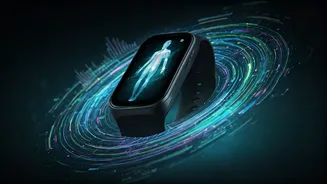
This is where artificial intelligence comes in. The latest wearables from companies like Whoop, Oura, and even in advanced features on Apple Watches and Garmins, are powered by sophisticated algorithms. They use a suite of sensors—accelerometers, gyroscopes, optical heart rate sensors, and skin temperature sensors—to build a comprehensive picture of your activity. Instead of just counting discrete movements, the AI is trained to recognize patterns. It’s the difference between a security guard who only counts how many people enter a building and one who analyzes who is coming and going, what they’re doing, and how their behavior impacts the building’s overall flow. The AI is looking at the entire story of your day, not just the final number.
How AI Sees Your Movement
So, what does this AI actually 'see'? It contextualizes your data. It knows the difference between the frantic, high-impact movements of a HIIT class and the slow, controlled motions of a physical therapy exercise. By analyzing the speed, force, and rhythm of your movements in combination with your heart rate, it can assign an intensity or 'strain' score to your activities. This allows it to understand that a 20-minute, high-intensity run might be more beneficial for your cardiovascular fitness than a 60-minute leisurely stroll, even if the stroll racked up more 'steps.' It learns your personal baseline, identifying when you’re pushing harder than usual or when your movements seem sluggish or less efficient, which could be an early sign of fatigue or injury.
Recognizing All Activity
One of the biggest wins for the AI-driven approach is its ability to credit all forms of effort. Step counters are notoriously bad at logging stationary workouts. A grueling hour of lifting weights or holding yoga poses might register as minimal activity, which is deeply demotivating. Modern AI, however, can detect sustained elevated heart rate and micro-movements consistent with exertion. It can automatically identify dozens of specific activities, from rowing and cycling to dancing and pickleball, and log them accurately. This creates a far more holistic and encouraging view of your fitness. It validates the effort you put in, regardless of whether it involved taking a single step, making your fitness journey feel more complete and accurately represented.
The Coach on Your Wrist
Ultimately, the goal of this technology isn't just to track you better; it's to guide you better. A simple step count can only tell you to 'walk more.' An AI that understands your patterns can offer truly personalized advice. It can see you’ve done three high-intensity workouts in a row and, by correlating it with your sleep and recovery data, suggest today should be a low-impact day. It might notice you’ve been sedentary for two hours and nudge you to do a five-minute stretch. By analyzing your long-term 'movement health,' some platforms can even assess your balance, walking stability, and posture, offering targeted exercises to improve functional fitness and reduce injury risk. It’s a shift from a simple data log to an adaptive, personal trainer.