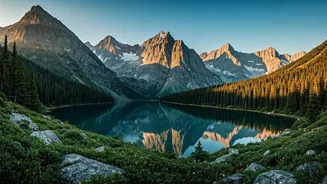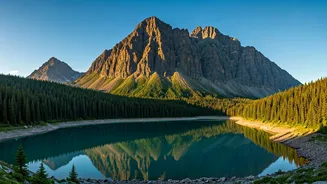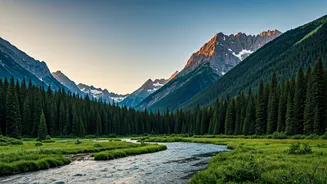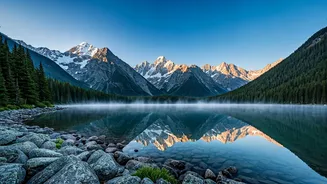




First, What Is a Hill Station?
Let’s get the definition straight. The term was coined by the British in colonial India. During the 19th century, officials, soldiers, and their families found the scorching summer heat of cities like Delhi and Calcutta unbearable. Their solution was to
develop high-altitude towns with cooler, more temperate climates where they could govern from and vacation in during the hottest months. Think of places like Shimla, Darjeeling, and Ooty. These weren't just villages with nice views; they were purpose-built seasonal capitals and resorts, complete with Victorian architecture, social clubs, and botanical gardens designed to replicate a slice of England in the Himalayan foothills. They were, in essence, engineered escapes, designed specifically to beat the heat.
America’s Gilded Age Answer
While the United States lacked a formal colonial empire to escape from, its own Gilded Age elite faced the same problem. Before the advent of air conditioning, American cities in the summer were sweltering, disease-ridden places. The wealthy families of New York, Philadelphia, and Boston did exactly what their British counterparts did: they headed for the hills. The Catskills and Adirondacks in New York, the Berkshires in Massachusetts, and later, the Poconos in Pennsylvania, became the American equivalent of hill stations. Grand hotels and sprawling family “cottages” (which were actually mansions) sprung up. Entire social seasons were transplanted from Fifth Avenue to mountain towns like Lenox, Massachusetts, or Saratoga Springs, New York, which combined mountain air with the leisure of horse racing.
The Southern Appalachian Sanctuary
This tradition wasn't confined to the Northeast. In the South, where summer’s humidity is a force of nature, the Blue Ridge and Great Smoky Mountains have long served as a vital refuge. Asheville, North Carolina, is arguably America’s most perfect modern hill station. Established in the late 19th century as a health resort for its clean, cool mountain air, it attracted titans of industry like George Vanderbilt, who built his monumental Biltmore Estate there. Today, Asheville thrives on that same identity. It's a city defined by its elevation, a haven for artists, chefs, and anyone looking to trade oppressive heat for a brewery patio with a mountain view. It offers the same promise it did 150 years ago: a refreshing break from the lowlands.
Rocky Mountain Refuges
Out West, the scale is grander, but the principle is the same. The Rocky Mountains are dotted with towns that began as mining outposts and evolved into high-altitude playgrounds. Towns like Aspen and Telluride in Colorado, or Park City in Utah, may be more famous for their winter ski slopes, but they are increasingly popular as summer destinations. As temperatures in places like Phoenix and Dallas soar past 100 degrees, the appeal of 75-degree days, low humidity, and endless hiking trails becomes undeniable. These towns offer a different flavor of escape—more rugged and adventure-focused than their eastern counterparts, but serving the identical purpose: using altitude to provide a seasonal sanctuary.
The Modern Appeal of an Old Idea
The 21st century has only amplified the need for these escapes. With climate change leading to hotter, longer summers, and remote work allowing for greater flexibility, the pull of the mountains is stronger than ever. The idea of a 'hill station' is no longer just for the wealthy elite or colonial administrators. It’s for anyone with a laptop and a desire for a change of scenery, or a family looking for a weekend where the kids can run around without overheating. The name might be a historical curiosity, but the function is more relevant than ever. It's a simple, elegant solution to an age-old problem.