



The Great Migration, Tanzania & Kenya
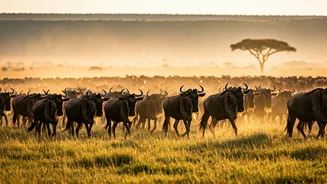
This isn't just a journey; it's the largest overland migration on Earth. Every year, over two million wildebeest, zebras, and gazelles chase the rains across the Serengeti plains in Tanzania and into the Maasai Mara in Kenya. The sheer scale is almost
impossible to comprehend. The air thrums with the sound of hooves and the low grunts of the herd, a river of life flowing across the savanna. The dramatic highlight for many is the Mara River crossing, where herds plunge into crocodile-infested waters in a desperate, chaotic bid to reach the other side. To see it responsibly, book with a certified eco-lodge or tour operator that adheres to strict park rules, never pressures drivers to crowd animals, and contributes to local conservation and community projects. The best viewing times depend on where you are, but the river crossings typically occur between July and October.
The Gentle Giants of Baja California, Mexico
Imagine a 40-ton gray whale and her calf approaching your small boat—not out of aggression, but curiosity. This is the magic of the lagoons of Baja California, particularly San Ignacio Lagoon, a UNESCO World Heritage site. From January through April, these waters become the world's most important nursery for gray whales. The mothers, known as "friendlies," often bring their calves right up to the boats, allowing for a breathtakingly intimate encounter. The practice is strictly regulated to protect the whales, with a limited number of licensed boats, or *pangas*, allowed in the viewing areas. Operators here understand the whales are the hosts. When you choose a tour, you're not just a tourist; you're participating in a conservation success story that turned a hunting ground into a sanctuary.
The Living Laboratory of the Galápagos, Ecuador
Nowhere on Earth does wildlife feel so completely indifferent to human presence. The Galápagos Islands, the crucible of Darwin's theory of evolution, are a world apart. Here, you can snorkel with playful sea lions, step around nesting blue-footed boobies, and watch giant tortoises amble by as if you're just another piece of the volcanic landscape. The animals have no natural predators, resulting in a unique fearlessness that allows for unparalleled observation. Tourism is the engine of the islands' economy and its conservation, but it's a delicate balance. Travel is tightly controlled by the Galápagos National Park. Choose your vessel wisely; smaller expedition ships often provide a more in-depth, educational experience with top-tier naturalist guides who ensure every interaction is respectful of the fragile ecosystem.
The Butterfly Blizzard in Michoacán, Mexico
Each fall, hundreds of millions of monarch butterflies travel up to 3,000 miles from the U.S. and Canada to a few specific groves of oyamel fir trees in the mountains of central Mexico. When they arrive, they cluster on the trees in such massive numbers that branches bend under their weight. When the sun warms the forest, they take flight in a swirling, silent blizzard of orange and black. Visiting the Monarch Butterfly Biosphere Reserve (another UNESCO site) is otherworldly. Local communities, who once relied on logging, now act as guardians of these forests, guiding visitors on horseback or foot. To visit, you must be quiet and stay on the designated paths. The best time is late January to mid-March, when the butterflies are most active before beginning their long journey north again.