






More Than Just a Game
For decades, animation and video games were seen as separate, niche corners of the entertainment world. Today, they represent a colossal, converging market. The global video game industry is worth hundreds of billions of dollars—eclipsing the film and music
industries combined. Simultaneously, animation has broken free from Saturday morning cartoons, becoming essential for everything from blockbuster visual effects (VFX) to corporate marketing and medical simulations. This explosive growth has created a voracious appetite for talent. The U.S. Bureau of Labor Statistics projects that employment for special effects artists and animators will grow faster than the average for all occupations over the next decade. This isn't a minor uptick; it's a fundamental shift recognizing that the line between technologist and artist has blurred into a single, highly valuable role.
The Game Engine Revolution
The single biggest driver behind this job boom is the rise of real-time game engines, particularly Epic Games' Unreal Engine and Unity. Originally built to create interactive video games, these powerful software platforms are now being used everywhere. In Hollywood, directors use them for 'virtual production,' creating digital sets on massive LED screens that actors can perform in, as seen in shows like *The Mandalorian*. Architects use them to create photorealistic, interactive walkthroughs of buildings before a single brick is laid. Automakers use them to design and test new vehicles in virtual environments. Because these tools require the same skills—3D modeling, lighting, texturing, and systems logic—a talented game artist can now find work in a dozen different industries. This cross-industry demand is what's truly causing the job market to 'skyrocket.'
The New Creative Career Paths
The modern job titles in this space go far beyond 'animator' or 'game designer.' The demand is for specialists who can bridge the gap between art and code. Technical Artists, for example, are crucial members of any team, responsible for creating efficient pipelines and custom tools that allow other artists to work effectively. VFX Artists create the dazzling explosions and magical effects that bring digital worlds to life. UI/UX Designers focus on creating intuitive and engaging menus and interfaces, a critical component of any interactive experience. Environment Artists build the stunning worlds we explore, while Character Artists sculpt the memorable heroes and villains. Other emerging roles include Virtual Production Specialists, Simulation Developers, and AR/VR Experience Creators, all of which draw from the same foundational skill set.
Skills That Build Worlds (and Careers)
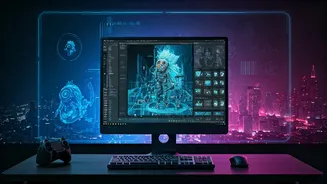
So what does it take to land one of these roles? Proficiency in industry-standard software is non-negotiable. For 3D creation, that means tools like Blender, Maya, and ZBrush. For real-time work, a deep understanding of Unreal Engine or Unity is paramount. However, technical skill alone isn't enough. Studios look for artists with a strong grasp of traditional art principles: color theory, composition, anatomy, and storytelling. Soft skills are equally critical. The collaborative nature of modern projects requires excellent communication, a willingness to receive and implement feedback, and robust problem-solving abilities. In a field where technology evolves constantly, the most successful professionals are those who are perpetual learners, always eager to master the next tool or technique.
How to Break Into the Industry
Unlike many traditional professions, a four-year degree is not always a prerequisite. For creative-tech roles, a killer portfolio is your ultimate resume. This curated collection of your best work demonstrates your skills far more effectively than a transcript. Aspiring artists should focus on creating high-quality personal projects that showcase their specific interests, whether it's character modeling, environment design, or special effects. Online platforms like ArtStation and Behance have become the de facto hubs for artists to display their work and get noticed by recruiters. Participating in 'game jams'—events where developers create a game from scratch in a short period—is another excellent way to build experience, network, and add a project to your portfolio. Specialized online schools and tutorials offer accessible pathways to learn the necessary software without the commitment of a full degree program.