





The Soul of a South Indian Staple
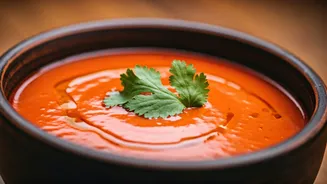
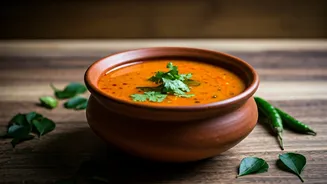
First, let's talk about rasam. If you’re new to it, imagine the most soulful soup you’ve ever had, then make it thinner, tangier, and infinitely more complex. A staple across South India, rasam is a water-based broth built on a foundation of tamarind’s
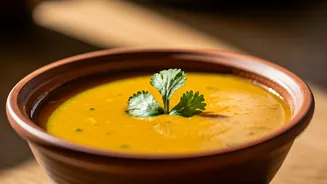
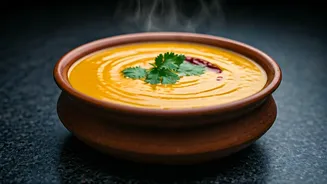
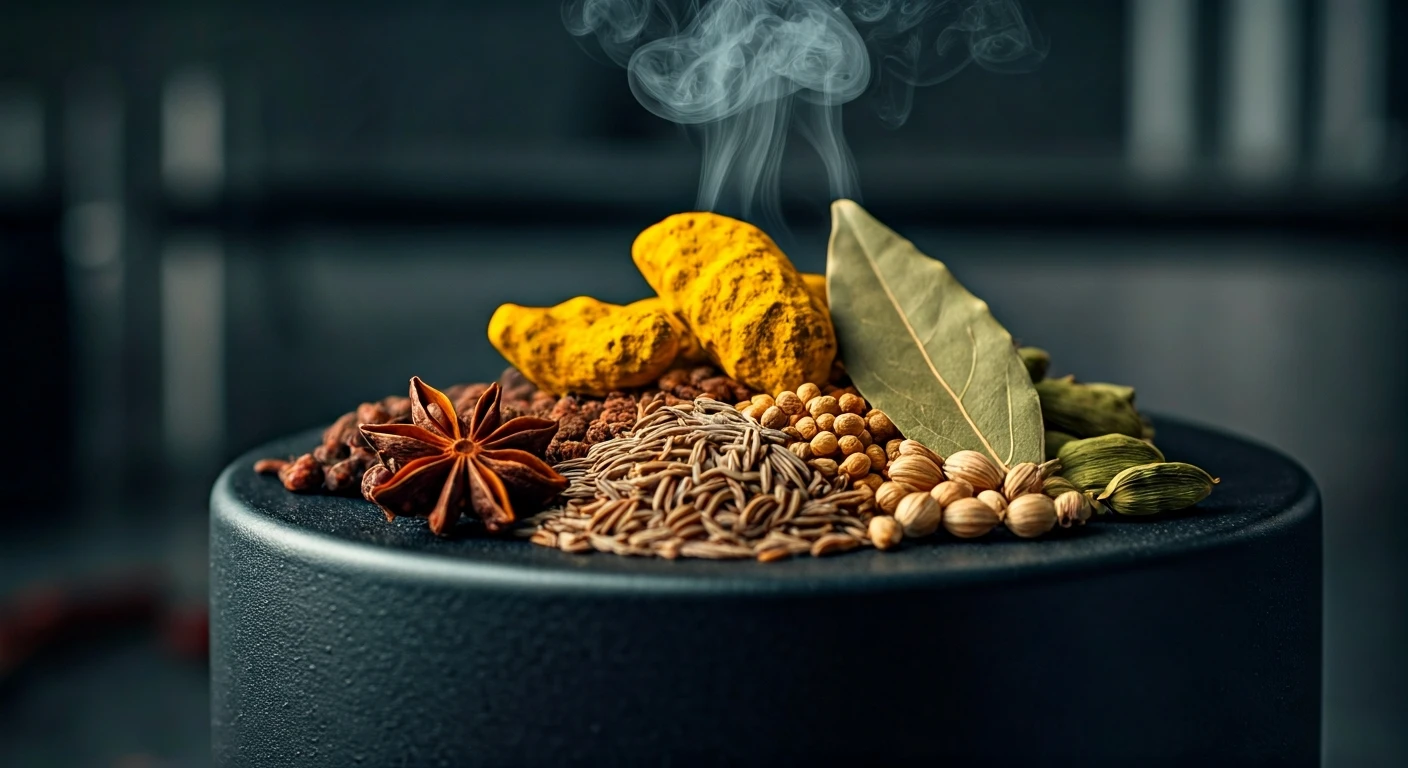
fruity sourness and the umami of ripe tomatoes. To this acidic base, a special blend of spices called rasam powder—typically containing coriander, cumin, black pepper, and red chiles—is added, along with a whisper of turmeric and a pop of asafoetida. Often fortified with cooked lentils (dal), it’s a peppery, piquant, and deeply restorative concoction that can be sipped like a tea, mixed with rice, or served as a digestive course in a sprawling meal. It’s the reliable, everyday hero of the South Indian table.
A Seasonal Superstar Makes Its Entrance
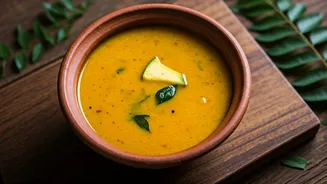
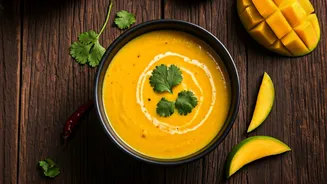
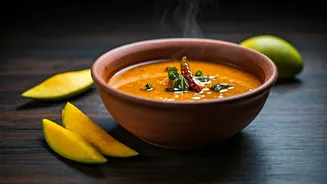
But then, summer arrives. And with it comes the mango. Not the sweet, fluorescent orange mangoes destined for desserts, but their younger, greener, and far more audacious cousins. These raw mangoes are firm, bracingly tart, and packed with an acidic power that can rival tamarind. This is where the drama begins. When raw mango enters the kitchen, it doesn’t just join the cast; it rewrites the script. In Mango Rasam, the raw mango often replaces the tamarind entirely, becoming the primary souring agent. Its arrival is a culinary event, a signal that the seasons have turned. It’s a limited-time offering from nature, and cooks waste no time putting it center stage.
The Science of Sweet, Sour, and Spice
This is where the “food science” comes in, though it’s a science perfected over generations, not in a lab. Traditional rasam gets its tang from the tartaric acid in tamarind. Raw mango, however, delivers a one-two punch of citric and malic acid, which the palate perceives as a brighter, sharper, and more fragrant sourness. This isn’t just a simple ingredient swap; it’s a chemical reaction you can taste. To balance this intense acidity, a touch of jaggery (unrefined cane sugar) is often added. Now you have a molecular tug-of-war happening in the pot: the sharp acids from the mango versus the complex sugars from the jaggery. Meanwhile, the pungent piperine from black pepper and the earthy heat from cumin and chiles are all vying for attention. The genius of the dish is that it doesn’t try to mute any of these flavors. Instead, it masterfully corrals them into a tense but delicious harmony. It’s a perfectly calibrated explosion.
A Full-Blown Flavor Performance
Eating mango rasam isn’t a passive experience. The first spoonful is a jolt to the senses. The bright, almost floral sourness of the mango hits first, waking up your entire mouth. It’s immediately followed by a wave of peppery heat that warms your throat, and then a subtle, mellow sweetness from the jaggery that rounds out the edges and keeps you coming back for more. The cooked mango pieces, now soft and infused with spice, dissolve on your tongue, releasing another burst of concentrated flavor. It’s a culinary rollercoaster. It cleanses the palate, stimulates the appetite, and makes you feel profoundly alive. This is the drama: it’s a loud, complicated, and unapologetic dish that demands your full attention and rewards it completely. It’s the opposite of a boring Tuesday night soup; it’s a standing-ovation-worthy finale.