





Beyond a Passing Shower
Let's be honest: when most Americans hear “monsoon,” they think of a faraway weather phenomenon. But the North American monsoon brings dramatic, drenching thunderstorms to the Southwest each summer. And across the country, from Florida's afternoon deluges
to the Midwest's sudden squalls, intense rainfall feels like the new normal. These aren't gentle drizzles. They are furniture-soaking, grill-rusting, cushion-mildewing events that can wreak havoc on your outdoor oasis. What used to be a minor inconvenience can now cause hundreds or even thousands of dollars in damage over a season. The sun-faded fabric and slightly worn wood of yesteryear have been replaced by the more immediate threats of waterlogging, rust, and mold.
The Ultimate Defensive Play
This is where waterproof covers make their MVP case. Think of them not as an accessory, but as an insurance policy for your outdoor investments. That $1,500 patio set, that $800 state-of-the-art grill, that cozy outdoor fire pit—they are all vulnerable. A high-quality cover, often costing less than 5% of the item it protects, is one of the smartest, most cost-effective defensive plays a homeowner can make. It's the simple barrier that stands between your valuable equipment and the elements. It’s the difference between enjoying your outdoor space year after year and grudgingly shopping for replacements every few springs because last summer’s storms took their toll. They save you money, they save you time on cleaning and maintenance, and most importantly, they save you the stress of the frantic “run-outside-and-grab-everything” dash.
Your Grill and Smoker
Your grill is ground zero for rain-related damage. Water seeping into the cookbox can mix with old ash and grease to create a corrosive sludge that eats away at metal. It can rust out your cast iron grates, damage delicate electronic igniters, and clog gas burners. For pellet smokers, moisture is the enemy, turning your expensive wood pellets into a useless, swollen paste that can jam the auger. A fitted, waterproof grill cover is non-negotiable. It keeps the internal components dry, protects the exterior finish from water spots and rust, and ensures your grill is ready to fire up the moment the sun comes back out, not after an hour of cleanup and troubleshooting.
Patio and Deck Furniture
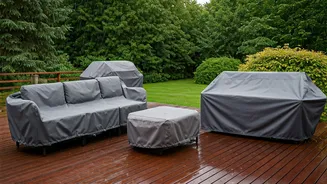
This is the big one. Outdoor furniture is designed to be durable, but it’s not invincible. Rain is particularly brutal. It soaks into cushions, creating a perfect breeding ground for musty-smelling mold and mildew. It can cause wooden furniture to warp, swell, and rot. For metal furniture, it accelerates rusting, especially at joints and welds, compromising both the look and the structural integrity of your chairs and tables. Covering your patio set not only keeps it dry but also dramatically reduces the amount of cleaning you’ll have to do. Instead of spending hours scrubbing away pollen, dirt, and bird droppings that have been cemented on by the rain, you can simply pull off the covers and enjoy your clean, dry furniture.
Fire Pits and Heaters
Often overlooked, the fire pit is another key player that needs protection. For gas-powered fire pits, moisture can damage the ignition system and burners, leading to costly repairs. Rain can leave unsightly water stains and streaks on the pit's exterior. For wood-burning pits, a cover prevents the basin from turning into a soupy mess of ash and water that you have to bail out before your next fire. The same logic applies to freestanding patio heaters, whose sensitive pilot light assemblies and metal exteriors are highly susceptible to rust and water damage when left exposed.
How to Choose a Winning Cover
Not all covers are created equal. To get true MVP performance, look for a few key features. First, material matters. Seek out heavy-duty polyester fabrics (like 600D) with a waterproof backing, which offer a great balance of durability and flexibility. Second, look for air vents. This seems counterintuitive, but vents allow moisture and condensation to escape from under the cover, preventing mildew from forming in humid conditions. Finally, insist on a secure fit. Simple elastic hems aren't enough for a windy storm. The best covers have buckle straps that click around furniture legs and a drawstring to cinch the bottom tight, ensuring your cover stays on your furniture and not in your neighbor’s yard.