





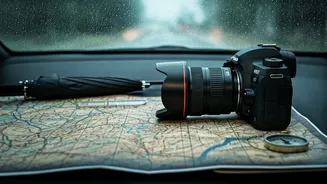

The Siren Call of the Stormy Video
We've all been there. You're on a road trip, and the weather turns. The landscape, once familiar, becomes dramatic and new under the veil of a downpour. The shimmering asphalt, the blurred lights, the rhythmic thump of the wipers—it feels like a scene
from a movie. In the age of social media, our first instinct is often to document. That fleeting urge to capture the perfect, moody clip for Instagram or TikTok is a powerful one. It’s a modern reflex that feels harmless. But on the road, a distraction that lasts only a few seconds is all it takes to turn a scenic drive into a tragic one. The aesthetic of a rainy day is undeniable, but its beauty masks a set of significant dangers that demand your full, undivided attention. Prioritizing the shot over your awareness of the road is a gamble with the highest possible stakes.
The Hidden Physics of a Wet Road
To understand why rainy driving is so hazardous, you have to appreciate the physics at play. Rain mixes with oil and dust on the road surface, creating a slick film that dramatically reduces the grip of your tires. According to the U.S. Department of Transportation, nearly half of all weather-related crashes happen during rainfall. The most notorious danger is hydroplaning. This occurs when a layer of water builds up between your tires and the road surface, causing a loss of traction and steering control. It can happen at speeds as low as 35 mph if the water is deep enough. It feels like the car is floating or suddenly accelerating, and the driver's instinct to slam on the brakes or jerk the wheel is precisely the wrong one. Reduced visibility is another major factor. Heavy rain can overwhelm your wipers and cut your sight distance to mere feet, making it nearly impossible to react to sudden stops or obstacles ahead.
Your Pre-Drive Safety Ritual
Safe rainy travel begins before you even turn the key. A few minutes of preparation can make all the difference when conditions worsen. First, check your tires. They are your only connection to the road. Ensure they are properly inflated and have adequate tread depth. You can use a penny to check: if you can see all of Abraham Lincoln's head when you insert the coin into the tread, it's time for new tires. Next, inspect your windshield wipers. If they are cracked, brittle, or leave streaks, replace them immediately. A clear field of vision is non-negotiable. Finally, test your headlights, taillights, and turn signals. In low-visibility conditions, being seen is just as important as being able to see. Using your headlights during the day in the rain is a legal requirement in many states for this very reason.
On the Road: The Unwritten Rules
Once you're driving, your strategy must adapt to the conditions. The single most important adjustment is to slow down. Posted speed limits are for ideal, dry conditions. Reducing your speed gives you more time to react and decreases the likelihood of hydroplaning. Second, double your following distance. A good rule of thumb is the 'three-second rule' in dry weather; in the rain, increase that to five or six seconds. This buffer gives you the space needed to brake safely without skidding. Be gentle and deliberate with all your inputs—steering, accelerating, and braking. Abrupt maneuvers can easily upset the car's balance on a slick surface. And crucially, disable cruise control. You need to be in complete control of your speed and able to reduce it instantly if you hit a patch of standing water. And, of course, that phone with the tempting camera? Put it away. Out of sight, out of reach.
What to Do When You Hydroplane
Even the most careful driver can experience hydroplaning. Panicking is the enemy. If you feel the car start to skid or float, follow these steps. First, do not slam on the brakes. This will lock the wheels and worsen the skid. Second, do not jerk the steering wheel. Instead, ease your foot off the accelerator smoothly. Gently turn the steering wheel in the direction the rear of the car is sliding. If your back end is sliding to the right, steer to the right. This is often counterintuitive but is key to regaining control. Keep your eyes focused on where you want the car to go, not where it is currently heading. As the tires find traction again, you will feel control return. Only then should you apply the brakes or accelerate if necessary.