


A Town Above The Clouds
For many American travelers dreaming of the Indian Himalayas, the reality can be a shock. Popular hill stations like Shimla and Mussoorie, while beautiful, often buckle under the weight of their own fame, especially during peak season. The dream of quiet
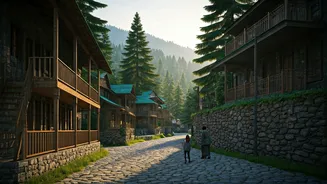
contemplation can be replaced by the reality of traffic jams and packed promenades. But just a few steep, winding miles above Mussoorie’s main market exists its quieter, older sibling: Landour. It’s not a suburb; it’s an entirely different state of mind. Established by the British as a military cantonment in the 1820s, Landour retains its historical structure and, more importantly, its tranquility. Because much of it remains under the control of the cantonment board, unchecked commercial development has been kept at bay. There are no malls, no multiplexes, and no major hotel chains. This isn't an oversight; it's the entire point.
The Gentle Art of Walking
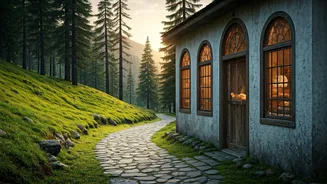
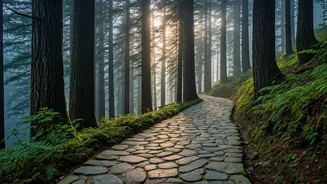
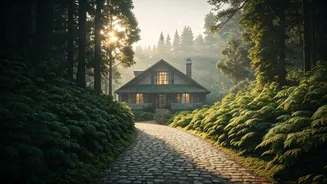
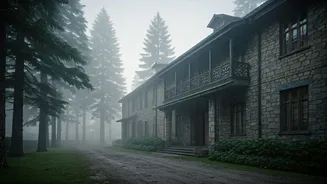
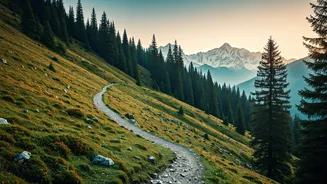
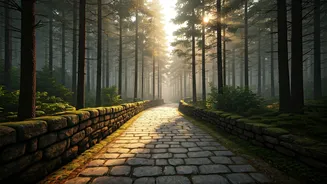
So, what do you *do* in a town that prides itself on having nothing to do? You walk. Landour is a place built for ambling, for rediscovering the simple rhythm of putting one foot in front of the other. The main artery for this activity is the “chakkar,” a roughly 2-mile circular path that winds around the ridge. On one side, you have colonial-era bungalows draped in ivy, old stone churches, and dense forests of pine, cedar, and oak. On the other, the view opens up to a breathtaking panorama of the snow-capped Himalayan peaks on a clear day. The walk takes you past Kellogg’s Memorial Church with its distinct gothic architecture and St. Paul’s Church, where the parents of famed writer Rudyard Kipling were married. There are no hawkers, no loud music—just the crunch of leaves underfoot, the occasional chime from a distant temple, and the crisp mountain air.
Literary Ghosts and Local Legends
Landour’s quiet charm has long made it a haven for writers, artists, and thinkers. Its most famous resident is Ruskin Bond, one of India’s most beloved authors, whose stories are deeply intertwined with the landscape of the Himalayan foothills. While visitors are asked to respect his privacy, his presence has turned the town into a site of literary pilgrimage. You can almost feel the pages of his books come to life as you wander the misty lanes he describes so vividly. This literary heritage adds a layer of magic to the town. It feels like a place where stories are born, where the quiet atmosphere gives creativity the space it needs to breathe. You don't have to be a writer to appreciate it; you just have to enjoy being in a place that values reflection over recreation.
Pancakes, Tea, and Simple Pleasures
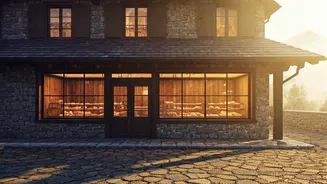
The heart of Landour’s social life isn’t a fancy club but a tiny cluster of shops known as Char Dukan (literally, “Four Shops”). For over a century, this spot has served as the main hub. Here, a few rustic cafes serve up simple, delicious fare to walkers and locals. Grabbing a plate of cinnamon-dusted pancakes or a comforting bowl of Maggi noodles at one of the sunny tables is a quintessential Landour experience. Nearby, Landour Bakehouse, a recreated 19th-century kitchen, offers fresh-baked goods and a cozy place to read. This is the extent of the town’s commercial activity, and it’s perfect. It’s sustenance for the soul and the body, a reward after a long walk, and a reminder that the best travel memories often come from the simplest, most authentic moments.