






The Ocean's Silent Menace
Before it becomes a car part, it’s a killer. Abandoned, lost, or discarded fishing gear—often called “ghost gear”—is one of the most insidious forms of ocean pollution. These massive nets, some as large as a football field, don't just biodegrade. They
drift for decades, entangling whales, dolphins, sea turtles, and seals in a phenomenon known as “ghost fishing.” They also snag on coral reefs, destroying fragile marine habitats. According to environmental groups, ghost gear makes up an estimated 10% of all plastic waste in our oceans, a staggering figure that translates to hundreds of thousands of tons. Unlike plastic bottles or bags, which get a lot of public attention, these nets are a tougher industrial-scale problem. They're bulky, made of highly durable plastics like nylon, and often found in remote locations, making collection and recycling a massive challenge.
From Tangled Mess to Precision Part
So, how do you turn a tangled, salty, sun-beaten fishing net into a piece of a high-tech vehicle? The process is a fascinating blend of brute force and sophisticated chemistry. First, the nets are collected, often through partnerships with local fishing communities in places like the Indian Ocean and the Pacific. This provides a new source of income for those communities while cleaning up their coastlines. Once collected, the real work begins. The nets are washed, sorted, and shredded into small pieces. The critical step is transforming this raw material back into a high-quality, engineering-grade plastic. Material science companies like Envalior (formerly DSM) have perfected a process to depolymerize the nylon, purify it, and then re-formulate it into a plastic resin called polyamide 6, or nylon 6. This resulting material is not a weaker, second-rate plastic; it's a high-performance thermoplastic that is just as strong, durable, and heat-resistant as virgin, petroleum-based nylon. This makes it ideal for the demanding environment of a modern car.
Automakers Get On Board
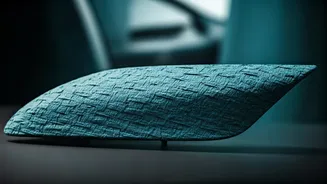
This innovation isn't just a science experiment; it’s already on the road. Ford, for example, is using this recycled nylon to manufacture wiring harness clips for its popular Bronco Sport SUV. These small, unseen clips are vital for organizing the vehicle's complex electronics, and they need to be tough enough to withstand vibrations and high temperatures in the engine bay. By using recycled ocean plastic, Ford created a part that is not only more sustainable but also 10% cheaper to produce than its petroleum-based equivalent, all without compromising quality. BMW is taking a similar path. The German automaker has announced plans to use trim components made from recycled fishing nets and ropes in its next generation of electric vehicles, starting in 2025. The company projects that this will lower the carbon footprint of these specific parts by about 25% compared to using conventional plastics. These aren't just one-off projects; they represent a strategic shift in how car companies think about their supply chains.
More Than Just Good PR
While using ocean plastic makes for a great sustainability headline, the business logic runs much deeper. For automakers, it’s a step toward creating a “circular economy,” where waste products are repurposed into valuable new materials. This reduces their reliance on volatile petroleum markets and creates more resilient, diversified supply chains. It also helps them meet increasingly stringent environmental regulations and appeal to a new generation of consumers who prioritize sustainability. For every ton of raw material produced from old fishing nets, the carbon footprint is significantly lower than producing a ton of virgin nylon. It's a rare win-win-win: the environment gets cleaner, coastal economies get a boost, and car companies get a high-quality, cost-effective, and greener material. This isn't about saving the world with a single car part, but about proving that industrial manufacturing can be a force for positive environmental change.