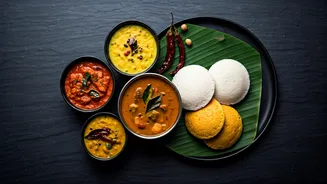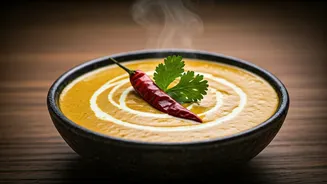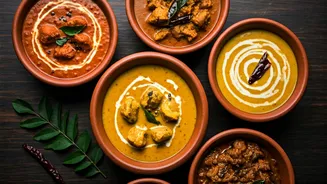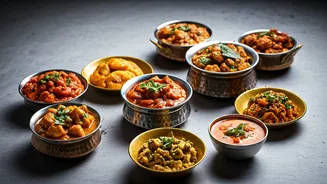



Moving Past the Monolith
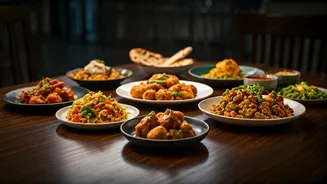
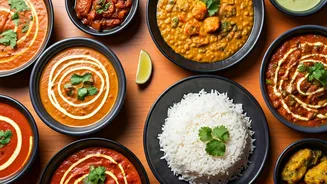
For years, the American understanding of “Indian food” has been dominated by the rich, creamy, tomato-and-cream-based gravies of Punjab and the greater Northern region. It’s delicious, no doubt, but it’s like judging all of American cuisine by a New York
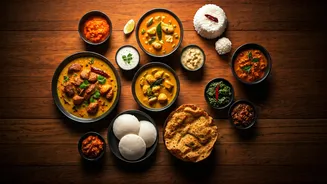
slice. It misses the incredible diversity of a subcontinent. South India, a region encompassing the states of Kerala, Tamil Nadu, Karnataka, Andhra Pradesh, and Telangana, represents a completely different culinary philosophy. And nothing illustrates this better than its masterful, multifaceted use of the coconut. The term “coconut curry” itself is a vast oversimplification. It suggests a single flavor profile: sweet and creamy. But in the hands of a South Indian cook, a coconut can be the foundation for dishes that are tangy, fiery, herbaceous, nutty, or delicately mild. It’s not one note; it’s an entire orchestra.
The Coconut Spectrum
The secret to this range lies in how the coconut is processed and what it’s paired with. South Indian kitchens don't just use canned coconut milk. They deploy coconut in a dazzling array of forms, each lending a distinct texture and flavor.
There's the thin, first-press coconut milk, which provides a light, savory base. Then there’s the thick, luscious coconut cream, used to finish a dish with richness. Coconut can be finely grated and added raw for texture and a subtle sweetness. It can be toasted until nutty and brown, then ground into a coarse, fragrant powder. Most importantly, it’s often the base for a wet spice paste, or *masala*, where it’s ground with chiles, cilantro, ginger, garlic, and a host of whole spices. The form of the coconut dictates the final character of the dish entirely.
A Journey Through the States
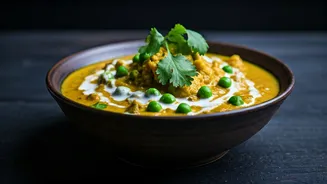
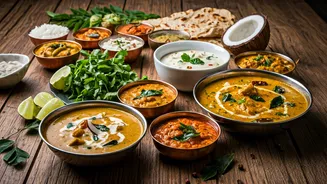
To truly grasp the variety, you need to travel—at least on the plate. In Kerala, a state laced with tropical backwaters and coconut groves, the curries are often elegant and restrained. An *ishtew* (a local take on “stew”) is a perfect example: a creamy, white curry made with coconut milk, green chiles, ginger, and gentle whole spices like cardamom and clove. It’s soothing, aromatic, and designed to complement the main ingredient, whether it’s potatoes or chicken.
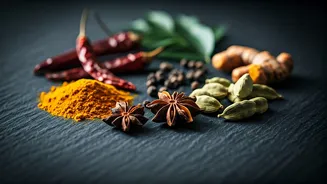
Travel east to Tamil Nadu, and the flavor profile gets bolder. In the Chettinad region, known for its fiery cuisine, coconut is ground with poppy seeds, star anise, and a formidable number of dried red chiles to create a complex, robust masala that’s anything but mild. A simple vegetable *kurma*, found across the state, uses a paste of coconut, cashews, and fennel seeds for a fragrant, savory-sweet gravy that’s a world away from Kerala’s *ishtew*.
Beyond Creaminess: Tang and Spice
Head to the coast of Karnataka, and you’ll find Mangalorean cuisine, which balances the richness of coconut with a signature tang. A dish like chicken *gassi* features a masala made from roasted coconut and spices, but it’s the addition of tamarind that gives it a bright, sour note that cuts through the fat. It’s a complex, layered flavor that is deeply satisfying.
Even in Andhra Pradesh and Telangana, states more famous for their searingly hot, chile-forward dishes, coconut finds its place. While less ubiquitous than in the coastal states, it's used as a moderating influence, ground into pastes to add body and a touch of sweetness that balances the heat and sourness from tamarind. This interplay—coconut with sour (tamarind, kokum), pungent (mustard seeds, ginger), and fresh (curry leaves)—is the engine of South Indian culinary creativity. The coconut isn’t just a flavor; it’s a canvas.