




1. Replace Your Wiper Blades
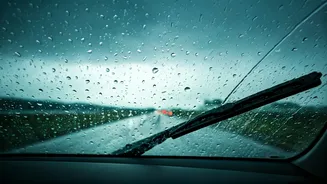
This seems obvious, but it’s the most critical step. The intense sun and dry heat of a Southwestern spring bake the rubber on wiper blades, causing them to crack, stiffen, and become utterly useless. When the first downpour hits, you need wipers that
can clear a deluge of water from your windshield, not just smear it around. Invest in a quality pair of beam-style blades, which apply more uniform pressure. While you're at it, top off your windshield washer fluid. You’ll need it to clear away the mud and grime that gets kicked up onto your glass during the first rain after a long dry spell.
2. Inspect Your Tires Thoroughly
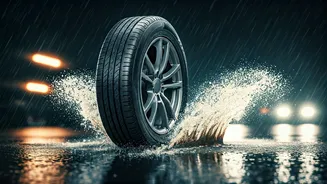
Your tires are the only thing connecting your car to the road. During a monsoon, that road can suddenly become dangerously slick with oil and water. First, check your tread depth using the penny test: if you can see all of Lincoln's head, your tires are worn and need replacing. Aim for at least 4/32" of tread for effective water channeling. Second, check your tire pressure. Hot asphalt heats your tires, increasing pressure, so check them when they're cold (in the morning before driving). Properly inflated tires provide better grip and stability. Finally, look for signs of dry rot—small cracks in the sidewall—which is common in arid climates and can lead to a blowout.
3. Test Your Battery
Extreme heat is a battery killer. The high temperatures under your hood accelerate the chemical reactions inside the battery, shortening its lifespan. A battery that was perfectly fine in May could easily fail you in August. Most auto parts stores will test your battery for free. A quick test can tell you if its cranking power is diminished. Getting stranded in a monsoon storm with a dead battery is not just an inconvenience; it can be dangerous if you’re caught in a flash flood area. If your battery is more than three years old, it’s worth getting it checked before the storms roll in.
4. Check All Exterior Lights
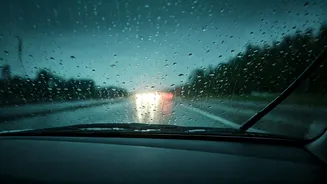
Monsoon storms can create near-dark conditions in the middle of the afternoon. A blinding dust storm, or haboob, can reduce visibility to almost zero. Functional lights are non-negotiable. Have a friend help you perform a quick check: test your headlights (both low and high beams), taillights, brake lights, and turn signals. You need to see, but just as importantly, you need to be seen by other drivers navigating the same poor conditions. A burnt-out bulb is a simple, inexpensive fix that dramatically improves your safety.
5. Service Your Air Conditioning System
While A/C is a creature comfort, during monsoon season it doubles as a vital safety feature. The high humidity that comes with the rains can cause your windshield to fog up instantly, completely obscuring your vision. Your air conditioner is the most effective tool for defogging the interior glass because it pulls moisture out of the air. If your A/C isn't blowing cold, it won't be able to do its job. A weak A/C system might just need a refrigerant recharge, but it could also signal a leak or a failing compressor. Get it checked by a professional.
6. Assemble a Monsoon-Specific Emergency Kit
A standard roadside kit is a good start, but a monsoon kit needs a few additions. Given the risk of being stranded by a flash flood or a road closure, your kit should include: extra bottles of water, non-perishable snacks, a powerful flashlight or headlamp with fresh batteries, a portable phone charger, and a first-aid kit. It's also wise to add a good dust mask (like an N95) for haboobs and a whistle to signal for help. Keep an old towel in your trunk; you’ll be glad you have it after getting soaked running to your car.