



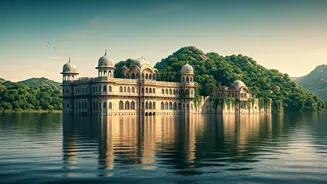



A City Washed Anew
The first drops of rain arrive as a welcome guest. They land on the marble courtyards of ancient havelis, sizzle on warm cobblestone streets, and send the scent of wet earth—petrichor—drifting through the air. In Udaipur, known as the “City of Lakes,”
the monsoon isn't a nuisance that sends people scurrying for cover; it's a season of renewal. The relentless Indian sun gives way to a soft, diffused light that drapes itself over the city like a sheer veil. Colors, once muted by dust, become shockingly vibrant. The bright pinks, yellows, and blues of women’s saris stand out like jewels against the moody grey skies and darkened stone of the city’s architecture. Every surface glistens. The world slows down, inviting you to simply sit by a window with a cup of chai and watch the city drink in the rain.
Reflections on Lake Pichola
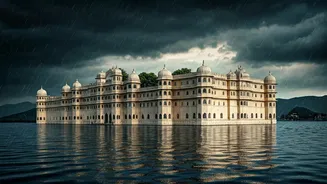
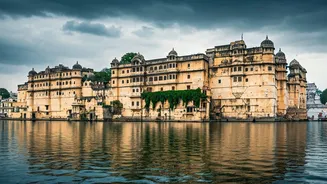
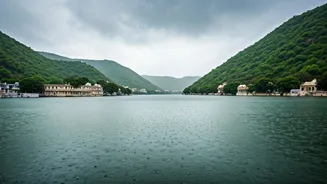
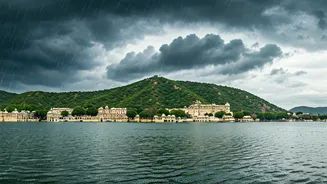
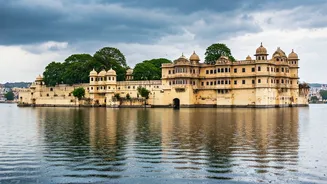
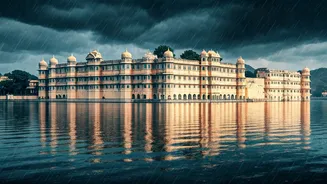
Udaipur’s soul is its water, and during the monsoon, the lakes are reborn. The placid surface of Lake Pichola, often rippled by tourist boats, becomes a canvas for the sky. The rain blurs the horizon, merging water and cloud until the magnificent Lake Palace—a floating vision of white marble—seems suspended in an ethereal mist. From a boat gliding across the water, the distinction between the real and the reflection dissolves. The ornate facades of the City Palace complex, which loom over the lake’s eastern shore, are mirrored in the water below, their golden details shimmering and shifting with every raindrop. Jag Mandir, the other island palace, appears like a distant, romantic mirage. The gentle drumming of rain on the boat’s canopy becomes the soundtrack to a city that has become a living watercolor.
The Moody Grandeur of the City Palace
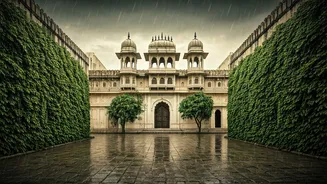
Exploring the sprawling City Palace during a downpour is an experience unto itself. The open-air courtyards, normally bustling under a hot sun, become quiet, contemplative spaces. Rain cascades from intricately carved drain spouts, forming temporary waterfalls that echo through the stone corridors. Peeking through a jharokha—an ornate overhanging balcony—the view is no longer of a crisp, clear cityscape but of a soft-focus panorama. The distant Aravalli Hills are shrouded in low-hanging clouds, and the city below is a patchwork of wet, gleaming rooftops. Inside, the colored glass of the palace windows catches the gloomy light, casting kaleidoscopic patterns on the polished floors. You’re not just looking at history; you’re feeling it, enveloped in the same moody, romantic atmosphere that maharanas experienced centuries ago.
The View from the Monsoon Palace
High on a hill overlooking the entire city sits Sajjangarh, aptly nicknamed the Monsoon Palace. This white marble fort was built by Maharana Sajjan Singh in the late 19th century specifically to watch the monsoon clouds roll in. Making the winding journey up to its ramparts during the rainy season feels like ascending into the sky itself. From this vantage point, the effect is breathtaking. Clouds drift below you, parting occasionally to reveal glimpses of the lakes and palaces, looking like a mythical kingdom emerging from the mist. The wind is cool and carries the sound of distant thunder. It is here, looking down at the landscape, that the headline’s promise is fully realized. Udaipur is no longer just a city; it is an impressionist masterpiece, with broad strokes of gray cloud, dabs of green on the hillsides, and the shimmering silver of its rain-fed lakes.