


The Nectar of Nawabs
Forget what you think you know about the mangoes in your local supermarket. In Lucknow, the historic capital of Uttar Pradesh, the mango is a near-religious experience. This city, once the seat of the opulent Nawabs of Awadh, is ground zero for one of the world's
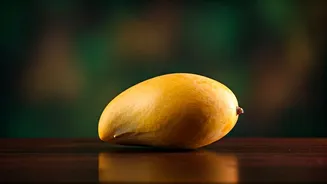
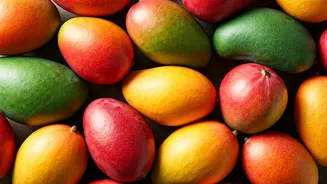
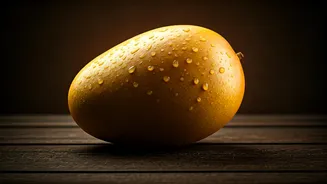
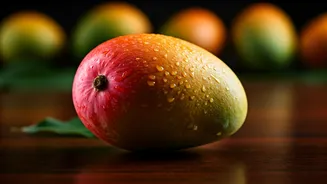
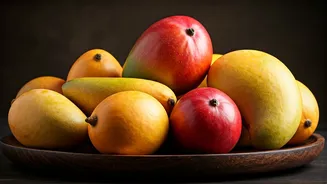
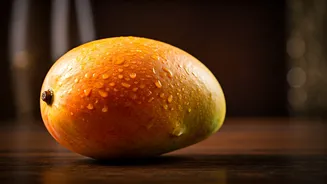
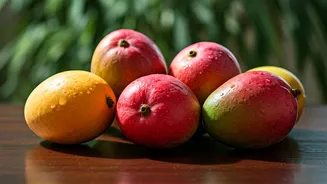
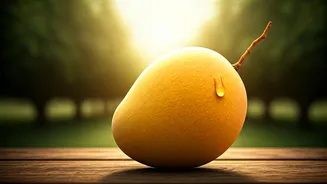
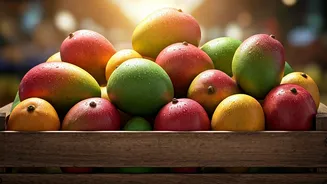
most prized mango varieties: the Dussehri. Legend has it the first Dussehri tree, now over 200 years old, still stands in a nearby village, a matriarch to millions of orchards. These aren't the large, reddish-green, fibrous fruits many Americans are used to. The Dussehri is slender, with a sun-yellow skin and a fragrance that perfumes the air. The flavor is its true magic: intensely sweet, fiberless, with a complex, honeyed nectar that coats your tongue. It’s a taste so sublime that it has been cultivated and coveted by royalty for centuries, earning Indian mangoes the title 'King of Fruits.'
More Than a Fruit, a Cultural Event
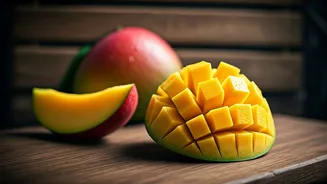
The arrival of mango season in Lucknow, and across India, triggers a cultural shift. Business meetings are rescheduled for 'mango parties,' where families and colleagues gather to do nothing but gorge on crate after crate of chilled mangoes. The techniques are passed down through generations: how to gently squeeze the fruit until the pulp liquefies inside, then nip off the top and drink the contents like a juice box. Debates over the superior variety—the honeyed Dussehri, the fragrant Chaunsa, the regal Alphonso from the west coast—are a national pastime, as passionate as any sports rivalry. This deep, cultural integration is the first pillar of India’s mango ‘dominance.’ It’s not just about production; it’s about a nationwide love affair that has refined the cultivation and appreciation of the fruit into an art form.
The Library of Flavor
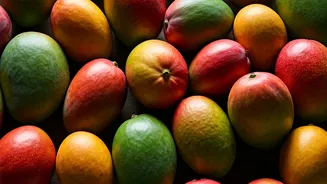
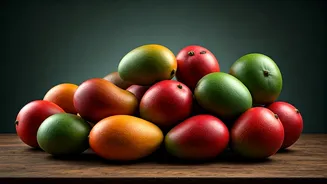
The headline's claim of dominance isn't just hyperbole; it’s rooted in unparalleled biodiversity. While the world market is often limited to a handful of mango types, India is a living library of the fruit, boasting over 1,500 distinct varieties. Each has its own name, shape, color, and flavor profile. There's the parrot-beaked Totapuri, tangy and perfect for pickles; the tiny, syrupy Langra from Varanasi; the floral and prestigious Alphonso, often called the 'finest mango in the world.' This staggering diversity means India doesn’t just grow mangoes; it curates an entire spectrum of flavor experiences. While other countries might compete on volume, none can touch the sheer depth and breadth of India’s mango heritage. This is the genetic and cultural wealth that underpins its global reputation.
The Prized American Trophy
For decades, these incredible fruits were forbidden treasure in the United States due to import restrictions aimed at preventing the spread of fruit flies. Americans who knew of their legend could only dream or listen to the rhapsodic tales of friends and family from India. That changed in 2007 when, after years of negotiation, Indian mangoes were finally allowed back onto U.S. soil, provided they undergo a special irradiation process. The arrival of the first shipment was treated like a state visit. Today, finding a box of genuine Dussehri, Chaunsa, or Alphonso mangoes in an American city is a seasonal scavenger hunt for food lovers. They are expensive, available for a fleeting window, and sell out almost instantly—a testament to their status not as a commodity, but as a luxury good, a taste of a distant, sun-drenched culture.