







Driving Through 'Shallow' Puddles
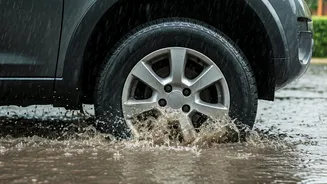
It’s the most common and deadliest mistake drivers make in a storm. That puddle on the road ahead might look like a mere inconvenience, but it’s a gamble you can’t afford. As little as six inches of water is enough to reach the bottom of most passenger
cars, causing loss of control or stalling. At one foot, many vehicles can begin to float. At two feet, even SUVs and pickups can be swept away. The water's surface hides the true danger: not just its depth, but the condition of the road beneath. A massive pothole could be lurking, or the asphalt could be washed out entirely. Furthermore, driving quickly through standing water can cause your car to hydroplane, leading to a complete loss of steering and braking control. The rule, promoted by the National Weather Service, is simple and non-negotiable: Turn Around, Don't Drown.
Ignoring Your Clogged Gutters
Out of sight, out of mind—until a torrential downpour arrives. The seemingly minor chore of cleaning your gutters can prevent catastrophic and expensive damage. When gutters and downspouts are clogged with leaves, pine needles, and debris, rainwater has nowhere to go but over the edge. This overflow sends water cascading down your home's siding and pooling directly against its foundation. Over time, this can lead to a leaky basement, cracked foundations, landscape erosion, and even damage to your roof and fascia boards. A heavy rainstorm is the ultimate stress test for your home’s water-diversion system. The “punishment” for this habit isn't immediate danger, but the slow, silent, and costly destruction of your property.
Walking or Playing in Floodwater
When streets turn into streams, the temptation to splash around can be strong, especially for kids. This is an incredibly dangerous idea. Floodwater is not clean. It’s often a toxic soup mixed with overflowing sewage, agricultural runoff, industrial chemicals, and gasoline. It can carry bacteria and viruses, posing a significant health risk through cuts or ingestion. Beyond contamination, the water conceals physical dangers. Just a few inches of moving water can knock you off your feet. Submerged hazards like open manholes, sharp debris, and downed power lines—which can electrify the water—are completely invisible. Treating floodwater like a public pool is a habit that can lead to sickness, serious injury, or worse.
Sticking to Your Usual Commute Time
You’ve perfected your morning routine down to the minute, but a heavy downpour makes that schedule obsolete. Insisting on leaving at your normal time and trying to maintain your usual speed is a recipe for stress and danger. Heavy rain dramatically reduces visibility, for you and for other drivers. It also increases the stopping distance your car needs, making tailgating even more hazardous. The collective effect is gridlock. Roads become jammed, minor accidents cause major backups, and your 30-minute commute can easily stretch to over an hour. The punishment for this habit is twofold: you risk an accident by rushing in unsafe conditions, and you add immense stress to your day by fighting a battle against traffic that you are guaranteed to lose.
Leaving Yard Items Unsecured
Heavy rain is often accompanied by strong winds. That lightweight patio furniture, portable grill, gardening tools, and your kids' trampoline can become destructive projectiles in a sudden gust. Forgetting to secure or store these items is a common oversight. They can be thrown against your house, your car, or your neighbor's property, causing broken windows and significant siding damage. In a severe storm, an unsecured object doesn't just risk getting damaged itself; it becomes a threat to everything around it. This habit isn't just about protecting your own belongings, but about preventing your belongings from harming people or property nearby.
Using Major Appliances During a Thunderstorm
A storm is the perfect time to catch up on laundry or run the dishwasher, right? Not necessarily. Thunderstorms that produce heavy rain are electrical events. A nearby lightning strike can cause a massive power surge—a brief but intense spike in your home’s electrical voltage. This surge can travel through wiring and overwhelm the delicate circuitry in modern electronics and appliances, from your television and computer to your refrigerator and washing machine. While a good surge protector can help shield smaller electronics, major appliances plugged directly into the wall are vulnerable. The punishment for this habit can be a fried motherboard and a thousand-dollar repair or replacement bill. When the thunder is rolling, it’s best to give those chores a rest.