






Beyond the Palace Aesthetic
For decades, the global image of Indian decor was frozen in a kind of opulent, historical fantasy—think maharaja palaces and colonial bungalows. It was beautiful, but often felt more suited to a museum than a modern family home. Today, a new generation
of Indian designers and homeowners is pushing back against this stereotype. They are asking a fundamental question: How do we live now? The answer is leading to interiors that prioritize comfort, efficiency, and personal expression over rote ornamentation. The focus has shifted from simply filling a room with beautiful objects to creating an environment that supports and enhances daily life. This change isn't about rejecting Indian heritage, but about reinterpreting it for the 21st century, creating a new design language that is both globally aware and deeply rooted in place.
Reimagining Traditional Craft
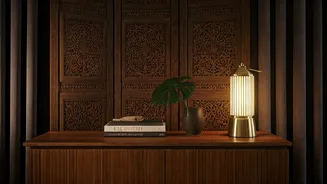
One of the most exciting aspects of this evolution is the way traditional craftsmanship is being given a new lease on life. Instead of being treated as fragile relics, age-old techniques are being integrated in functional, contemporary ways. A classic 'jaali,' the intricately carved lattice screen, is no longer just a decorative element; it's used as a clever room divider that allows for airflow in a compact apartment or as a sliding panel that casts dynamic shadows throughout the day. Hand-block printed textiles from Rajasthan are appearing on minimalist Scandinavian-style chairs, and ancient weaving patterns are being used for durable, modern rugs. This approach is 'thoughtful' in two ways: it preserves artisanal skills by creating a new market for them, and it embeds a sense of history and soul into otherwise modern spaces.
Designing for the Urban Reality
This movement is also profoundly 'useful,' driven by the practicalities of modern urban life in India. With millions living in increasingly dense cities like Mumbai, Delhi, and Bangalore, space is at a premium. Designers are responding with brilliant, multi-functional solutions. A 'diwan' (a traditional backless daybed) might be reimagined as a modular sofa with hidden storage underneath. A dining table might fold away seamlessly into a wall unit, freeing up living space for children to play. Furniture is becoming lighter, more mobile, and built to serve multiple purposes. The new Indian interior is uncluttered and intentional, using clever design to maximize every square foot without sacrificing style or comfort. It's about smart living, where every piece of furniture has to earn its place.
A Sustainable and Local Focus
Parallel to the global conversation on sustainability, Indian designers are looking inward, championing local materials that are both eco-friendly and culturally resonant. Instead of imported marble, designers are using indigenous stones like Kota stone or Cuddapah black. Teak and rosewood, while still prized, are often sourced from reclaimed or certified origins. There's a renewed appreciation for materials like bamboo, cane, and terracotta, which are not only sustainable but also better suited to India’s climate. This turn towards the local is about more than just environmentalism; it’s a celebration of India’s diverse material landscape and a conscious move away from a monolithic, globalized aesthetic. It results in homes that feel authentic, breathable, and deeply connected to their surroundings.