






The Ultimate 'Tokyo Drift' Fantasy
Imagine opening your Uber app, not for a quiet Prius to take you to your hotel, but for a high-octane thrill ride that feels ripped straight from a movie scene. For a few lucky people in Tokyo, this fantasy became a reality. Uber, in a stroke of marketing
genius, launched a limited-time 'Drifting Taxi' experience. This wasn't your typical point-A-to-point-B journey. In a partnership with Toyota Gazoo Racing, Uber offered a handful of users the chance to be passengers in a professionally piloted drift car. The concept was simple yet audacious: transform the mundane act of hailing a ride into an adrenaline-pumping event. Held at a closed course—not, thankfully, on Tokyo’s public streets—the experience was less about transportation and more about entertainment. It tapped directly into the global fascination with Japanese car culture, and specifically the art of drifting, famously immortalized in films like *The Fast and the Furious: Tokyo Drift*. This wasn't just a ride; it was a ticket to star in your own personal action sequence, complete with the smell of burning rubber and the G-force of a perfectly executed slide.
Not Your Average Corolla
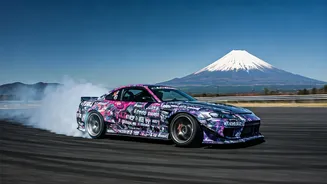
To pull off 'drifting madness,' you need more than just a driver with a heavy foot. You need serious hardware and world-class talent. The vehicle of choice was a custom-built Toyota GR Corolla, a far cry from the sensible family sedan that shares its name. This all-wheel-drive hot hatch was modified for pure performance, capable of the blistering acceleration and precise control needed to dance on the edge of traction. Behind the wheel? None other than professional drift champions like Daigo Saito, a legend in the sport known for his aggressive style and incredible car control. Having a world-class driver at the helm was key. It ensured the experience was not only thrilling but also safe, turning potential chaos into a controlled, choreographed performance. Riders weren't just being thrown around a track; they were witnessing a master at work, experiencing the physics-defying ballet of a drift from the best seat in the house. It elevated the stunt from a cheap gimmick to a genuine showcase of automotive skill and engineering.
A Clever Detour Around Regulations
So why would Uber, a company built on urban transportation logistics, invest in such an elaborate spectacle? The answer lies in the unique challenges it faces in Japan. Unlike in the United States, Japan has strict regulations that heavily restrict peer-to-peer ride-sharing services like UberX. For the most part, ride-hailing apps must partner with existing, licensed taxi fleets. This regulatory wall has prevented Uber from disrupting the market in the same way it has elsewhere. Forced to get creative, Uber Japan has pivoted its strategy from disruption to integration and high-impact marketing. It has focused on its premium Uber Taxi service, partnerships with established taxi companies, and its wildly successful Uber Eats delivery platform. The 'Drift Taxi' campaign fits perfectly into this playbook. It was never about moving lots of people; it was about capturing attention, generating buzz, and building brand affinity in a market where it can’t compete on its usual terms. It's a way of saying, 'We may not be your everyday ride, but we are still the most exciting brand in mobility.'
More Than Just a Marketing Stunt
While it was undeniably a marketing stunt, calling it *just* a stunt feels dismissive. The campaign was a masterclass in culturally aware branding. Drifting isn’t some random, imported idea; it’s a globally recognized cultural export born on the mountain roads and parking lots of Japan in the 1980s. By embracing drifting, Uber wasn't just creating a cool ad; it was paying homage to a significant part of modern Japanese automotive culture. This partnership with Toyota Gazoo Racing, a deeply respected name in Japanese motorsport, added another layer of authenticity. It showed that Uber understood and respected the local passion. For a massive American tech company often criticized for ignoring local customs, this was a surprisingly nuanced and effective way to connect with a Japanese audience. It was a perfect storm of brand power, pop-culture resonance, and local flavor, creating a moment that was both globally shareable on social media and deeply rooted in its host country.