




Assumption: The Nutrition Facts Panel Tells All
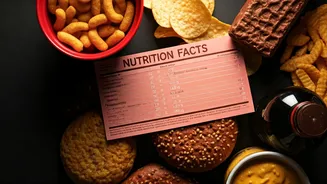
The black-and-white Nutrition Facts panel is the bedrock of American food labeling. Mandated by the Nutrition Labeling and Education Act of 1990 and updated in recent years, it provides a standardized snapshot of calories, fats, sugars, and key nutrients.
It’s an invaluable tool that empowers millions to compare products at a glance. But it’s a guide, not a gospel. The most significant limitation is the serving size. Manufacturers determine this figure, and it can be unrealistically small. A small bag of chips might list 150 calories per serving, but the bag might contain three servings. Without checking that detail, a shopper could easily assume they’re consuming far fewer calories, sodium, or grams of sugar than they actually are. The panel provides crucial data, but context and critical reading are still required.
Assumption: 'Natural' Means Healthy and Unprocessed
Of all the words plastered on food packaging, “natural” is one of the most powerful and misleading. Consumers often interpret it to mean the product is free from artificial ingredients, pesticides, and heavy processing—essentially, that it’s food as nature intended. The reality is far murkier. The Food and Drug Administration (FDA) has no formal, enforceable definition for the term “natural.” The agency’s long-standing informal policy is that it considers “natural” to mean nothing artificial or synthetic has been included in a food that would not normally be expected to be there. This policy, however, doesn’t address production methods like the use of pesticides, nor does it concern processing or manufacturing methods. This massive gray area allows a product loaded with high-fructose corn syrup—which is derived from corn—to be labeled “natural.” For a health-conscious shopper, this word is less a guarantee and more a marketing tactic.
Assumption: The 'Organic' Seal Guarantees Purity
Unlike “natural,” the “USDA Organic” seal is a legally defined and regulated standard. This is a huge win for transparency. Products bearing this seal must be produced without most synthetic pesticides and fertilizers, genetic engineering, or irradiation. For animal products, it means the animals were raised without antibiotics or growth hormones. However, “complete transparency” isn't quite the case. There are different tiers of organic. “100% Organic” means just that. Products labeled simply “Organic” must contain at least 95% organic ingredients. And those labeled “Made with Organic Ingredients” must have at least 70%. Furthermore, the National List of Allowed and Prohibited Substances permits certain synthetic substances to be used in organic farming and processing when organic alternatives are not available. The seal is a strong, reliable indicator of a specific farming standard, but it’s not a simple synonym for “pure.”
Assumption: Allergen Warnings Cover All Risks
For millions of Americans with food allergies, clear labeling is a matter of life and death. The Food Allergen Labeling and Consumer Protection Act of 2004 (FALCPA) was a landmark piece of regulation, mandating that the top major allergens be clearly identified. As of 2023, this list includes nine foods: milk, eggs, fish, crustacean shellfish, tree nuts, peanuts, wheat, soybeans, and sesame. This is a non-negotiable requirement. However, the system isn’t perfect. Advisory warnings like “may contain traces of peanuts” or “made in a facility that also processes wheat” are completely voluntary. A company can choose to include them as a courtesy, but it isn’t required. This leaves a dangerous gap for highly sensitive individuals, who can have severe reactions to even minute levels of cross-contamination. The law covers ingredients, but it doesn't fully regulate the transparency of environmental exposure risk.