





So, What Exactly Is an AI Sandbox?
Let’s break down that jargon. A 'sandbox' in the tech world is a safe, isolated environment where you can test new ideas without breaking anything important. It’s a digital playground. Now, add 'interactive 3D' and 'AI' to the mix. You’re no longer just
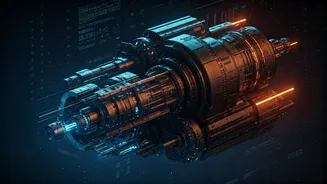
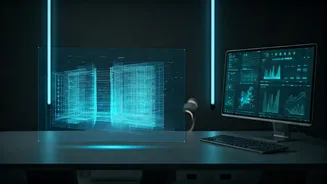
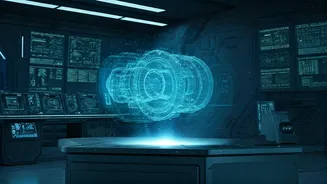
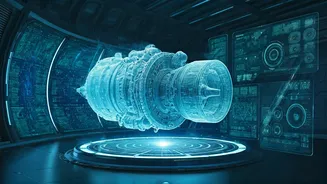
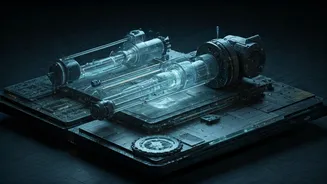
running code; you're stepping into a photorealistic, physics-accurate virtual world. These aren't static 3D models like you’d see in a design file. They are living, breathing 'digital twins'—virtual replicas of real-world objects, from a single screw to an entire factory floor. Inside this sandbox, you can interact with the models in real-time. You can turn them on, see how parts move, simulate wear and tear over a decade, or see what happens if you subject a new turbine blade design to hurricane-force winds. It’s the ultimate 'what-if' machine for the physical world.
More Than Just a Digital Blueprint
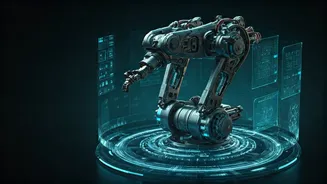
For decades, engineers have used Computer-Aided Design (CAD) to create detailed 2D and 3D blueprints. This was revolutionary, but it had its limits. A CAD file shows you what a machine looks like, but it doesn't tell you how it will behave under pressure, how its thousands of parts will interact, or how air will flow over its surfaces. Simulating those dynamics was a separate, incredibly time-consuming process that often required a supercomputer and days of processing. The new generation of 3D sandboxes integrates everything. They combine the visual fidelity of a Hollywood blockbuster with a powerful physics engine that simulates light, gravity, material properties, and fluid dynamics. This means an engineer can design a robotic arm, drop it into a virtual assembly line, and watch it interact with other virtual robots and components, identifying potential collisions or inefficiencies long before a single piece of metal is welded.
Where the 'AI' Changes Everything
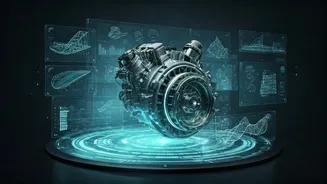
The real game-changer is the Artificial Intelligence component. The AI doesn’t just help run the simulation; it actively participates in it. First, AI can rapidly accelerate the simulation process itself, solving complex physics problems faster than traditional methods. Second, and more importantly, the AI acts as an tireless, brilliant design partner. An engineer can set a goal—for example, 'design a car chassis that is 30% lighter but just as strong'—and the AI can generate and test thousands, or even millions, of design variations within the sandbox overnight. It can discover non-obvious solutions that a human engineer might never consider. Furthermore, AI can analyze data from the simulation to predict maintenance needs. By simulating an engine running for 50,000 hours, the AI can pinpoint which components are most likely to fail and when, enabling predictive maintenance that saves companies millions in downtime.
From Theory to the Factory Floor
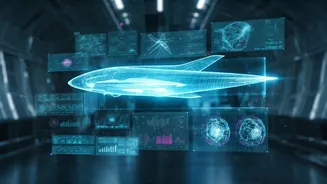
This isn't science fiction; it's already happening. BMW, for instance, has created a complete digital twin of its factory in NVIDIA's Omniverse platform. Planners and engineers can walk through the virtual factory, test new layouts for their production lines, and train robots in the simulation before deploying them on the real factory floor. This allows them to optimize workflows and reconfigure assembly lines with a speed and confidence that was previously unimaginable. In aerospace, companies are using these sandboxes to simulate entire aircraft, testing flight characteristics and material stress under extreme conditions without the enormous expense and risk of building dozens of physical prototypes. Even in the energy sector, digital twins of wind farms are used to optimize the placement and operation of turbines based on years of simulated weather patterns.
The Future of Making Things
The rise of 3D AI sandboxes marks a fundamental shift in how we approach engineering, manufacturing, and innovation. It collapses the time and cost between an idea and a viable product. By making failure cheap and experimentation easy, it encourages more radical and ambitious designs. It also has profound implications for training. A new technician can learn to repair a complex piece of machinery in a safe, virtual environment before ever touching the real thing. As these technologies become more accessible, they promise to democratize high-level engineering, allowing smaller companies to compete with industrial giants. We're moving from a world where we build things and then test them to a world where we test things to perfection before we ever build them.