

The Gospel of Green Mango
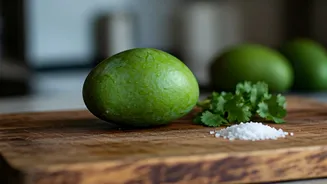
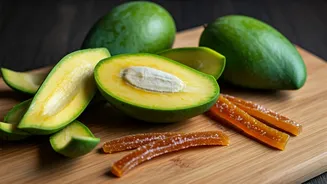
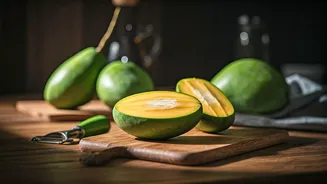
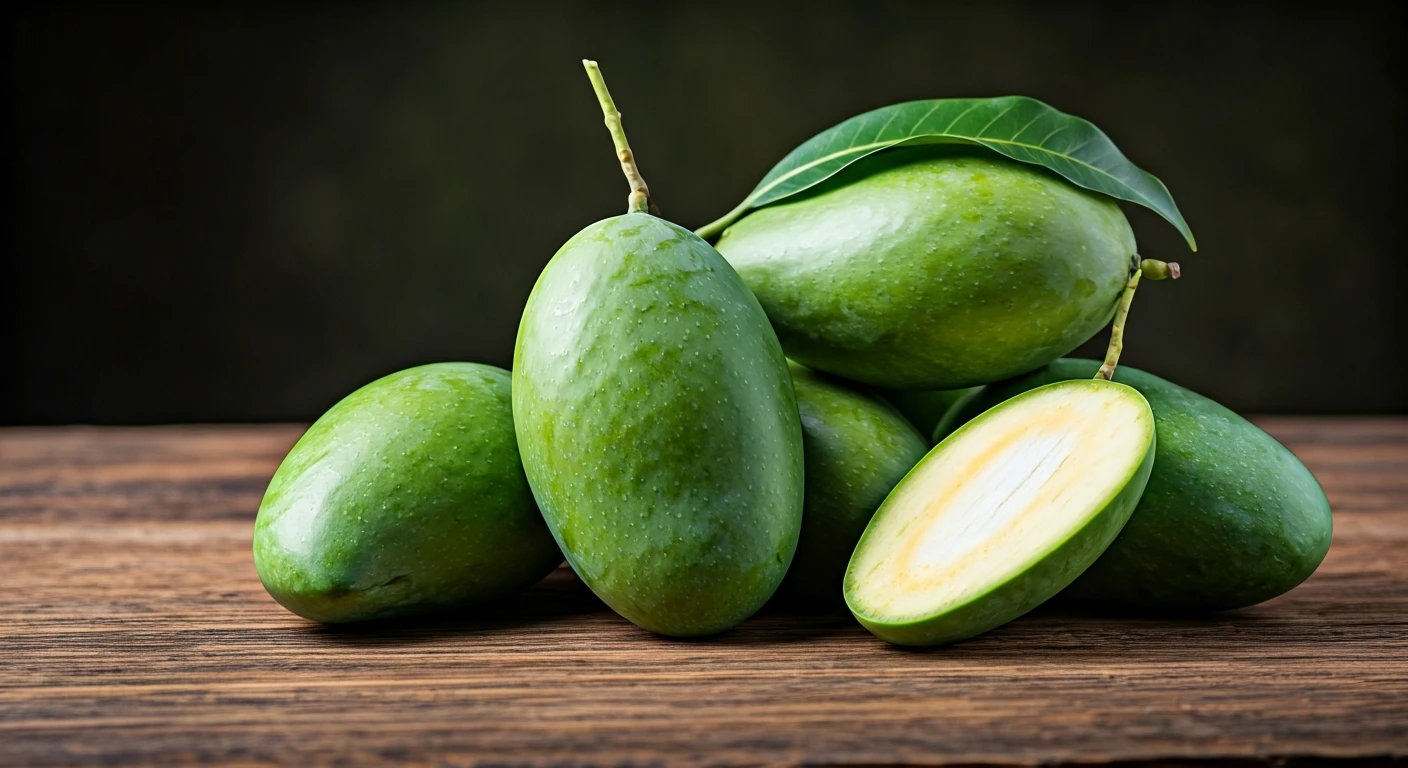
Before mangoes ripen into the sweet, juicy icons of summer, they exist in a different form: tart, crisp, and vibrantly green. This is kairi, or kachchi kairi, the unripe mango that is a cornerstone of seasonal cooking across India. Forget the soft, fiber-less
flesh of a ripe Alphonso; kairi is firm, intensely sour, and practically begs to be transformed. Its flavor is a lightning bolt of acidity, a perfect counterpoint to the sweltering heat of the months it appears in, typically from spring to early summer. While Americans are conditioned to wait for fruit to be perfectly ripe, entire culinary traditions in India are built around celebrating this sharp, adolescent stage. Kairi isn’t an imperfect mango; it’s a perfect ingredient in its own right, a signal that the seasons are turning and a new palette of flavors has arrived.
Flesh, Transformed
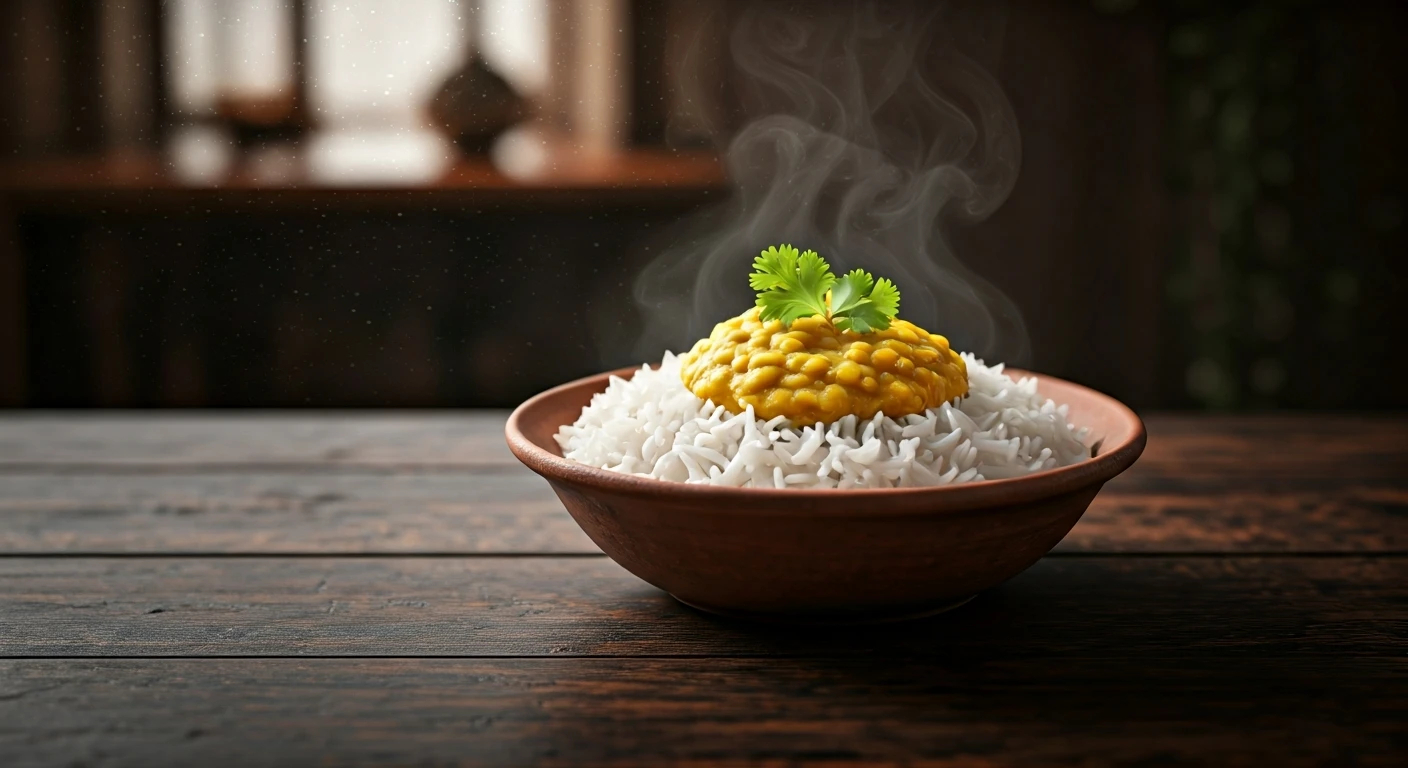
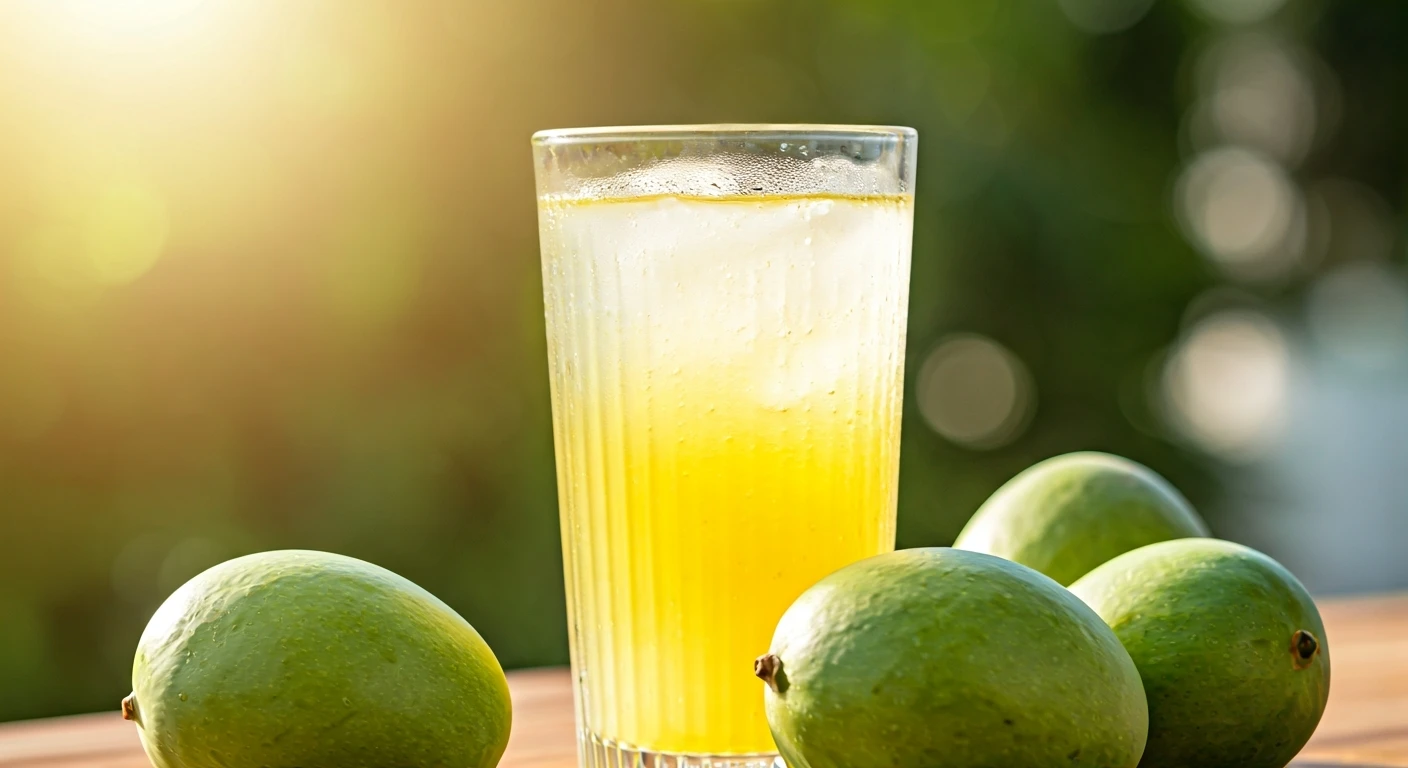
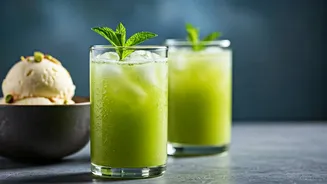
The most straightforward use of kairi is its flesh. But even here, the ingenuity is staggering. The most famous application is probably achar, or Indian pickle, where chunks of raw mango are submerged in oil and a potent mix of spices like mustard seeds, fenugreek, and chili powder. It’s a condiment, a side dish, and a flavor bomb that can elevate a simple meal of rice and dal. But that’s just the beginning. The flesh is grated into salads for a zesty crunch, blended into refreshing chutneys with mint and cilantro, or boiled down with sugar and spices like cumin and black salt to create aam panna. This revered summer drink is a lifesaver in the heat, an electrolyte-rich cooler that’s both delicious and deeply functional. In many regional cuisines, kairi is also the go-to souring agent, with slivers added to lentil dishes (dals) or fish curries, providing a bright, tangy note that tamarind or lime can’t quite replicate.
The True Zero-Waste Move: Skin and Seed
This is where the real “flex” comes in. Using the flesh is smart; using the entire fruit is genius. Many home cooks and traditional recipes demonstrate a deep-seated refusal to waste any part of the kairi. The skin, often discarded in modern kitchens, is entirely edible. In many households, it’s thinly sliced and added to pickles or chutneys, providing a slightly bitter, textural contrast. The real masterstroke, however, lies in using the seed, or guthli. After the flesh is carved away, the large, woody seed isn't tossed. It's often thrown into a dal or sambar while cooking, where it leeches a subtle, sour flavor into the stew before being discarded. In some even more dedicated practices, the hard shell is cracked open to reveal a soft inner kernel. This kernel can be dried, powdered, and used as a remedy for digestive issues or, in certain regional recipes, incorporated into dishes. This nose-to-tail, or rather, skin-to-seed approach, is the heart of the zero-waste principle, practiced out of necessity and respect long before it became a hashtag.
Why Tradition is the Ultimate Trend
The Western concept of “zero-waste” often involves buying new things: reusable silicone bags, special compost bins, branded water bottles. It’s a movement sometimes defined by what you acquire to help you waste less. The kairi tradition offers a powerful counter-narrative. This is a zero-waste philosophy born not of consumer trends but of deep-rooted culinary wisdom, resourcefulness, and a respect for ingredients. It’s about understanding the full potential of what you have and using creativity to make the most of it. In a food system that champions perfectly uniform, blemish-free produce and encourages disposability, looking to these practices isn’t just about finding a new recipe. It’s a quiet rebellion. It’s a way of saying that the old ways, developed over centuries of making do, are often smarter, more sustainable, and ultimately more satisfying than anything we can invent today.