







Forget the Marathon, It's All About Sprints
First, let's break down the jargon. At its core, 'micro-learning' is exactly what it sounds like: learning in small, digestible pieces. Forget committing to a six-week, 20-hour online course. Instead, think of a 15-minute video on a specific skill, a ten-minute
interactive quiz, or a short article explaining a single concept. The philosophy is simple: by breaking down complex topics into bite-sized chunks, information is easier to absorb, retain, and apply. This approach respects our modern, attention-scarce reality. We’re more likely to engage with and complete a short, targeted lesson on our lunch break than we are to carve out huge blocks of time for a monolithic curriculum. It’s a shift from 'knowledge-hoarding'—amassing credentials we may never use—to 'just-in-time' learning that solves an immediate problem or teaches a directly applicable skill.
The 'Experiential' Part: Learning by Doing
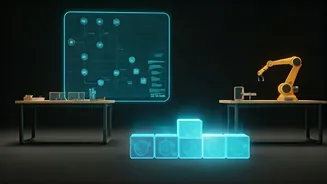
This is where the trend gets its real power. Micro-learning on its own isn't new; we've had short YouTube tutorials for years. The game-changer is the 'experiential' component. These aren't passive workshops where you just watch a presenter. Instead, they are designed to make you *do* something. An experiential micro-workshop is an active, hands-on simulation. For example, instead of watching a video about 'how to give difficult feedback,' you might enter a 20-minute workshop where you role-play a conversation with a facilitator or even an AI-powered bot. Instead of reading about a new software tool, you’re dropped into a sandbox environment and given a specific task to complete. This active participation moves learning from a theoretical exercise to a practical one. It creates muscle memory, builds confidence, and ensures the lesson actually sticks because you’ve already put it into practice in a low-stakes environment.
Why Now? A Response to Digital Burnout
The rise of experiential micro-learning is no accident. It’s a direct response to the way we live and work today. After years of being told to hustle harder and learn more, many people are experiencing a unique form of burnout. The pandemic accelerated the shift to online learning, but it also led to 'Zoom fatigue' and a general exhaustion with passive screen time. We're overloaded with information but starved for practical application. Experiential micro-workshops offer an antidote. They are efficient, respecting our limited time and cognitive bandwidth. They are engaging, pulling us out of passive consumption and into active participation. And they deliver a tangible result—a new skill, a solved problem, a boost of confidence—almost immediately. This provides the small, satisfying wins that are often missing from longer, more abstract personal development journeys.
What This Looks Like in Practice
This trend is emerging in both corporate training and the direct-to-consumer personal development market. Companies are using it to upskill their employees on everything from cybersecurity protocols to inclusive leadership. A sales team might participate in a 30-minute workshop simulating a difficult negotiation. A new manager might take a 15-minute module on how to run an effective one-on-one meeting, complete with interactive scenarios. On the personal side, platforms are offering short, paid workshops on topics like 'Mastering Small Talk for Introverts' or 'Building a Personal Budget in 20 Minutes.' These often involve live facilitators, peer-to-peer interaction, and immediate feedback, packing the value of a much longer seminar into a session that can fit into a coffee break. It's a move away from the one-size-fits-all model toward personalized, high-impact learning experiences.