








Ignoring Your Gutters
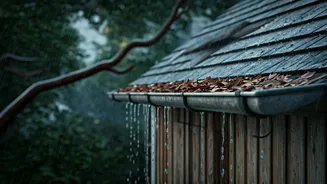
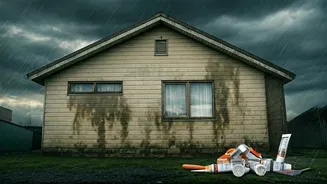
It’s the most classic—and most consequential—mistake. When gutters are clogged with leaves, twigs, and other debris, they can't do their one job: directing water away from your home. Instead, rain overflows and cascades down your siding, pools around
your foundation, and can even back up under the eaves of your roof. This waterlogged scenario is a direct invitation for wood rot in your fascia boards, siding damage, and, worst of all, foundation issues. A compromised foundation isn't a simple fix; it's a structural crisis that can cost thousands. The solution is simple but essential: clean your gutters at least twice a year, especially after fall and before the spring rains begin. A weekend afternoon spent on a ladder can save you a season of headaches.
Forgetting a Roof Inspection
Out of sight, out of mind—until a water stain appears on your ceiling. Your roof is your home's first line of defense against the elements, but it takes a constant beating. Missing, curled, or cracked shingles are open doors for water intrusion. Even a small breach can allow water to seep into your attic, soaking insulation, rotting the roof deck, and promoting mold growth. Many homeowners don't look at their roof until there’s an obvious leak, but by then, the damage is already done. Before the rainy season, do a visual inspection from the ground with binoculars. Look for obvious signs of wear. If you’re not comfortable on a ladder, a professional roofer can perform an inspection for a nominal fee, identifying small problems before they become catastrophic failures.
Neglecting Poor Yard Drainage
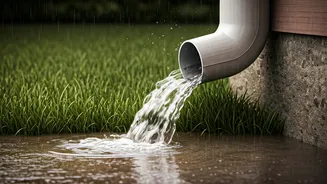
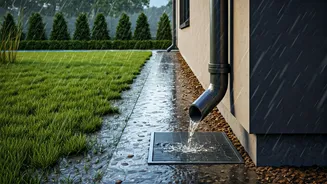
What happens outside your home is just as important as what happens on it. If the ground around your house slopes toward the foundation, you’re essentially funneling every downpour directly to the place where it can do the most damage. Water pressure against foundation walls can lead to cracks, seepage into your basement or crawlspace, and long-term structural instability. This is known as negative grading. Pay attention during the next rainstorm: where does the water go? Does it pool near the house? If so, you may need to build up the soil around your foundation to create a gentle slope away from it—a concept called positive grading. Extending your downspouts so they discharge water at least five to six feet away from the house is another simple, high-impact fix.
Overlooking Window and Door Seals
Your windows and doors aren't just for views and access; they are critical parts of your home's protective envelope. Over time, the caulk and weatherstripping around them can dry out, crack, and pull away, creating tiny gaps. During a wind-driven rainstorm, these small gaps can allow a surprising amount of water to work its way inside, damaging drywall, warping window sills, and ruining flooring. It’s a slow, insidious kind of damage that often goes unnoticed until you spot discoloration or feel a soft spot in the wall. Inspecting the caulking around your home's exterior is a quick job. Look for any areas that are cracked or missing, and apply a fresh bead of exterior-grade, waterproof silicone caulk. It's one of the cheapest and easiest ways to tighten up your home's defenses.
Dismissing Minor Foundation Cracks
A tiny crack in your foundation might seem like a purely cosmetic issue, but it's a potential superhighway for water. During a wet season, the soil around your home becomes saturated, creating hydrostatic pressure that pushes water against your foundation. That water will exploit any weakness it can find. Even hairline cracks can widen over time and allow moisture to seep into your basement or crawlspace, leading to musty smells, mold, and a perpetually damp environment. It's crucial to inspect your foundation, both inside and out, for new or expanding cracks. Small vertical cracks can often be sealed with an epoxy or polyurethane injection kit, but horizontal or stair-step cracks in block foundations can indicate a more serious structural problem that requires a professional assessment.