
1. Master the Pre-Walk Prep
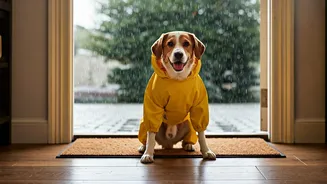
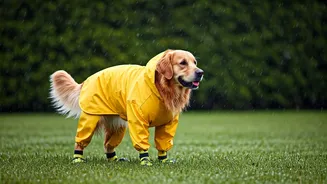
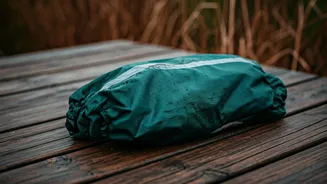
The best way to manage rainy day coat chaos is to minimize it from the start. A good quality dog raincoat is your first line of defense. Look for one that offers belly coverage and is made from a genuinely waterproof, not just water-resistant, material.
For dogs with feathery legs or long hair that touches the ground, waterproof pants or full-body suits are also available. While they might look a little silly, they drastically reduce the amount of fur that gets soaked. Before you even clip on the leash, you’ve already won half the battle against the impending dampness.
2. Perfect Your Towel-Drying Technique
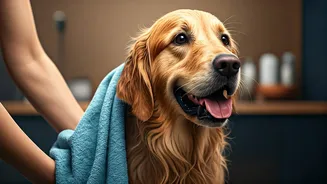
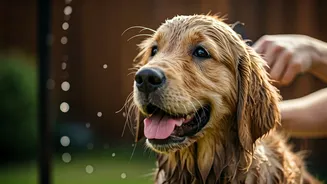
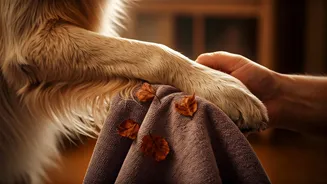
When you get back inside, your first instinct is probably to grab a towel and vigorously rub your dog dry. Resist that urge. For dogs with medium to long fur, aggressive rubbing can create instant tangles and push moisture deeper into the undercoat. Instead, practice the “blot and squeeze” method. Use a highly absorbent towel—microfiber towels designed for dogs are excellent for this—and gently press it against your dog’s fur, blotting up the water. For their legs and tail, gently squeeze sections of fur within the towel. This method removes a surprising amount of water without creating knots.
3. Brush Before It Dries
This might seem counterintuitive, but brushing a damp coat is often better than waiting for it to dry into a tangled mess. Once you’ve towel-dried your dog, a gentle brush-through can separate the hairs and allow air to circulate, speeding up the drying process and preventing mats from forming as the fur dries. Use a slicker brush for dense or double-coated breeds and a pin brush or comb for dogs with longer, silkier hair. Be gentle, and if you encounter a knot, don’t yank. Work it out slowly from the tips of the hair down to the base. This single step is the most critical for preventing the dreaded post-rain matting.
4. Safely Handle Tangles and Mats
If a mat has already formed, your approach needs to be careful and methodical. Never, ever use scissors to cut out a mat. The skin underneath is often pulled up tightly into the knot, and it is shockingly easy to cut your dog. Instead, use a de-matting tool or a steel comb. Try to isolate the mat and hold it at the base, close to the skin, to prevent pulling. Then, use the end tooth of the comb to gently pick the mat apart, working from the outside in. For severe matting, it's always safest to call a professional groomer. They have the tools and expertise to remove mats without causing pain or injury.
5. Use a Blow Dryer (With Caution)
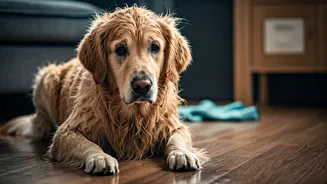
A blow dryer can be a fantastic tool, but it requires care. Never use a human blow dryer on a high heat setting, as it can easily burn your dog’s sensitive skin. Instead, use a dryer designed for pets or use your own on the coolest, lowest-speed setting. Keep the dryer moving constantly and at least a foot away from your dog’s body. Pay attention to their reaction; if they seem scared or uncomfortable, stop. Using a dryer can be especially helpful for double-coated breeds like Huskies or Golden Retrievers, helping to ensure their dense undercoat gets fully dry and avoids mildew or skin irritation.
6. Banish the 'Wet Dog' Smell
That infamous wet-dog odor is caused by the bacteria and yeast that live on your dog’s skin. When water evaporates, it carries those smelly microorganisms into the air. The key to reducing the smell is a thoroughly dry coat. Once your dog is dry, a final spritz with a dog-safe conditioning or deodorizing spray can help. For persistent odor, waterless shampoo foams can work wonders. If the smell just won’t quit, it might be a sign that a full bath is in order, as excess dirt can amplify the problem.