




What Is a 'Planet Alignment,' Anyway?
First, let's clear up a common misconception. When you hear “planet alignment,” you might picture planets forming a perfectly straight line in space, like cosmic billiard balls. The reality is both a little less dramatic and a lot more interesting. From
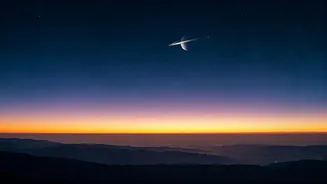
our vantage point on Earth, an alignment—more accurately called a conjunction or a grouping—is when two or more planets appear very close to each other in our sky. They aren't actually close in space; in fact, they remain millions of miles apart on their own distinct orbits around the sun. It's a trick of perspective, a beautiful optical illusion. Imagine you’re standing in a field looking at a distant mountain and a nearby tree that seem to be right next to each other. You know they’re miles apart, but from your spot, they share the same small patch of your view. That’s exactly what happens during a planetary alignment.
The All-Star Trio: Mercury, Venus, and Jupiter
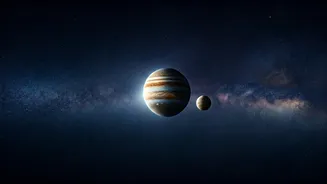
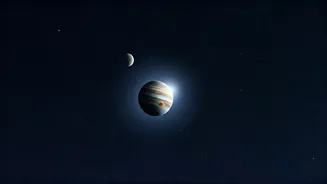
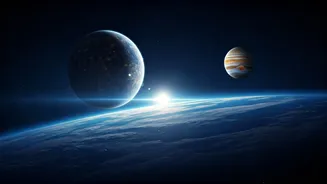
Not all alignments are created equal, and a gathering of Mercury, Venus, and Jupiter is a true astronomical treat. Think of it as a celestial supergroup. You have Venus, the undisputed queen of the night sky. Often mistaken for an airplane or a UFO, it’s the brightest object up there after the Sun and Moon. Then you have Jupiter, the king of the planets, a giant that also shines with a powerful, steady light. Seeing these two bright beacons near each other is stunning on its own. But adding Mercury to the mix is what makes it a real challenge and a rewarding sight for skywatchers. Mercury is the solar system’s smallest and fastest planet, a faint little world that never strays far from the sun’s glare. Spotting it is a badge of honor for amateur astronomers. Getting to see this elusive planet flanked by the two bright giants is what turns a simple grouping into a truly spectacular event.
How to Become a Planet Hunter
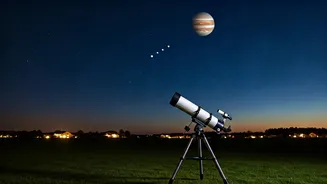
You don't need a fancy telescope or a degree in astrophysics to enjoy the show. The best tool for planet hunting is a good plan. First, find your spot. To give yourself the best chance, get as far away from city lights as you can. A local park, a field, or even a rooftop with a clear view of the horizon will do. Second, timing is everything. Many planetary groupings, especially those involving Mercury or Venus, are best viewed during a short window around twilight—either just after sunset in the west or just before sunrise in the east. Finally, use your resources. There are dozens of fantastic free smartphone apps (like SkyView, Stellarium, or Star Walk) that use your phone's camera and GPS to identify exactly what you're looking at. Just point your phone at the sky, and the app will label the planets, stars, and constellations for you. It’s like having an astronomer in your pocket.
What to Look For Now
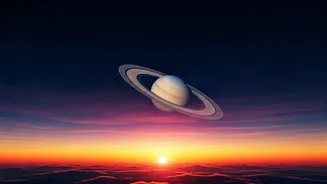
While a specific three-planet alignment is a special occasion, the night sky is a constantly changing theater, and there's almost always something to see. The planets are in perpetual motion, leading to a dynamic dance you can follow year-round. Venus and Jupiter regularly dazzle as the brightest “stars” in the evening or morning sky. Mars, with its distinct reddish hue, makes dramatic appearances every couple of years. And stately Saturn, though fainter, is a constant, steady presence. Check a reliable astronomy site like NASA, Sky & Telescope, or EarthSky for monthly sky-watching guides. They’ll tell you which planets are visible, where to look, and when they’ll be putting on their best show. You might find Venus cozying up to a crescent moon one month, or see Mars and Saturn appear as close celestial neighbors the next. The show is always on.