


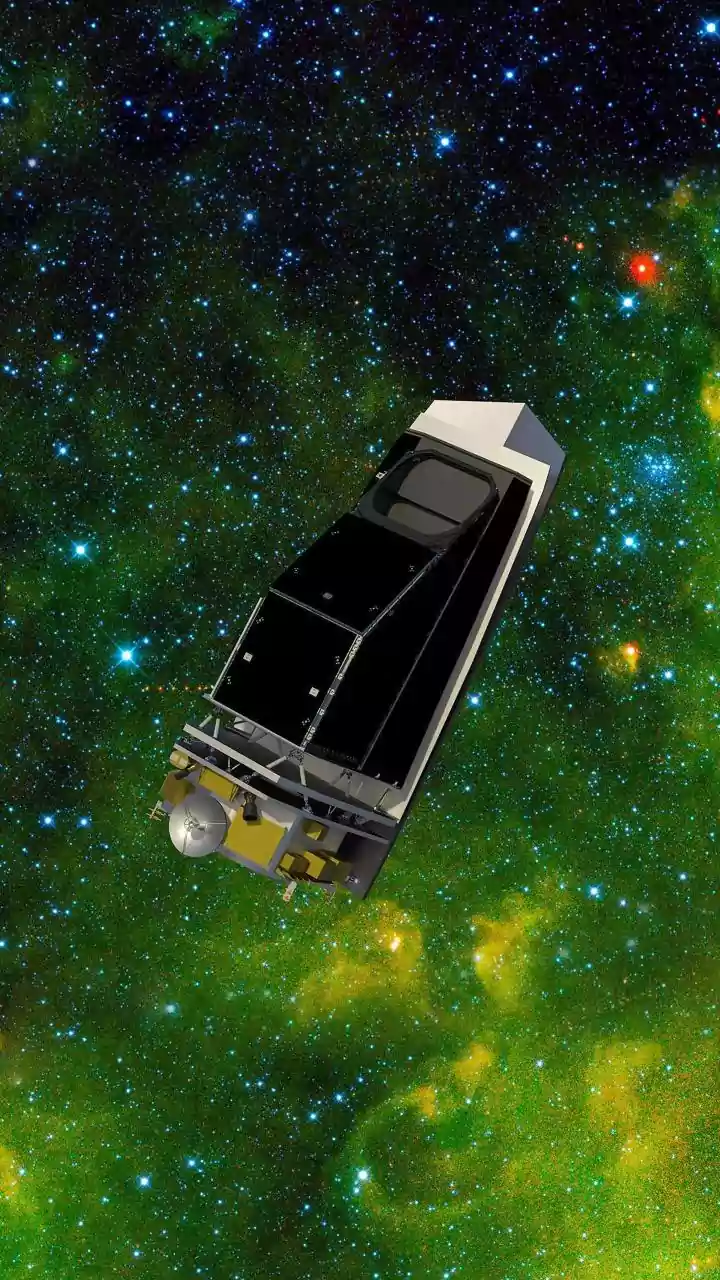

So, What Is the Roman Telescope?
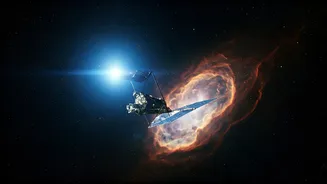
Think of the James Webb Space Telescope (JWST) as a precision magnifying glass, zeroing in on tiny, specific patches of sky to see farther back in time than ever before. The Nancy Grace Roman Space Telescope, on the other hand, is the ultimate panoramic
camera. Its primary mission isn't to stare at one spot for weeks, but to scan vast swathes of the universe quickly, creating cosmic maps of unprecedented scale and detail. Named after Dr. Nancy Grace Roman, NASA’s first chief astronomer and the visionary “Mother of the Hubble Space Telescope,” Roman is designed to be a survey instrument. It will tackle some of the biggest questions in cosmology by gathering data on a massive scale. It’s less about taking individual portraits of galaxies and more about creating a census of the universe, cataloging millions of them to understand the big picture.
A Hundred Hubbles in One Glance
The single most mind-blowing feature of the Roman Telescope is its field of view. In a single snapshot, Roman can capture an area of the sky 100 times larger than the Hubble Space Telescope can. Imagine trying to piece together a map of the United States using satellite images the size of a single city block. That’s been the challenge for astronomers. Roman, by contrast, takes pictures the size of an entire state. This incredible capability comes from its Wide Field Instrument, a 300-megapixel camera that will generate enormous amounts of data—more than any previous NASA astrophysics mission. Over its five-year primary mission, it will survey more of the sky than all of Hubble's three-plus decades combined. This will create a treasure trove of information that astronomers will be mining for decades, enabling discoveries that we can't even anticipate yet.
Hunting for Dark Energy and Rogue Planets
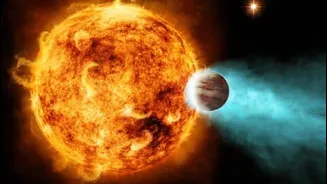
Roman has two primary scientific objectives that get to the heart of modern astrophysics. First, it will hunt for the secrets of dark energy. That's the mysterious, unidentified force that is causing the expansion of the universe to accelerate. By precisely measuring the distances and shapes of millions of galaxies, Roman will help cosmologists understand how dark energy has behaved throughout cosmic history. Is it a constant force, or has it changed over time? Roman’s data will be our best bet for finding out. Its second major goal is to conduct the first-ever census of exoplanets using a technique called gravitational microlensing. When a star or planet passes in front of a more distant star, its gravity can briefly magnify the background star's light. Roman is so sensitive it can detect these tiny flickers, even those caused by “rogue planets”—worlds that drift through space untethered to a star. This method is especially good at finding planets at Earth-like distances from their stars, filling a critical gap in our planet-hunting toolkit.
When Does It Actually Take to the Skies?
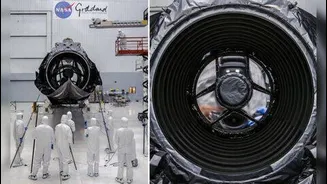
While space enthusiasts are eager for the next great observatory to get underway, major space missions require immense patience. NASA is currently targeting a launch for the Roman Space Telescope no later than May 2027. The telescope will be carried into orbit aboard a SpaceX Falcon Heavy rocket from Kennedy Space Center in Florida. Once launched, it won’t be orbiting Earth like Hubble. Instead, it will travel nearly a million miles to the second Lagrange point (L2), a gravitationally stable spot where the James Webb Telescope also resides. This distant vantage point keeps it far from the heat and light of Earth, allowing its sensitive infrared instruments to stay cool and capture faint signals from the distant universe. The journey from initial concept to final launch is a long one, but Roman is now in its final stages of assembly and testing, bringing its revolutionary mission closer to reality.