





1. Check Your Tire Tread and Pressure
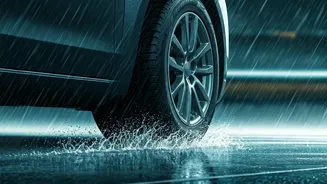
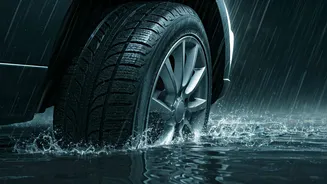
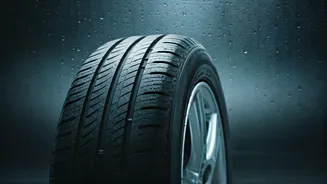
Your tires are your car's only connection to the road, and in the rain, that connection is fragile. Before the rainy season starts, inspect your tires. The easiest way is the “penny test.” Insert a penny into your tire's tread with Lincoln's head upside
down. If you can see the top of his head, your tread is worn too low (below 2/32 of an inch) and it's time for new tires. Properly inflated tires are just as crucial. Underinflated tires can make poor contact with the road, while overinflated ones have a smaller contact patch. Both increase the risk of hydroplaning. Check your car's door jamb for the recommended PSI and check your pressure monthly.
2. Replace Worn Wiper Blades
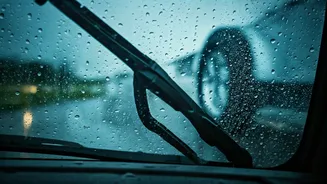
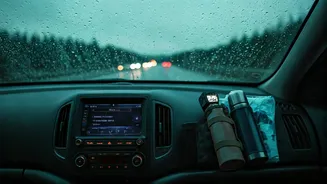
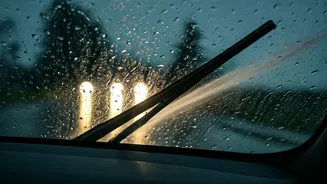
This is one of the cheapest and easiest ways to improve your rainy-day safety. If your wipers are streaking, skipping, or squeaking, they aren't clearing your windshield effectively. Visibility is already reduced in a downpour; don't make it worse with faulty blades. Most experts recommend replacing your wipers every six to twelve months. It’s a simple DIY job you can do in a few minutes in your driveway, and it provides an immediate, tangible improvement in visibility when you need it most.
3. See and Be Seen: Use Your Headlights
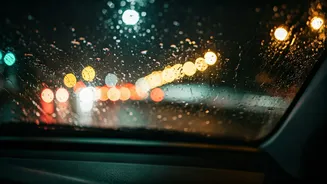
In a gray, rainy landscape, a car without its lights on can seem to disappear. Turning on your headlights makes you significantly more visible to other drivers and pedestrians. Don't rely on automatic daytime running lights, as these often don't activate your tail lights, making you harder to see from behind. In many states, it’s the law to have your headlights on whenever your windshield wipers are in use. It’s a simple flip of a switch that dramatically increases your presence on the road.
4. Slow Down Significantly
This is the single most important adjustment you can make when driving in the rain. Wet roads drastically reduce your tires' grip, increasing the distance it takes to stop. The posted speed limit is for ideal, dry conditions. In the rain, you should reduce your speed by at least a third. For example, if the speed limit is 60 mph, you shouldn't be going much faster than 40 mph. Going slower gives you more time to react to hazards and reduces the chance of hydroplaning.
5. Double Your Following Distance
Tailgating is always a bad idea, but in the rain, it’s downright dangerous. The “three-second rule” for following distance in dry weather should be increased to at least five or six seconds in the rain. To measure this, watch the vehicle ahead of you pass a fixed object like a sign or an overpass. Then, start counting “one-one-thousand, two-one-thousand…” If you reach the same object before you finish counting to five, you're following too closely. This buffer gives you the space you need to brake safely without skidding or rear-ending the car in front of you.
6. Understand and Avoid Hydroplaning
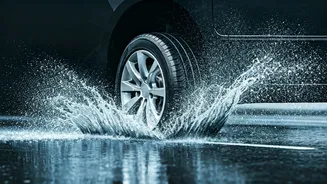
Hydroplaning occurs when a layer of water builds up between your tires and the road surface, causing a loss of traction and steering control. It feels like you're floating or gliding. It can happen at speeds as low as 35 mph if there's enough water. If you feel your car hydroplaning, do not slam on the brakes or jerk the steering wheel. Instead, ease your foot off the accelerator and steer gently in the direction you want to go until you feel your tires regain contact with the road. The best way to handle hydroplaning is to avoid it by slowing down and steering clear of puddles and standing water.
7. Turn Off Cruise Control
Cruise control is a great feature for long, dry highway drives, but it's a hazard in the rain. The system is designed to maintain a constant speed, and if your car begins to hydroplane, the cruise control may try to accelerate to maintain that speed, which is the exact opposite of what you should do. This can cause you to lose control completely. Driving in the rain requires constant, subtle adjustments to your speed. Keep your foot on the pedal and stay actively engaged in controlling your vehicle.