







The Legend of the Living Pesticide
Walk through any seasoned gardener’s vegetable patch, and you’re likely to see neat rows of marigolds tucked between the tomatoes and squash. The common wisdom says their pungent scent acts as a natural force field, warding off everything from hornworms
to rabbits. It’s an appealingly simple, chemical-free solution passed down through word of mouth and printed in gardening almanacs for decades. While there is a powerful truth at the heart of this legend, the reality is more nuanced—and far more interesting. Not all marigolds are created equal, and their pest-fighting abilities are more targeted than many gardeners realize. Understanding the science behind the folklore is the key to unlocking their true potential and avoiding disappointment.
The Real Power: Below The Soil
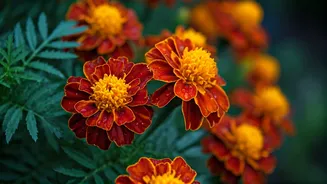
The marigold’s greatest, scientifically-proven superpower lies not above the ground, but within the soil. Certain varieties of marigolds are expert assassins of a particularly destructive microscopic pest: the root-knot nematode. These tiny roundworms infest the soil and form galls, or knots, on the roots of susceptible plants like tomatoes, peppers, and melons, stunting their growth and reducing yields. French marigolds (*Tagetes patula*), in particular, release a biochemical compound from their roots called alpha-terthienyl. This substance is highly toxic to nematodes, effectively sterilizing the soil around the marigold's root zone. For this to work best, the marigolds must be established in the area. Some studies show the most effective method is to plant a dense cover crop of French marigolds in a problem area for a full season, then till them into the soil before planting your vegetables the following year. This acts as a 'biofumigant,' cleansing the soil far more effectively than simply interplanting a few flowers here and there.
What About Bugs Above Ground?
So, what about the insects you can actually see? Here, the evidence is more mixed. The strong, earthy scent of marigolds does seem to have a confusing effect on certain pests. Some gardeners swear that planting them near cabbage and broccoli helps deter the white cabbage butterfly, which lays the eggs that become destructive cabbage worms. The scent may mask the smell of the target crop, making it harder for the pests to find. Similarly, they have a reputation for repelling Mexican bean beetles. However, a marigold is not a magic shield. Many insects, like aphids, are completely unfazed. Worse, some pests are actually attracted to marigolds, particularly spider mites, which can thrive on them in hot, dry conditions and then spread to your other plants. The takeaway is to view marigolds as a potential deterrent for specific pests, not a general-purpose bug zapper.
Choose Your Champion: Not All Marigolds Are Equal
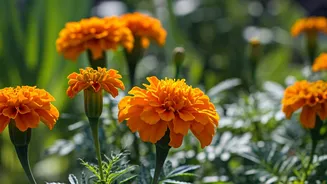
If you're planting marigolds specifically for pest control, variety matters immensely. For tackling root-knot nematodes, the scientific consensus points squarely to French marigolds (*Tagetes patula*). Varieties like 'Nema-Gone,' 'Golden Guardian,' and the 'Tangerine' cultivar have been bred and selected for their high concentration of nematicidal compounds. The larger, puffier African marigolds (*Tagetes erecta*) and the delicate Signet marigolds (*Tagetes tenuifolia*) are beautiful but produce significantly less of the pest-killing biochemicals and are not effective for nematode control. When shopping for seeds or starts, look specifically for French marigolds if your goal is pest management. Read the plant tag or seed packet carefully—if it just says “marigold,” you may not be getting the hard-working variety you need.
Putting Them to Work in Your Garden
To get the most out of your marigolds, you need a strategy. For nematode control, the gold standard is the cover crop method mentioned earlier: dedicate a bed to a dense planting of French marigolds for a full 60-90 days, then till them in. For a less intensive approach, you can incorporate them into your vegetable beds. Plant a solid border of French marigolds around your entire vegetable garden. This creates a perimeter that may help confuse some flying pests and will begin the process of suppressing nematodes in the surrounding soil. You can also 'interplant' them by tucking a marigold plant every few feet between your tomatoes or beans. While this may not provide the same level of nematode protection as a cover crop, it can still contribute to a healthier, more diverse garden ecosystem and may help with some above-ground pests. Just remember to monitor them for spider mites, especially during hot weather.