





The Great Urban Squeeze
To understand India's obsession with space-saving design, you have to understand its cities. Megacities like Mumbai, Delhi, and Bengaluru are magnets for a young, ambitious population seeking opportunities. This relentless urbanization has sent real estate
prices soaring. For many millennials and Gen Z professionals, the dream of homeownership is only feasible in a “compact” or “micro” apartment, often under 600 square feet. In Mumbai, one of the world's most expensive property markets, that number can be even smaller. But this isn’t just an economic story. It’s also a cultural one. The traditional Indian joint family system, where multiple generations lived under one sprawling roof, is giving way to nuclear families and single-person households. Young Indians are moving away from their hometowns for work and building independent lives. Their homes need to reflect this new reality: flexible spaces that can serve as an office by day, a social hub by night, and a sanctuary from the bustling city outside. The result is a powerful demand for homes that are not just small, but smart.
Beyond the Murphy Bed
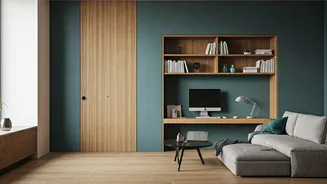
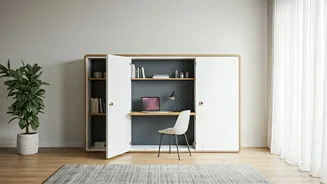
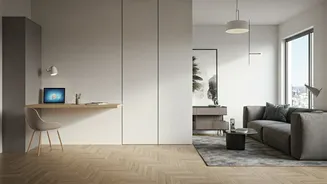
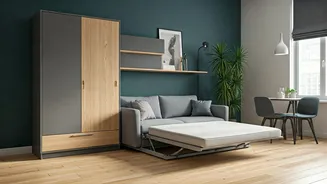
When Americans think of space-saving furniture, the mind often goes to the classic Murphy bed or a simple futon. But Indian designers are taking the concept to a whole new level. They are creating entire ecosystems of “transformer furniture” that redefine the function of a room with a few simple moves. Imagine a coffee table that rises and expands to become a six-person dining table, a TV unit that conceals a pull-out study desk, or a sofa with built-in storage and side tables that can be reconfigured for guests. Architects are also rethinking the very layout of apartments. Instead of rigid walls, they’re using sliding partitions, fluted glass screens, and even strategically placed curtains to create flexible zones. A living room can be sectioned off to create a private guest room or a home office. Vertical space is king, with floor-to-ceiling shelving, lofted beds that open up floor space for a desk or seating area, and clever kitchen storage that ensures every inch is utilized. Light and color are used strategically to create an illusion of spaciousness, with neutral palettes, mirrored surfaces, and large windows becoming standard practice.
A New Design Philosophy
This movement is being led by a new generation of Indian architects and interior designers who see constraint as a catalyst for innovation. For firms like Mumbai’s The Little Details or Delhi's Quirk Studio, designing a small apartment is a fascinating puzzle. They work closely with clients to understand their specific lifestyle—Are they avid cooks? Do they work from home? Do they love to entertain?—and then tailor the space to meet those needs precisely. The goal is no longer to mimic a larger home, but to celebrate the efficiency and intelligence of a smaller one. This marks a significant shift in the definition of luxury. For decades, luxury was synonymous with size. Today, for a growing urban demographic, luxury means a home that is highly personalized, technologically integrated, and effortlessly functional. It’s about the quality of the living experience, not the square footage. A custom-built, multifunctional piece of furniture is seen as more desirable than a larger, generic one. This philosophy emphasizes decluttering and minimalism, not for aesthetic reasons alone, but as a practical necessity for a serene urban life.
Lessons from the Compact Apartment
While the tiny home and micro-apartment movements are global phenomena seen in cities from New York to Tokyo, the Indian approach offers unique insights. Designers in India are often creating solutions that cater to specific cultural habits—like the need to host extended family comfortably, even in a small space, or kitchens designed for the complexities of Indian cooking. There's an inherent warmth and adaptability in these designs that prioritizes human connection and flexibility over stark minimalism. For American observers, the trend is a powerful reminder that innovative design often flourishes best under pressure. As cities across the U.S. grapple with housing shortages and rising costs, the principles emerging from India’s design labs are more relevant than ever. They offer a blueprint for creating dignified, beautiful, and highly functional living spaces that prioritize people over sheer size. It’s a compelling vision of the future of urban living, where smart design allows us to live better, not just bigger.