


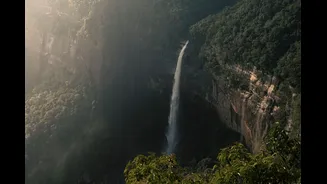

Mawsynram, India: The Reigning Champion
Tucked away in the Khasi Hills of northeastern India, the village of Mawsynram holds the Guinness World Record for the highest average annual rainfall on Earth. We’re not talking about a few extra rainy days; we’re talking about an average of 467.4 inches—nearly
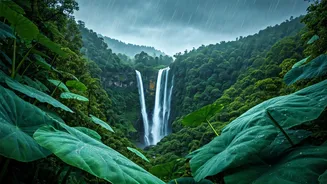
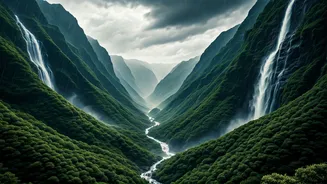
39 feet—of rain per year. To put that in perspective, Seattle gets about 38 inches annually. Mawsynram gets that in less than two weeks during its peak monsoon. The sound of the rain here is a permanent feature of life, a constant drumming on the rooftops that locals have learned to muffle with thick layers of grass. But this deluge is also a life-force. It feeds a landscape of almost surreal greenery, where every surface seems to be covered in a lush blanket of moss and ferns. The monsoon transforms the surrounding hills into a water world, spawning countless waterfalls that cascade down cliffs in dramatic fashion. The air is thick with mist and the smell of damp earth, creating a mystical, almost primeval atmosphere that feels worlds away from anywhere else.
Cherrapunji, India: The Famous Contender
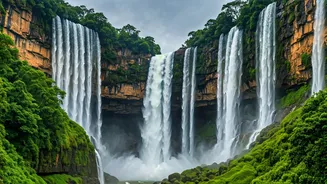
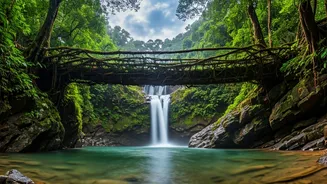
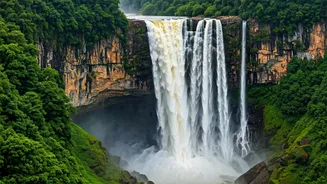
Just a few miles from Mawsynram lies its famous rival, Cherrapunji (also known by its traditional name, Sohra). For many years, it held the title of the wettest place on Earth and still holds records for the most rainfall in a single year. While Mawsynram may have edged it out in average rainfall, Cherrapunji is arguably the more dramatic destination for witnessing the monsoon’s majesty. This is the land of the living root bridges. Over generations, the Khasi people have learned to guide the aerial roots of rubber fig trees across rivers and gorges, weaving them into sturdy, living structures that grow stronger over time. These bio-engineered marvels are a testament to human ingenuity in harmony with nature, a solution that wooden bridges could never provide in a climate where they would quickly rot. The monsoon season brings the region’s waterfalls to their thunderous peak, including the Nohkalikai Falls, which plunges over 1,100 feet from a verdant plateau. The landscape is a spectacle of deep gorges, misty valleys, and roaring water.
Tutunendo, Colombia: The Tropical Downpour
Leaving Asia, we head to South America, where the small town of Tutunendo in Colombia’s Chocó department offers a different flavor of extreme wetness. While the Indian locations experience a concentrated monsoon season, Tutunendo’s rainfall is more evenly distributed throughout the year, meaning it’s almost always raining. It receives an average of 450 inches of rain annually, making it one of the wettest inhabited places in the world. The town is situated in a region of staggering biodiversity. The constant rain and tropical temperatures create an incredibly lush and vibrant rainforest, home to a vast array of plant and animal species. The rivers here, like the Rio Tutunendo and Rio Atrato, are the lifeblood of the community. They swell with the daily downpours, their banks a riot of emerald green vegetation. Unlike the misty, cool highlands of Meghalaya, this is a hot, humid, and intensely tropical wetness that fosters a different kind of natural splendor, one defined by dense jungle, exotic wildlife, and the ever-present rhythm of falling water.
Why Here? The Science of the Super-Soaked
These locations don't win the rainfall lottery by accident. Their extreme weather is a product of geography, a phenomenon known as orographic lift. In the case of Mawsynram and Cherrapunji, moisture-laden monsoon clouds sweep in from the Bay of Bengal. When they hit the steep slopes of the Khasi Hills, they are forced to rise rapidly. As the air rises, it cools, and its ability to hold moisture plummets. The result is a concentrated, epic release of rain over a very small area. A similar effect happens in Tutunendo, where humid air from the Pacific Ocean is trapped by the nearby Andes Mountains. These places are, in essence, perfectly positioned natural rain machines.