



The Old World of Trend-Spotting
It wasn't so long ago that café trends spread organically, almost like folklore. A barista in Seattle might be inspired by a trip to Italy, bringing back a new brewing technique. A baker in Brooklyn could experiment with a family recipe, creating a pastry
that slowly gains a cult following. Trends moved at a human pace, passed from shop to shop through word of mouth, magazine features, and the occasional influential blog post. The driving force was often a blend of individual creativity and local customer demand. This decentralized system created distinct regional café cultures, where the offerings in Austin felt genuinely different from those in Chicago.
Enter the Expo: A Centralized Idea Factory
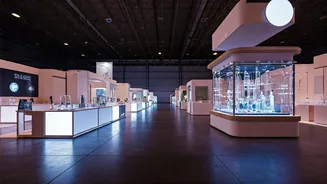
Today, that slow, organic process has been largely superseded by a far more efficient, centralized, and commercialized engine: the food and beverage expo. Events like the Specialty Coffee Expo, the Summer Fancy Food Show, and the National Restaurant Association Show are the new ground zero. Imagine a space the size of multiple football fields, packed with thousands of booths. In one aisle, a dozen companies showcase competing oat milks. In another, startups pitch single-origin chocolate syrups, innovative chai concentrates, or shelf-stable pastries. These aren’t just tasting events; they are hyper-efficient marketplaces where the entire supply chain converges. Café owners, regional buyers, and national distributors walk the floor with the specific goal of finding 'the next big thing.' They can taste, touch, and negotiate deals for hundreds of potential new products in a single weekend.
Why the Expo Model Works
The expo's dominance is a story of efficiency and risk reduction. For a small café owner, attending an expo is a powerful shortcut. Instead of spending weeks researching and vetting new suppliers, they can discover a year's worth of menu innovation in three days. They can see what the big players are betting on, gauge industry-wide shifts, and ensure they aren't left behind. For the brands—from massive corporations like Monin to tiny startups—the expo is an unparalleled launchpad. It offers direct access to thousands of potential customers (the cafés) and the distributors who can place their product in hundreds of stores at once. A successful showing can take a product from a garage-based experiment to a nationwide phenomenon in months. This is where nitro cold brew went from niche to necessity and where oat milk cemented its status as the king of dairy alternatives.
From Booth to Your Morning Brew
The journey is astonishingly direct. A café owner from Denver might sample a new line of vegan-friendly syrups at a show in Chicago. Impressed, she places a small order through a distributor she met at the same event. Two weeks later, that syrup is on her menu as a weekly special. It sells out. She features it on social media, and customers start asking for it. Seeing the success, other local cafés take notice. The distributor reports this uptick in demand to the syrup manufacturer, who in turn ramps up production. Within a year, a trend that began as a sample sip on a concrete floor is a standard menu item in cafes across the country, creating a wave of demand that feels organic to customers but was engineered with industrial precision.
The Homogenization Trade-Off
While this system is incredibly effective at identifying and scaling popular ideas, it comes with a cost. As expos become the primary source of innovation, a certain sameness can creep into café culture. If every buyer is sourcing from the same pool of vendors, the “unique” find in Portland, Oregon, might be identical to the one in Portland, Maine. This can lead to a landscape of rotating, pre-packaged trends rather than genuine, place-based culinary discovery. The quirky, slightly-off-the-wall experiment from a single passionate barista has a harder time competing with a professionally marketed, scalable 'solution' presented at an expo. The result is fewer true originals and more high-quality, widely distributed copies.