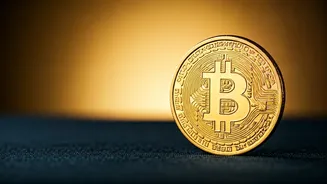







So, What Is a '₹1 Gold' Purchase?
First, let's translate. One Indian Rupee (₹1) is worth roughly 1.2 U.S. cents. The idea of buying a tangible asset like gold for that amount sounds impossible. But in India, it’s a booming market, thanks to a concept called 'digital gold.' Major fintech
platforms—think of them as India's versions of Venmo or Cash App, like Paytm and PhonePe—allow users to buy 24-karat gold for as little as a single rupee. When you make a purchase, you’re not getting a microscopic fleck of metal in the mail. Instead, you're buying a fractional claim on a larger bar of gold that a trusted custodian, often working with a company like the government-backed MMTC-PAMP, holds for you in a secure vault. Your purchase is recorded digitally, and your holdings accumulate with every tiny transaction. You can check your 'gold balance' in the app just like you’d check your bank account.
The Psychology of a Gateway Drug
The headline calls it a 'gateway investment,' and that’s the perfect analogy. For generations, buying gold meant having significant savings and visiting a jeweler. It was an event—intimidating and expensive. This new model completely shatters that barrier. The psychological genius is that it reframes investing not as a major life decision but as a casual, everyday action. It’s the financial equivalent of a 'buy one, get one free' deal for your brain; the initial hurdle is so low, it feels risk-free. By making the first step absurdly easy, these apps are teaching a new generation the habit of putting money aside. It removes the fear of 'doing it wrong' and replaces it with the simple, satisfying feeling of owning something of value, even if it's just a few cents' worth. This small, repeated action builds confidence and a sense of identity as an 'investor,' making it far more likely that a user will graduate to larger, more significant investments in the future.
The American Equivalent Is Already Here
While you won't find a 'one-cent gold' option on U.S. apps, the 'gateway' principle is the engine driving the modern retail investing boom. The American version of this phenomenon is fractional investing. A decade ago, if you wanted to own a piece of a company like Amazon or Google, you needed thousands of dollars to buy a single share. Today, apps like Robinhood, Public, Fidelity, and Schwab let you buy a 'slice' of a share for as little as $1. This is the exact same logic as ₹1 gold: it lowers the price of admission to an exclusive club. Instead of feeling locked out of the market, you can start building a portfolio with the spare change from your coffee budget. This has democratized access to wealth-building tools that were once reserved for the affluent, allowing millions of Americans to start investing with pocket change. The asset is different—stocks instead of gold—but the behavioral science is identical.
Is It Actually a Good Idea?
For a beginner, absolutely. The biggest benefit of micro-investing isn't the financial return on your $1 investment; it’s the educational and behavioral return. It's a risk-free training ground. However, it’s not without its catches. These platforms make money somewhere, often through transaction fees, storage fees (for digital gold), or 'spreads' (the small difference between the buy and sell price). While often small, these costs can eat into returns on very small amounts. Furthermore, it's crucial to understand what you're buying. 'Digital gold' isn't the same as holding a gold coin in your hand, and a fractional share doesn't come with the same voting rights as a full share. It’s a fantastic first step, but it’s not the entire journey. Think of it as learning to ride a bike with training wheels—it gets you moving, but eventually, you'll want to take them off and ride freely.